The Jose Sanchez (II) estate of Rancho Buri Buri was granted to him in 1836. When Sanchez died in 1843 his estate was cut up and sold on a piecemeal pattern due to the debt incurred in the court battles and the need of his heirs to live off of their estate. The Mexican Rancho owners were land rich but money poor and they were continually mortgaging their land without regard to amounts owed or methods of paying off the debts. Therefore, after Jose Antonio Sanchez died (1775-1843) his heirs divided and sold off their inheritance to the flood of land hungry immigrants in the newly formed state of California (1850).
The most desirable and available land of the future San Bruno, at that time, lay on the flat land east of County Road (El Camino Real) in the 1850s. Money began pouring onto the Peninsula from successful businessmen north of the Peninsula. The land was subdivided and trees were planted to give the area a park look. They named the tract the San Bruno Park Addition. A rush to purchase the land ensued beginning with the South San Francisco Land and Improvement Company. D.O. Mills (of Millbrae fame) and his brother-in-law, Ansel Ives Easton (living in Burlingame) then purchased the land then sold the land after the No. 40 Line Trolley was constructed down the Peninsula in 1903. It was opened for development by realtors George A. Hensley and Alfred T. Green (with R. Masson Smith as a silent partner). On one of the promotional brochures it was stated the other investors at the time of Nov. 11, 1906, A.C. Kains was shown to be the manger of the Canadian Bank of Commerce; John S. Angus was a capitalist; W. J. Martin was president of the S.S.F. Railroad and Power Company; George H. Mastick, attorney; and George F. Chapman, general manager of the United Railroads of San Francisco. Most of these men have streets named for them in the downtown area.
Lots could be bought with little money down ($200) and low monthly payments ($25). These 25-foot lots had no sidewalks or curbs and faced a dirt street that was not paved until the 1920s. The streets were impassable in the wet winter months. The water table was near the surface so there was well-water available in abundance. “Outhouses” were constructed for sanitation use. This would pose a problem later when the community was built up. Prospective buyers were coaxed down the Peninsula to San Bruno by free trips on the No. 40 Line. A band played as they got off the trolley and meal of sandwiches and drinks were waiting for them after they took a tour of the San Bruno Park Addition.
The lots did not sell very fast and purchasers tended to from San Francisco. Most were looking for a piece of land where they could spend their leisure time out of the city. Most lots were never built upon until 20 or 30 years after purchase and the most owners failed to pay the taxes as well as the principle. This proved to become a huge tax problem for San Bruno and in the 1930s delinquent lots was sold by the city by the hundreds.
Alfred Tiasco Green was born in San Francisco on March 21, 1857, (d. 1927). He became a surveyor and plied his trade in the San Bruno area in the late 1800s. While working in the area he stayed at the Cunningham “San Bruno House” that had been built on an acre of land facing San Mateo Avenue (now American Legion Hall). In 1863 the San Jose and San Francisco Railroad (in 1868 it became the Southern Pacific RR) was built across his property to the east.
A partnership with Mr. Hensley resulted in the Hensley-Green Company office being set up at 35 Van Ness Ave. Their logo states that the Hensley-Green Company was the “Largest Suburban Real Estate operators on the Pacific Coast.”
Alfred T. Green’s son, A. Hyde Green (b. 1888-1961), became well known in the community and he built many homes and sold real estate in the San Bruno area. He built a home behind Green’s Hall (which he owned at 440 San Mateo Ave.) on Mastick. He continued in real estate dealings just like his father did and had a business office next to Artichoke Joe’s (670) on San Mateo Avenue. He and his wife built a beautiful house at 433 Mastic.
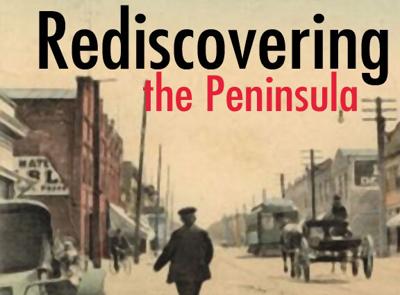
Rediscovering the Peninsula runs every weekend. It is compiled through our archives created by Jim Clifford and the late Darold Fredricks.
Keep the discussion civilized. Absolutely NO
personal attacks or insults directed toward writers, nor others who
make comments. Keep it clean. Please avoid obscene, vulgar, lewd,
racist or sexually-oriented language. Don't threaten. Threats of harming another
person will not be tolerated. Be truthful. Don't knowingly lie about anyone
or anything. Be proactive. Use the 'Report' link on
each comment to let us know of abusive posts. PLEASE TURN OFF YOUR CAPS LOCK. Anyone violating these rules will be issued a
warning. After the warning, comment privileges can be
revoked.
Please purchase a Premium Subscription to continue reading.
To continue, please log in, or sign up for a new account.
We offer one free story view per month. If you register for an account, you will get two additional story views. After those three total views, we ask that you support us with a subscription.
A subscription to our digital content is so much more than just access to our valuable content. It means you’re helping to support a local community institution that has, from its very start, supported the betterment of our society. Thank you very much!












(0) comments
Welcome to the discussion.
Log In
Keep the discussion civilized. Absolutely NO personal attacks or insults directed toward writers, nor others who make comments.
Keep it clean. Please avoid obscene, vulgar, lewd, racist or sexually-oriented language.
Don't threaten. Threats of harming another person will not be tolerated.
Be truthful. Don't knowingly lie about anyone or anything.
Be proactive. Use the 'Report' link on each comment to let us know of abusive posts.
PLEASE TURN OFF YOUR CAPS LOCK.
Anyone violating these rules will be issued a warning. After the warning, comment privileges can be revoked.