In 1976, Kodak had a 90% share of photographic and camera sales in the United States. Everybody knew what was meant by saying “It’s a Kodak moment.”
But it was not always that way. It took a long road to get to the stage we were at in photography in 1976. Greek and Chinese philosophers described the optics and camera as early as fourth century and Isaac Newton described white light as being composed of many colors in the mid-1600s. It took another 100 years before silver nitrate was discovered to darken upon the exposure of light. Silver nitrate is the basic ingredient used to capture an image on celluloid or paper. The camera obscura was used to make the first photographic image in 1814, but it took eight hours to produce the picture and faded shortly after making. Louis Daguerre in 1837 made his first daguerreotype. It took only 30 minutes to make and lasted forever. He had discovered how to stop the silver nitrate reaction from going further and darkening. In 1840, Alexander Wolcott got the first patent for a camera. More developments on the film allowed the picture to be taken but it was not necessary to develop the film immediately as had to be done up to now.
Due to all of these developments by experimenting, George Eastman founded the Eastman Dry Plate Company and shortly thereafter he invented flexible, paper-based photographic film that could be rolled for use in still cameras and professional movie cameras. After patenting a cheap, “aim and click” camera, he began marketing the “Brownie” camera for the mass market. He developed a delivery system at drugstores throughout the east, where the person delivered the film to the store and the store immediately developed the film or sent it to a central chemical plant. Photography for the mass market was developed.
The first cameras were of box form and took round pictures that were 2 1/2 inches in diameter. The camera had a fixed focal length and a roll of film that could deliver 100 pictures. The film, however, had to be loaded and unloaded in complete darkness but, in 1900, Kodak invented the Kodak Film Tank that allowed the amateur to load and unload a roll of film without aid of a darkroom.
Led on by his phenomenal success, the Eastman Company was formed and plants that would hold his multibillion photographic empire were built in Rochester, New York. It was renamed Eastman Kodak Company in 1892.
In 1935, Kodak introduced Kodachrome, a color reversal film for movie and slide film. On June 22, 2009, Kodachrome film production was discontinued.
Recommended for you
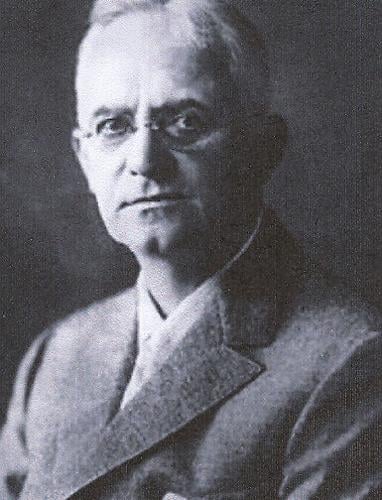
George Eastman (1854-1932) was an American innovator and entrepreneur who founded Eastman Kodak Company. He was born on a 10-acre farm in New York state but moved to Rochester when his father’s health deteriorated. While living on the farm, his teacher at the school he attended felt he would never complete schooling as his mind wandered and he accused him of “addling.” He then continued his schooling at home.
Eastman’s success was phenomenal and his wealth increased greatly. He never married, but his life took on a new direction in the 1910s when he began distributing his wealth to worthy social causes. He had founded the Eastman Trust and Savings Bank and developed paternal systems of support for his employees. He donated much money to establish the Eastman School of Music at the University of Rochester and, in 1921, a school of medicine and dentistry. He became one of the major philanthropists of his time, slightly behind Andrew Carnegie and John D. Rockefeller.
A curious event occurred in Los Angeles that many feel changed the market of photography. Fujifilm entered the U.S. market by becoming the official sponsor of the 1984 Olympics. Kodak refused it and its share of the photographic market was 17% by 1997. Kodak’s market in Japan stalled and, in May 1995, Kodak filed a petition with the U.S. Department of Commerce against Japan for unfair market practices. It was rejected as Kodak’s U.S. market share plunged from 80.1% to 74.7%. The ironic fact was that in 1975 Kodak scientists created the world’s first megapixel sensor, capable of recording 1.4 million pixels and producing photo-quality 5-by-7 inch print. They sat on the research thinking that this would threaten their film business. They were right. Kodak was so successful that it thought no Asian film would threaten their market so they sat on this invention. The ride downhill was rough and bumpy.
Kodak announced June 22, 2009, that it was retiring it oldest film stock, Kodachrome due to declining sales of “wet photography” and complete dominance of the digital photographic film, mainly by foreign countries.
In January 2012, Kodak filed for bankruptcy and it’s taking measures to emerge from bankruptcy.
Rediscovering the Peninsula runs every weekend. It is compiled through our archives created by Jim Clifford and the late Darold Fredricks.
Keep the discussion civilized. Absolutely NO
personal attacks or insults directed toward writers, nor others who
make comments. Keep it clean. Please avoid obscene, vulgar, lewd,
racist or sexually-oriented language. Don't threaten. Threats of harming another
person will not be tolerated. Be truthful. Don't knowingly lie about anyone
or anything. Be proactive. Use the 'Report' link on
each comment to let us know of abusive posts. PLEASE TURN OFF YOUR CAPS LOCK. Anyone violating these rules will be issued a
warning. After the warning, comment privileges can be
revoked.
Please purchase a Premium Subscription to continue reading.
To continue, please log in, or sign up for a new account.
We offer one free story view per month. If you register for an account, you will get two additional story views. After those three total views, we ask that you support us with a subscription.
A subscription to our digital content is so much more than just access to our valuable content. It means you’re helping to support a local community institution that has, from its very start, supported the betterment of our society. Thank you very much!






















(0) comments
Welcome to the discussion.
Log In
Keep the discussion civilized. Absolutely NO personal attacks or insults directed toward writers, nor others who make comments.
Keep it clean. Please avoid obscene, vulgar, lewd, racist or sexually-oriented language.
Don't threaten. Threats of harming another person will not be tolerated.
Be truthful. Don't knowingly lie about anyone or anything.
Be proactive. Use the 'Report' link on each comment to let us know of abusive posts.
PLEASE TURN OFF YOUR CAPS LOCK.
Anyone violating these rules will be issued a warning. After the warning, comment privileges can be revoked.