
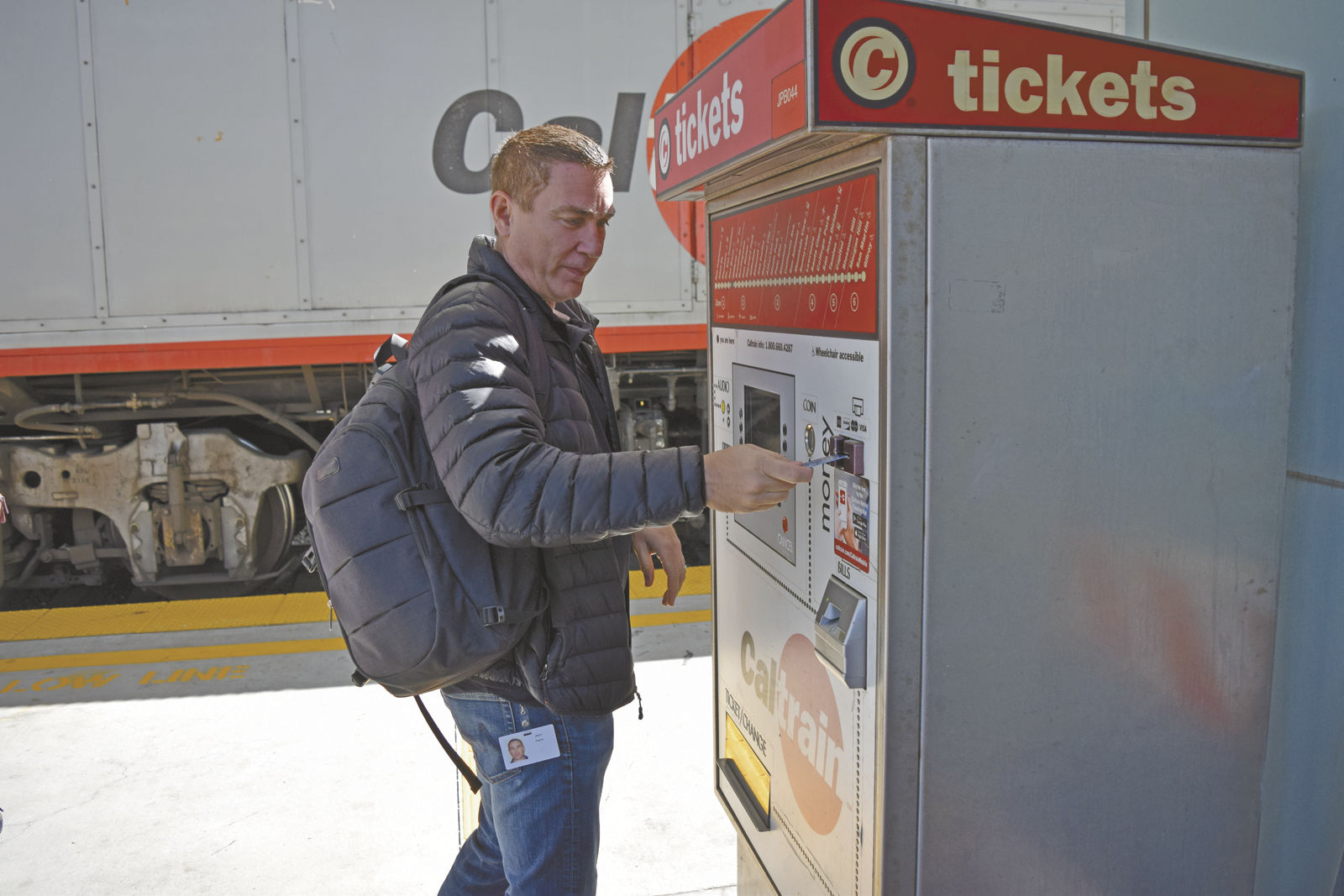
Caltrain officials are searching for answers to the transit agency’s structural deficit, and one of those answers may be a fare hike.
The Joint Powers Board at a Thursday meeting received an update on the ongoing fare study, which offers insight into the potential consequences of various fare changes.
Those changes include an increase in base fare by 25 cents, an increase in zone fare by the same amount, a reduction of the Clipper Card discount from 55 cents to 20 cents or eliminating that discount altogether, and finally, a 25 percent discount off base fare for off-peak travel.
The 25-cent increase in base fare could bring between $5 million and $6.1 million in revenue while the Clipper Card discount reduction to 20 cents could yield between $5.3 million and $7.4 million. Caltrain’s deficit is projected to hit $6.3 million by 2019.
The study, which cost $275,000, found that ridership demand for Caltrain is inelastic, meaning ridership is not dramatically affected by price changes. And lower income riders are more likely to continue riding Caltrain and absorb the higher fares, according to the study, as they often lack access to alternative transportation options.
Impromptu interviews with Caltrain commuters at the Millbrae and San Bruno stations Friday morning were consistent with those findings.
Andres Garcia, a hotel worker, has seen many Caltrain fare hikes since he began commuting to San Francisco from Millbrae nine years ago. He pays his fare via Clipper Card and said even the smallest increase piles up and adds pressure, but he said Caltrain remains cheaper than BART and driving is a “nightmare.”
“There’s no other choice,” he said.
Numerous commuters at those stations Friday morning boarded Caltrain via the Go Pass program, in which employers purchase unlimited rides for their entire workforce for a year at a time. None of those riders were concerned about fare increases.
Two Caltrain board members from San Mateo County, Jeff Gee and Charles Stone, both said raising prices for full-fare riders should be a last resort response to the agency’s budget woes, but expressed interest in other cost adjustments. Gee, also a Redwood City councilman, said he’s open to further Go Pass price increases and reducing the Clipper Card discount, the latter of which Stone also mentioned, along with the 25 percent off-peak discount.
Recommended for you
Of the five fare changes outlined in the study, the off-peak discount would result in the greatest increase in ridership, including low-income passengers, but that option also ranked lowest in terms of revenue gains.
Caltrain will commission further studies next year on the Go Pass program — which saw a price increase in January and will see another in January of 2019 — along with parking prices.
Stone, also a Belmont councilman, said parking fees represent a “microscopic amount of revenue,” but it might make sense to charge more for parking at certain stations and not others, referencing a regularly packed lot at the Hillsdale station and an often-empty lot at the Belmont one.
“We shouldn’t be looking at parking through a revenue lens, but a policy lens,” he said.
Whatever price adjustments the Caltrain board ultimately agrees upon, those decisions likely won’t take effect until 2020, Gee said.
And as for Caltrain’s looming deficit, fare adjustments will help, but are by no means a panacea.
“Whatever we decide to do won’t be enough to avoid asking all partner agencies to put in more money,” Stone said, referencing San Francisco, Santa Clara and San Mateo counties.
(650) 344-5200 ex. 102





(2) comments
Another fare increase? Keep raising fares, lose riders
Since most people are on clipper card fares should be based on distance traveled. Loose the zone charges not trying to pick on anyone, but it makes no sense the person traveling from Redwood City pays the same as someone in Milbrae to get to San Francisco. Riders later on the trip are most likely standing and should enjoy paying a little bit less for not having a seat. BART only gives a 6.25% discount, but to be eligible you must buy a $45 or $60 ticket to get a $48 or $64, respectively. But Bart does give a 62.5% discount to seniors, those willing and able to give up driving should have an incentive to do so. This is a much better approach which helps cash flow needs without increasing cost. Asking for a deposit or prefunding is much better than having a tax or increased cost.
Welcome to the discussion.
Log In
Keep the discussion civilized. Absolutely NO personal attacks or insults directed toward writers, nor others who make comments.
Keep it clean. Please avoid obscene, vulgar, lewd, racist or sexually-oriented language.
Don't threaten. Threats of harming another person will not be tolerated.
Be truthful. Don't knowingly lie about anyone or anything.
Be proactive. Use the 'Report' link on each comment to let us know of abusive posts.
PLEASE TURN OFF YOUR CAPS LOCK.
Anyone violating these rules will be issued a warning. After the warning, comment privileges can be revoked.