

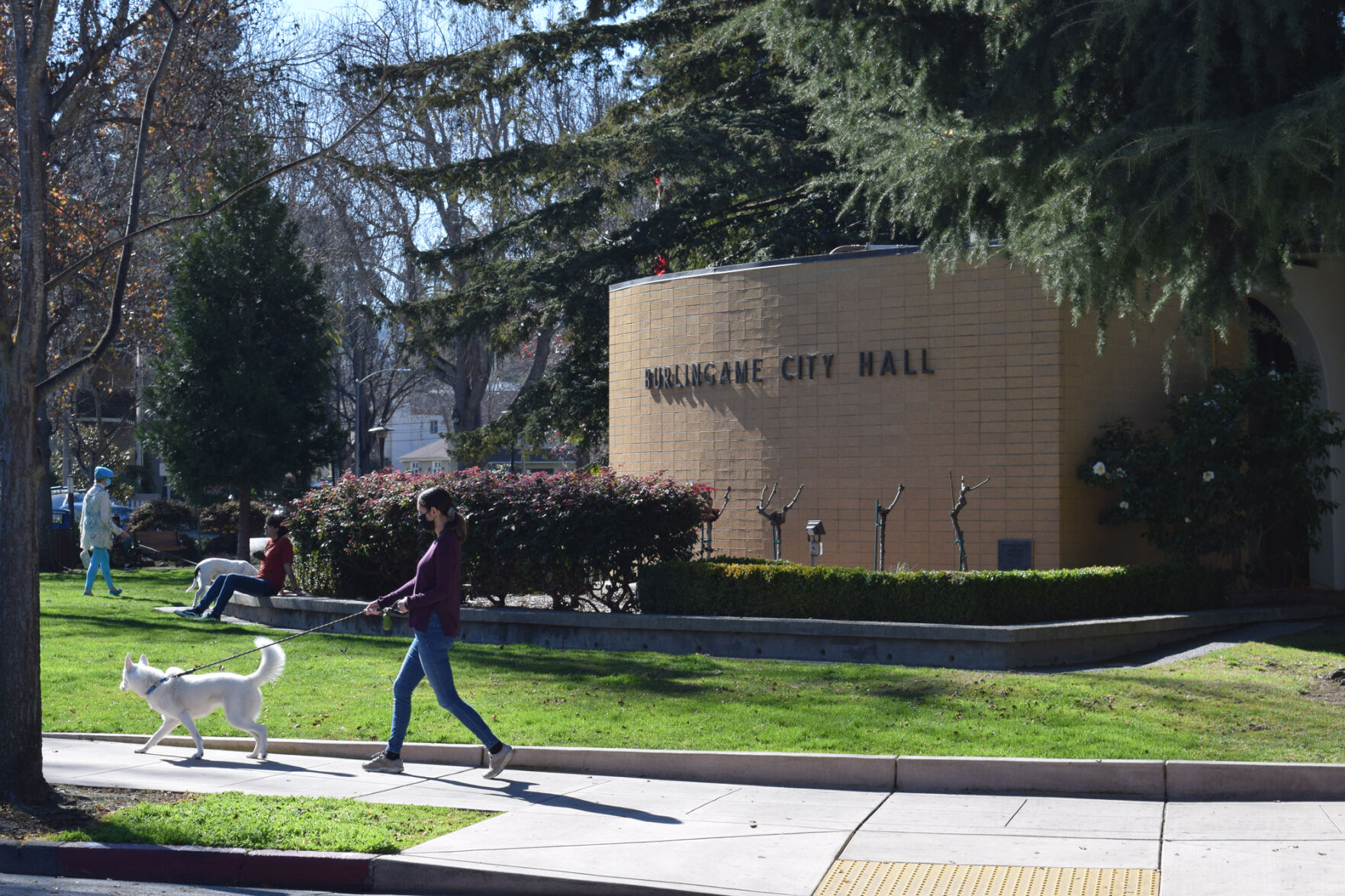
On top of thousands of units recently completed, Burlingame intends to add another 3,200 homes to its stock over the course of the next decade to keep up with job growth and provide affordable options for its workforce.
The City Council and Planning Commission met last week to discuss how the city will accomplish the task, which will involve new residential construction in the north part of the city and considerable investments to subsidize below-market rate homes. According to city data, nearly 40% of workers in the city make $40,000 or less per year — less than half the county’s median income and not nearly enough to afford the area’s soaring housing costs.
“We do want housing that is affordable to the city’s workforce, and certainly the city has been making great strides in recent years towards that goal,” Community Development Director Kevin Gardiner said. “It’s something to continue to work on.”
Average monthly rent for a one-bedroom apartment in the city is nearly $2,400, according to Zumper data. Meanwhile, median condominium prices last year were more than $1.2 million and single-family homes were north of $2.8 million, according to the county association of Realtors.
In a recent poll of 220 full-time Burlingame city employees, the city found 82% of its staff lived outside the city despite 66% reporting they would prefer to live within the city. Additionally, 30% reported commuting more than a half hour to get to work.
The majority of the planned 3,200 units are already under construction or making their way through the city’s planning process. Of roughly 2,000 homes recently approved or being built, 16% are planned to be offered at below-market rates. That number jumps to 20% when looking at the 1,200 units still under review by city planners, Gardiner said.
The city intends to continue upping the ratio, and to meet state mandates, nearly 1,900 units affordable to various income brackets beneath the county’s median income will need to be built by 2031. Those categories range from very low, low and moderate income, defined as households earning 50%, 80% or 100% or less of the county median income. Rents would be set to consume 30% of median wages in each category.
As an example, a three-bedroom for a “low-income” family would need to cost $3,290 a month or less, given the county’s $134,650 median income for that household size.
“We have a lot of service jobs in the city, your baristas, waiters, waitresses, hotel staff would all be quite likely to be in that very-low category,” Gardiner said. “Teachers and public servants tend to be … probably in the low-income category, but it does show there is a pressing need.”
The city is planning much of its new housing near Rollins Road, close to the Millbrae BART and Caltrain station. The area also has quick access to the Bayfront where thousands of new jobs will be produced with new biotech developments. Housing is additionally being considered in the city’s downtown.
To provide units priced below-market rates, subsidies will need to come either from public sources or private developers. Private subsidies come as a product of recently passed city rules requiring 10% of units within multiunit projects be for below-median earners. Public funding can come from various levels of government, most notably the city’s own ballooning affordable housing fund.
A growing housing fund
Recommended for you
As of last month that fund already had $3.8 million, thanks to fees adopted in 2017 that are charged to commercial developers. That figure is expected to grow exponentially as multiple payments in the tens of millions are scheduled from commercial developers. The city recently received an application for a large biotech campus that alone would contribute $35 million to the fund.
But how many units that will actually finance is difficult to determine. Even in projects that include all below-market rate units, which are typically run by nonprofit developers, the units closer to market rate help subsidize those offered at deeper levels of affordability. Cost to construct and operate a single unit can be several hundred thousand dollars. A developer in South San Francisco recently indicated it would cost $15 million over the course of 55 years to provide 60 below-market rate units, 40 at the low income and 20 at the moderate income levels within a 480-unit project.
“When it comes to the very low, that is a real challenge,” Mayor Ricardo Ortiz said. “Creating those units is going to be where we’re really going to have to be creative.”
Gardiner said a council subcommittee could be formed to come up with a policy of how the city’s affordable housing funds should be spent. He said some developers had already inquired about availability of funds for subsidizing affordable projects.
‘Naturally occurring’ affordable housing
Councilmembers and commissioners indicated support for continuing to look to “naturally occurring” affordable housing — that which is not deed restricted or directly subsidized but has low rents because of an aging building or other factors. The city’s population is majority renters, many of whom live in older apartments that could fit the description and could be at risk of displacement if the building owner decides to sell or conduct major renovations.
Funds could be used to purchase such buildings and implement deed restrictions. Councilmember Emily Beach said many buildings could also require seismic retrofitting to reinforce structures for earthquakes. Incentives to keep rents affordable could be wrapped in with financial aid to complete the work, she said.
“Some day, the earthquake’s going to hit and we need to address that,” she said. “It could be a beautiful, elegant solution to help create incentives for owners to hang onto those units so they don’t get redeveloped but make sure they’re safe.”
Along with rental options, expanding affordable ownership opportunities has in the past been identified as a council priority and was reiterated, as was expanding the percentage of affordable units required in multiunit developments. A rainy day fund for renters in need of assistance was also restated as a possibility for the funds.
The suite of policies will eventually be wrapped into a document called the housing element, planned for completion by the beginning of next year.
(650) 344-5200, ext. 105


(0) comments
Welcome to the discussion.
Log In
Keep the discussion civilized. Absolutely NO personal attacks or insults directed toward writers, nor others who make comments.
Keep it clean. Please avoid obscene, vulgar, lewd, racist or sexually-oriented language.
Don't threaten. Threats of harming another person will not be tolerated.
Be truthful. Don't knowingly lie about anyone or anything.
Be proactive. Use the 'Report' link on each comment to let us know of abusive posts.
PLEASE TURN OFF YOUR CAPS LOCK.
Anyone violating these rules will be issued a warning. After the warning, comment privileges can be revoked.