I bet you’ve experienced this yourself. It’s been a long and especially hard day, you’re feeling all kinds of emotions, and that includes feeling all alone. You look over at your dog or cat, and things start to shift. Your cat does it with her eyes, the way she blinks, slow and even. It’s subtle but you see it. Your dog does it with his whole body and tail, but especially his face. Those wrinkled eyebrows, slanted up toward the top of his head, making his eyes seem impossibly big and round, turning his forehead into an accordion of adorable wrinkles. All of a sudden, looking at those sweet faces, you know someone understands you and that you are not alone. It’s such a good feeling.
There is a growing body of scientific research looking into how humans and various species of animals communicate with each other by facial expression, and that dog eyebrow stuff is now a topic of very real interest. Cats are not physically able to move the muscles of their faces very much, which leads to more subtle ways of communicating. But dogs have a special muscle — the “levator anguli oculi medialis” muscle — that helps raise those brows. Interestingly, dogs make this facial expression far more frequently and far more intensely than do the closely related wolves, who also lack that muscle. Wolves and dogs share a recent common ancestor, so why the physical difference?
The thinking is that as humans consciously selected physical characteristics when breeding dogs, such as strength and size for working breeds or speed and agility for hunting breeds, they subconsciously favored eyebrow-raising individuals because they were so damn appealing. So this facial expression hitchhiked a ride with our more intentional efforts at domesticating the species. No one has yet studied if the “AU101 Inner Eyebrow Raise” (so named at the recent Proceedings of the National Academy of Sciences) is affected by how a dog is nurtured; that is, if owners going all weak-kneed and treat-giving when their pup gives this look actually teaches a dog to make that expression more frequently, but my guess is Yes. As we know, they do have us all wrapped around their dewclaws.
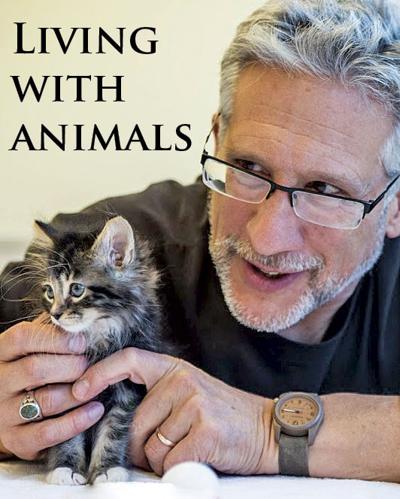
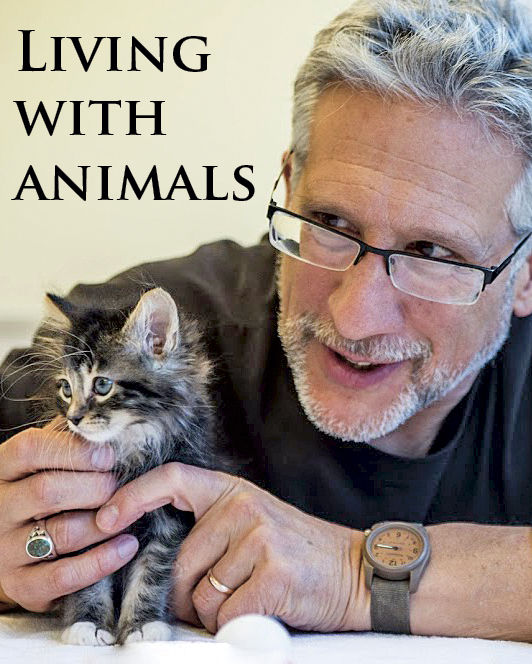
Ken White is the president of the Peninsula Humane Society & SPCA.
Keep the discussion civilized. Absolutely NO
personal attacks or insults directed toward writers, nor others who
make comments. Keep it clean. Please avoid obscene, vulgar, lewd,
racist or sexually-oriented language. Don't threaten. Threats of harming another
person will not be tolerated. Be truthful. Don't knowingly lie about anyone
or anything. Be proactive. Use the 'Report' link on
each comment to let us know of abusive posts. PLEASE TURN OFF YOUR CAPS LOCK. Anyone violating these rules will be issued a
warning. After the warning, comment privileges can be
revoked.
Please purchase a Premium Subscription to continue reading.
To continue, please log in, or sign up for a new account.
We offer one free story view per month. If you register for an account, you will get two additional story views. After those three total views, we ask that you support us with a subscription.
A subscription to our digital content is so much more than just access to our valuable content. It means you’re helping to support a local community institution that has, from its very start, supported the betterment of our society. Thank you very much!






(0) comments
Welcome to the discussion.
Log In
Keep the discussion civilized. Absolutely NO personal attacks or insults directed toward writers, nor others who make comments.
Keep it clean. Please avoid obscene, vulgar, lewd, racist or sexually-oriented language.
Don't threaten. Threats of harming another person will not be tolerated.
Be truthful. Don't knowingly lie about anyone or anything.
Be proactive. Use the 'Report' link on each comment to let us know of abusive posts.
PLEASE TURN OFF YOUR CAPS LOCK.
Anyone violating these rules will be issued a warning. After the warning, comment privileges can be revoked.