The future of transportation here in San Mateo County is cleaner, quieter and faster.
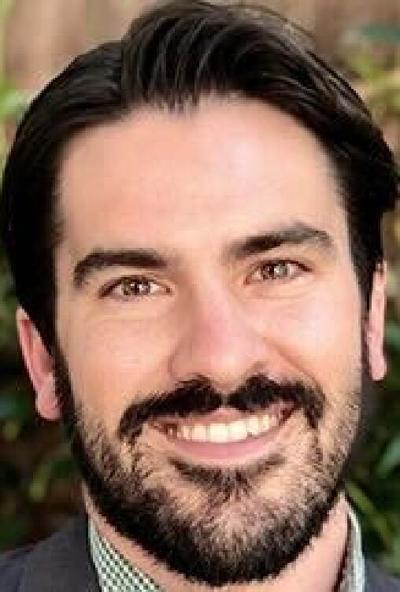
Phillip Kobernick
Caltrain for the first time in its 160-year history is now offering all-electric rail service from San Francisco to San Jose. That dramatic transition from what was once loud and dirty diesel to clean and quieter electricity is happening not sometime down the road, but right now.
That same transition is beginning to happen in electric vehicles, with EV
sales in California recently exceeding more than one in four total new car purchases.
But we will not adequately serve the growing consumer demand for EVs in San Mateo County and beyond until we admit that how we got to where we are today is not going to be the path forward.
According to the California Energy Commission, we need more than 1 million EV charging stations installed to support the state’s goal of 7 million EVs by 2030. There are currently about 1.5 million EVs on California roads today and 150,000 chargers. Put another way, California needs to install as many EV chargers each year as it has installed in its entire history, just to meet the 2030 target.
We remain woefully short of providing the necessary EV charging to meet customer demand because we have relied heavily on fast and expensive chargers instead of focusing on less expensive options that actually meet the normal daily need of San Mateo County drivers.
Recommended for you
A solution lies in the humble three-pronged 120V wall outlets already installed inside parking garages across San Mateo County. This type of slow EV charging, referred to as “Level 1” charging, provides about 70 miles of recharge overnight, more than double the average daily driving distance by San Mateo County residents.
For drivers in single-family homes, this is by far the easiest solution to EV charging since there is no need to install anything, you already have an outlet in your garage. According to data from Peninsula Clean Energy, San Mateo County’s locally led clean energy provider, about one-third of current EV drivers charge this way at home. Even Transportation Secretary Pete Buttigieg, the person responsible for federal funding to install hundreds of thousands of public chargers, uses a regular wall outlet at home.
Level 1 charging through regular wall outlets has tremendous benefits for widescale EV adoption.
First, it’s much cheaper to install than more powerful EV chargers. In Peninsula Clean Energy’s EV Ready program, local property owners are installing Level 1 charging at a total cost of about $2,500 each, before rebates are applied. This is in comparison to $10,000-$18,000, the typical cost of installing higher power Level 2 chargers in other utility programs. That means you can install about five to seven Level 1 chargers for the same price as installing just one fast charger.
Second, slow Level 1 charging reduces pressure on the electrical grid. Like a good barbecue, charging on a regular outlet is slow and low over several hours, reducing the overall intensity of energy spikes when tens of thousands of EV drivers plug in at the same time. Also, using lower power levels also helps to avoid the overall magnitude and number of requests for Pacific Gas and Electric to upgrade electrical service to energy-constrained properties, a process that already regularly takes over a year.
Finally, slow charging is a critical tool to providing widescale access to EV charging for residents of multi-family housing like apartments and condos, a critically underserved community currently left out of the transition to EVs. These properties need an affordable way to install large quantities of chargers for their residents without waiting for an electrical service upgrade, exactly what Level 1 charging provides.
While much of the attention around EV charging is around exciting new technology such as Vehicle to Home, powering your house in a blackout with your EV, or wireless charging, these all come at considerable higher prices. While high-tech innovations may capture headlines and our imaginations, the path to mass EV adoption lies in the simplicity of a solution that's been right in front of us all along — a regular wall outlet.
Phillip Kobernick is associate director of Energy Programs at Peninsula Clean Energy, a Community Choice Aggregation agency that is the official electricity provider for San Mateo County. Learn more at PenCleanEnergy.com.
The PCE associate director makes several valid points regarding charging one's EV at home. He does not address the real issue with EVs. They still have very limited range. Most EV owners are likely forced to keep another combustion engine automobile if they want to take a trip in excess of 250 miles without a recharge. His assertions that an 8 hour charge may provide a measly 80 hours of range is not supported by the industry itself. There are various credible sources on YouTube that peg this at no more than 30 to 40 miles on a single charge. Those 8 hours would also limit simultaneous electric use of other appliances in one's household. For multi-family dwellings, PCE does not provide logistical details on how to connect the chargers to one's wiring. Ostensibly, very heavy duty extension cords could be provided as part of the package. PCE should be more forthright and explain the pros, of which there are plenty, and the cons of EVs which should also be part of the recommendation. A slick presentation by the associate director alone is not very helpful and borders on misleading.
The most important quote here is: "This type of slow EV charging provides about 70 miles of recharge overnight, more than double the average daily driving distance by San Mateo County residents."
-It's 21:00 right now and real renewables are at only 7%.
-44% of power is Natural Gas and 16% is "Imports", which stands for more Natural Gas and even Coal.
-The rest are rather questionable 'green' sources like Large Hydro, Nuclear, Batteries
-California's "green power" infrastructure is completely based on cheap power from desert solar farms now - everything PG&E does points into that direction.
-Unfortunately even in CA the sun only shines and produces reliable power between 10:00 and 16:00, the rest is called "greenwashing"
The third largest solar plant in California is Ivanpah. It is a thermal plant that uses mirrors to heat molten salt to produce steam for its electricity generating turbines. This plant frequently needs to supplement it solar capacity with natural gas fired boilers to keep it on line and fulfill its generation output obligations. So much for green energy.
There is another "hidden secret" about Thermal Solar Plants. The sun is heating them during the day, which could take hours. So after the sun goes down the water is kept fairly hot with natural gas so the next day when the sun kicks in again the power production can start right away.
In the Carbon Emissions calculations of Thermal Solar, that fossil fuel carbon is often omitted from reports.
The same is true with batteries. All the carbon emissions to produce these large batteries are never mentioned, therefore the county is able to call EVs "carbon free". In fact it might take 3-7 years and longer to make up for these huge batteries in oversized trucks and SUVs. And if the power than comes from 80-90% non-renewables during the night, EVs aren't "green" at all.
Thanks for your astute comments, eGerd and Dirk. After reading Mr. Kobernick’s guest perspective I continue to wonder why folks want to burden their life with more hassles in trying to charge up an EV. Mr. Kobernick’s essay, in a read between the lines way, provides reasons why folks should continue purchasing gas-powered or hybrid vehicles. After all, why tether (or if you’d prefer, leash) yourself to an electric cord and wonder if there will be an electrical blackout (forced or natural) or a plea (for now) to not charge during certain time periods, or if a charger is available and working during travel, etc. Just buy a gas-powered or hybrid car and let it “sit” while others deal with their charging headaches. Oh yes, and wait for the "reverse" charge when the grid needs electricity, they "steal" power from your plugged in EV.
I agree, EVs need a killer app. CA is still the state of earthquakes, wildfires, floods, etc. which means we need more resiliency. We also still need residential solar power instead of desert farms to have a microgrid. Some wind power would look good in San Mateo County as well.
To be greener EVs need to charge during the day, when CAISO throws away solar power. Which means PCE and government agencies have to work harder to install reliable charging stations. We need vehicle-2-home (V2H) charging, so these solar panels can charge cars and cars can charge houses even when we have power outages.
They also need to be Lithium Iron batteries instead Lithium Ion, which are the ones that cause fire departments a lot of headaches.
Keep the discussion civilized. Absolutely NO
personal attacks or insults directed toward writers, nor others who
make comments. Keep it clean. Please avoid obscene, vulgar, lewd,
racist or sexually-oriented language. Don't threaten. Threats of harming another
person will not be tolerated. Be truthful. Don't knowingly lie about anyone
or anything. Be proactive. Use the 'Report' link on
each comment to let us know of abusive posts. PLEASE TURN OFF YOUR CAPS LOCK. Anyone violating these rules will be issued a
warning. After the warning, comment privileges can be
revoked.
Please purchase a Premium Subscription to continue reading.
To continue, please log in, or sign up for a new account.
We offer one free story view per month. If you register for an account, you will get two additional story views. After those three total views, we ask that you support us with a subscription.
A subscription to our digital content is so much more than just access to our valuable content. It means you’re helping to support a local community institution that has, from its very start, supported the betterment of our society. Thank you very much!



(6) comments
The PCE associate director makes several valid points regarding charging one's EV at home. He does not address the real issue with EVs. They still have very limited range. Most EV owners are likely forced to keep another combustion engine automobile if they want to take a trip in excess of 250 miles without a recharge. His assertions that an 8 hour charge may provide a measly 80 hours of range is not supported by the industry itself. There are various credible sources on YouTube that peg this at no more than 30 to 40 miles on a single charge. Those 8 hours would also limit simultaneous electric use of other appliances in one's household. For multi-family dwellings, PCE does not provide logistical details on how to connect the chargers to one's wiring. Ostensibly, very heavy duty extension cords could be provided as part of the package. PCE should be more forthright and explain the pros, of which there are plenty, and the cons of EVs which should also be part of the recommendation. A slick presentation by the associate director alone is not very helpful and borders on misleading.
The most important quote here is: "This type of slow EV charging provides about 70 miles of recharge overnight, more than double the average daily driving distance by San Mateo County residents."
-It's 21:00 right now and real renewables are at only 7%.
-44% of power is Natural Gas and 16% is "Imports", which stands for more Natural Gas and even Coal.
-The rest are rather questionable 'green' sources like Large Hydro, Nuclear, Batteries
-California's "green power" infrastructure is completely based on cheap power from desert solar farms now - everything PG&E does points into that direction.
-Unfortunately even in CA the sun only shines and produces reliable power between 10:00 and 16:00, the rest is called "greenwashing"
The third largest solar plant in California is Ivanpah. It is a thermal plant that uses mirrors to heat molten salt to produce steam for its electricity generating turbines. This plant frequently needs to supplement it solar capacity with natural gas fired boilers to keep it on line and fulfill its generation output obligations. So much for green energy.
There is another "hidden secret" about Thermal Solar Plants. The sun is heating them during the day, which could take hours. So after the sun goes down the water is kept fairly hot with natural gas so the next day when the sun kicks in again the power production can start right away.
In the Carbon Emissions calculations of Thermal Solar, that fossil fuel carbon is often omitted from reports.
The same is true with batteries. All the carbon emissions to produce these large batteries are never mentioned, therefore the county is able to call EVs "carbon free". In fact it might take 3-7 years and longer to make up for these huge batteries in oversized trucks and SUVs. And if the power than comes from 80-90% non-renewables during the night, EVs aren't "green" at all.
Thanks for your astute comments, eGerd and Dirk. After reading Mr. Kobernick’s guest perspective I continue to wonder why folks want to burden their life with more hassles in trying to charge up an EV. Mr. Kobernick’s essay, in a read between the lines way, provides reasons why folks should continue purchasing gas-powered or hybrid vehicles. After all, why tether (or if you’d prefer, leash) yourself to an electric cord and wonder if there will be an electrical blackout (forced or natural) or a plea (for now) to not charge during certain time periods, or if a charger is available and working during travel, etc. Just buy a gas-powered or hybrid car and let it “sit” while others deal with their charging headaches. Oh yes, and wait for the "reverse" charge when the grid needs electricity, they "steal" power from your plugged in EV.
I agree, EVs need a killer app. CA is still the state of earthquakes, wildfires, floods, etc. which means we need more resiliency. We also still need residential solar power instead of desert farms to have a microgrid. Some wind power would look good in San Mateo County as well.
To be greener EVs need to charge during the day, when CAISO throws away solar power. Which means PCE and government agencies have to work harder to install reliable charging stations. We need vehicle-2-home (V2H) charging, so these solar panels can charge cars and cars can charge houses even when we have power outages.
They also need to be Lithium Iron batteries instead Lithium Ion, which are the ones that cause fire departments a lot of headaches.
Welcome to the discussion.
Log In
Keep the discussion civilized. Absolutely NO personal attacks or insults directed toward writers, nor others who make comments.
Keep it clean. Please avoid obscene, vulgar, lewd, racist or sexually-oriented language.
Don't threaten. Threats of harming another person will not be tolerated.
Be truthful. Don't knowingly lie about anyone or anything.
Be proactive. Use the 'Report' link on each comment to let us know of abusive posts.
PLEASE TURN OFF YOUR CAPS LOCK.
Anyone violating these rules will be issued a warning. After the warning, comment privileges can be revoked.