The San Francisco Peninsula, stretching from the vibrant city of San Francisco down to the suburban heartlands of Silicon Valley, is home to a diverse array of business districts. From bustling downtowns to tech hubs and charming commercial centers, this region is a key economic driver for the Bay Area. However, one challenge that has increasingly hindered the growth and sustainability of these business districts is the pervasive issue of inadequate parking. Addressing this need is not just about convenience; it’s about ensuring economic vitality, enhancing quality of life and fostering future development.
The impact of parking shortages
Parking shortages in business districts on the Peninsula create a ripple effect that affects various facets of local economies and communities. For businesses, limited parking means reduced foot traffic, which can directly translate to lower sales and profits. This is especially detrimental for small businesses that rely heavily on local patronage. Moreover, the frustration of finding parking can discourage potential customers from visiting altogether, shifting their spending to areas with more convenient parking options.
For employees, inadequate parking can lead to longer commutes and increased stress, potentially impacting job satisfaction and productivity. In turn, this can contribute to higher turnover rates and difficulties in attracting and retaining talent, particularly in highly competitive industries.
For residential neighborhoods, this means more cars parking in front of homes and delivery vehicles blocking driveways.
Economic consequences
The economic consequences of parking shortages extend beyond individual businesses. They can stifle economic growth and deter investment. Developers and investors may be hesitant to commit to projects in areas where parking is a known issue, thereby limiting opportunities for expansion and redevelopment. Additionally, the strain on local infrastructure and services due to parking congestion can undermine the overall appeal of these business districts.
Environmental and community considerations
While the focus is often on the economic implications, there are also significant environmental and community considerations. As drivers circle in search of parking, increased vehicle emissions contribute to air pollution and traffic congestion. A well-planned parking strategy that includes options for alternative transportation and efficient use of existing spaces can mitigate these negative environmental impacts.
Furthermore, accessible parking is crucial for ensuring inclusivity within business districts. Adequate parking facilities accommodate people with disabilities, families with young children and others who may face mobility challenges. Ensuring that parking solutions cater to all members of the community is essential for fostering an inclusive and welcoming environment.
Recommended for you
Strategies for improvement
Addressing the parking challenges on the San Francisco Peninsula requires a multipronged approach:
1). Expansion of parking facilities. Developing new parking garages or expanding existing ones in high-demand areas can alleviate some of the pressure. These facilities should be strategically located to maximize accessibility for both businesses and customers.
2). Smart parking solutions. Implementing smart parking technologies, such as real-time space availability apps and dynamic pricing, can help manage parking more efficiently and reduce the time spent searching for a spot. With today’s artificial intelligent technologies, parking can be dynamically managed without expensive parking meters and collection kiosks.
3). Encouraging alternative transportation. Investing in public transit infrastructure, bike lanes and pedestrian paths can reduce reliance on individual vehicles and ease the parking burden. Integrated transportation solutions can make business districts more accessible while promoting environmental sustainability.
4. Revitalizing underutilized spaces. Identifying and repurposing underutilized spaces, such as vacant lots or underdeveloped areas, for parking can provide immediate relief. Creative solutions like shared parking agreements, in which businesses offer parking spaces during off-hours, can also be beneficial.
5). Community engagement and planning. Engaging with local businesses, residents and stakeholders to develop parking strategies that meet their needs is crucial. Public forums and surveys can provide valuable insights and foster community buy-in.
The need for more parking in business districts on the San Francisco Peninsula is a pressing issue that demands attention. By addressing this challenge through a combination of expanded facilities, innovative technologies and sustainable transportation options, the Peninsula can enhance its economic vitality, improve quality of life and ensure future growth. Investing in smart frictionless parking solutions is not just about easing congestion; it’s about fostering thriving, accessible and dynamic business districts that contribute to the overall prosperity of the region. The time to act is now, for the future economic health and livability of the Peninsula depend on it. It is time our public officials be proactive rather than reactive.
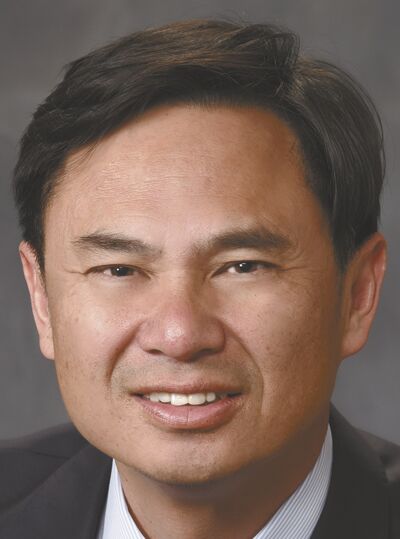
Wayne Lee is currently serving as a trustee on San Mateo County Community College District Board of Trustees and served nine years on the Millbrae’s City Council and twice as the mayor. He works in the nonpartisan and nonprofit space to improve the quality of life for San Mateo County residents.
Thank you for your guest perspective, Mr. Lee. I’d agree that many folks won’t bother patronizing businesses that have a dearth of available parking. Why bother when you can go to a shopping mall and patronize their food and retail shops, without worrying about parking. And of course, we have cities nickel and diming (or is it more half dollar and dollar) folks to obtain parking revenue, and to pay off contractors they’ve hired to hand out parking tickets. I appreciate your strategies for improvement and I don’t know if they were priority-listed but I don’t think items 2 and 3 would help as much as you’d hope, because again, it’s easier to patronize shopping malls.
The US has more vehicles than people with drivers license and for every single car there are 4-5 empty parking spots. Those are wasteful spaces, that don't bring any economical value. Many San Mateo downtowns have currently empty parking spots anyways.
So parking isn't the real problem. The most vibrant downtowns offer a mix of establishments: retail, food, entertainment, errands. They should be walkable, bikeable, accessible through public transportation and of course parking spots at the edges and corners would be great too.
Businesses in San Mateo County have not died because they weren't reachable by car, they died because the business environment around them wasn't mixed and attractive enough. Cinemas are empty, restaurants have become too expensive, "over-tipping" and "over-feeing" seems more pervasive than begging. If people are basically forced to tip 25% at the counter and before even seeing the food, they feel scammed. Retail has disappeared, everything that would be entertaining for children is gone.
A lot of this is currently missing along the Peninsula, that is why parking lots and parking garages are actually empty in many cities. A more solid parking management couldn't hurt as many company, school, churches or business parking spots are empty at various times of various days.
Keep the discussion civilized. Absolutely NO
personal attacks or insults directed toward writers, nor others who
make comments. Keep it clean. Please avoid obscene, vulgar, lewd,
racist or sexually-oriented language. Don't threaten. Threats of harming another
person will not be tolerated. Be truthful. Don't knowingly lie about anyone
or anything. Be proactive. Use the 'Report' link on
each comment to let us know of abusive posts. PLEASE TURN OFF YOUR CAPS LOCK. Anyone violating these rules will be issued a
warning. After the warning, comment privileges can be
revoked.
Please purchase a Premium Subscription to continue reading.
To continue, please log in, or sign up for a new account.
We offer one free story view per month. If you register for an account, you will get two additional story views. After those three total views, we ask that you support us with a subscription.
A subscription to our digital content is so much more than just access to our valuable content. It means you’re helping to support a local community institution that has, from its very start, supported the betterment of our society. Thank you very much!



(2) comments
Thank you for your guest perspective, Mr. Lee. I’d agree that many folks won’t bother patronizing businesses that have a dearth of available parking. Why bother when you can go to a shopping mall and patronize their food and retail shops, without worrying about parking. And of course, we have cities nickel and diming (or is it more half dollar and dollar) folks to obtain parking revenue, and to pay off contractors they’ve hired to hand out parking tickets. I appreciate your strategies for improvement and I don’t know if they were priority-listed but I don’t think items 2 and 3 would help as much as you’d hope, because again, it’s easier to patronize shopping malls.
The US has more vehicles than people with drivers license and for every single car there are 4-5 empty parking spots. Those are wasteful spaces, that don't bring any economical value. Many San Mateo downtowns have currently empty parking spots anyways.
So parking isn't the real problem. The most vibrant downtowns offer a mix of establishments: retail, food, entertainment, errands. They should be walkable, bikeable, accessible through public transportation and of course parking spots at the edges and corners would be great too.
Businesses in San Mateo County have not died because they weren't reachable by car, they died because the business environment around them wasn't mixed and attractive enough. Cinemas are empty, restaurants have become too expensive, "over-tipping" and "over-feeing" seems more pervasive than begging. If people are basically forced to tip 25% at the counter and before even seeing the food, they feel scammed. Retail has disappeared, everything that would be entertaining for children is gone.
A lot of this is currently missing along the Peninsula, that is why parking lots and parking garages are actually empty in many cities. A more solid parking management couldn't hurt as many company, school, churches or business parking spots are empty at various times of various days.
Welcome to the discussion.
Log In
Keep the discussion civilized. Absolutely NO personal attacks or insults directed toward writers, nor others who make comments.
Keep it clean. Please avoid obscene, vulgar, lewd, racist or sexually-oriented language.
Don't threaten. Threats of harming another person will not be tolerated.
Be truthful. Don't knowingly lie about anyone or anything.
Be proactive. Use the 'Report' link on each comment to let us know of abusive posts.
PLEASE TURN OFF YOUR CAPS LOCK.
Anyone violating these rules will be issued a warning. After the warning, comment privileges can be revoked.