Now that Lime has decided to pull their bikes out of participating cities, it leaves many wondering what’s next.
Last week, the company announced it was pulling bikes, and looking to replace them with scooters. For cities in San Mateo County, there was a bit of frustration and, um, wonder about the decision. South San Francisco was the first city to have them, then Burlingame, then San Mateo. San Mateo actually made the switch from docked bikes to Lime bikes after the green bikes proved to be more popular. The city also said it was not interested in scooters after some controversy in San Francisco with the proliferation of those little vehicles. So after trying one company (Social Bicycles, the blue ones) and switching to another (Lime, the green ones), San Mateo is facing an immediate future without those rentable bikes. But that won’t last long. The city may turn to another company (Jump, the red ones), but we will see.
So the only city here that might take Lime up on its offer of having scooters will be Foster City, and it will be interesting to see how it works.
The Lime experiment was short-lived, but seemed to go well. While there were complaints about people leaving the bikes around, they were definitely used and helped solve the “last mile problem” in which people have difficulty making it to their ultimate destination from a mass transit stop. There was also some amount of serendipity in that it seemed people sometimes just decided to hop on and go.
I was a little more excited about the regular bikes rather than the electric ones since it was nice to see more people finding a way to get a bit more exercise in their day-to-day lives — though the electric bikes certainly did fly.
But it appears the rentable bikes were not a long-lasting business model and is an example of the perils of public/private partnerships. Perhaps now some transportation planners can determine a way for a public agency to create their own bicycle borrowing network that matches up to buses, trains and shuttles and could be scaled countywide.
In the meantime, I wonder what will happen to all those green bicycles. If Lime doesn’t want to use them anymore, just where will they go? I’d hate to think of them going to a landfill — that’s certainly not very green.
Recommended for you
***
Gov. Gavin Newsom must be kicking himself for suggesting that the high-speed rail project was ending as we know it then later backtracking and saying, no, it’s fine. His announcement in the State of the State address last week caused a bit of stir. There was both concern and joy, depending on where you are on the issue.
The high-speed rail project obviously needed a reset, and Newsom is providing that. But it also caught the attention of President Trump who saw an opportunity to land some blows over federal funding for it. With California already fighting the feds on a number of different issues, it’s probably clear to Newsom now that you don’t drop your right hand when you are jabbing with your left.
With all this said, it might be time to really contemplate how we envision rail in this state. In European countries, you have electrified rail that acts as a commuter service in population centers, then speeds away into and through rural areas and into other population centers. Maybe it’s time we start thinking of rail in that way and extend and enhance our current commuter services from where they are now.
***
It seems like just yesterday that food truck Curry Up Now took the leap to brick and mortar on B Street in San Mateo. Curry Up Now was founded in 2009 by husband and wife Akash and Rana Kapoor, with support from Amir Hosseini, co-founder and senior vice president of operations. Now, it appears the Indian fast casual restaurant will soon find itself across the country — so you won’t have to go without your “sexy fries” for long. The company, now headquartered in South San Francisco, has locations in San Mateo (the original, opened in 2011), Palo Alto, San Francisco, San Jose and two other Bay Area spots, along with its famous food trucks and two of its Mortar & Pestle bars. It has franchise stores coming soon to Atlanta, Sacramento, Southern California, Utah, Colorado and New Jersey and is looking for more locations, according to its website. A company press release says it has 50 franchised and corporate stores in development across the nation and anticipates 100 spots by year’s end, with an additional 200 in 2020.
Now if that’s not a success story, I don’t know what is.
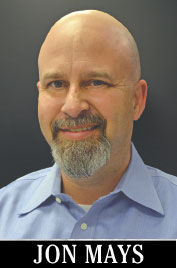
Jon Mays is the editor in chief of the Daily Journal. He can be reached at jon@smdailyjournal.com. Follow Jon on Twitter @jonmays.
Jon, in terms of HSR and Europe/Asia compared to the United States.... It seems density is a big factor..... in that Europe/Asia have it and we, comparatively, don't......Large subsidies......Only 2 HSR lines - world wide, one in France and one in Japan, are profitable......in the EU, the cheapest European rail line costs more than $50,000 per seat to operate annually......Options, like coach buses and even airplanes, are often cheaper...... Mobility, as you mentioned, remains an issue with HSR.
The City's contract with the previous vendor--for which it paid $90k setup then $50k/year---ended when that company just pulled out. So the City then called LimeBike (which some residents had promoted before, since it is free to cities--but the City staffer told us that wasn't true, which was incorrect). THAT is why the switch occurred, not because City staff made the switch. In December 2018, the City staff asked City Council to approve a moratorium on scooters, which it did, despite some residents objecting. Then Lime decided this business model didn't work. It is not a public/private partnership. It's all private. The City should have used the $140,000 it spent on the previous vendor instead on improving bike/ped non-car infrastructure so those of us with bikes would be happier to use them more often instead of cars.
To add to my comment below: LimeBike was free to cities (not users, of course). City Council banned scooters tentatively. Lime decided it would not make enough money on its bikes and not-always-helpful e-bikes. So City staff is probably both taken aback AND embarrassed.
Keep the discussion civilized. Absolutely NO
personal attacks or insults directed toward writers, nor others who
make comments. Keep it clean. Please avoid obscene, vulgar, lewd,
racist or sexually-oriented language. Don't threaten. Threats of harming another
person will not be tolerated. Be truthful. Don't knowingly lie about anyone
or anything. Be proactive. Use the 'Report' link on
each comment to let us know of abusive posts. PLEASE TURN OFF YOUR CAPS LOCK. Anyone violating these rules will be issued a
warning. After the warning, comment privileges can be
revoked.
Please purchase a Premium Subscription to continue reading.
To continue, please log in, or sign up for a new account.
We offer one free story view per month. If you register for an account, you will get two additional story views. After those three total views, we ask that you support us with a subscription.
A subscription to our digital content is so much more than just access to our valuable content. It means you’re helping to support a local community institution that has, from its very start, supported the betterment of our society. Thank you very much!




(3) comments
Jon, in terms of HSR and Europe/Asia compared to the United States....
It seems density is a big factor..... in that Europe/Asia have it and we, comparatively, don't......Large subsidies......Only 2 HSR lines - world wide, one in France and one in Japan, are profitable......in the EU, the cheapest European rail line costs more than $50,000 per seat to operate annually......Options, like coach buses and even airplanes, are often cheaper...... Mobility, as you mentioned, remains an issue with HSR.
https://reason.org/wp-content/uploads/files/high_speed_rail_lessons.pdf
The City's contract with the previous vendor--for which it paid $90k setup then $50k/year---ended when that company just pulled out. So the City then called LimeBike (which some residents had promoted before, since it is free to cities--but the City staffer told us that wasn't true, which was incorrect). THAT is why the switch occurred, not because City staff made the switch. In December 2018, the City staff asked City Council to approve a moratorium on scooters, which it did, despite some residents objecting. Then Lime decided this business model didn't work. It is not a public/private partnership. It's all private. The City should have used the $140,000 it spent on the previous vendor instead on improving bike/ped non-car infrastructure so those of us with bikes would be happier to use them more often instead of cars.
To add to my comment below:
LimeBike was free to cities (not users, of course).
City Council banned scooters tentatively.
Lime decided it would not make enough money on its bikes and not-always-helpful e-bikes.
So City staff is probably both taken aback AND embarrassed.
Welcome to the discussion.
Log In
Keep the discussion civilized. Absolutely NO personal attacks or insults directed toward writers, nor others who make comments.
Keep it clean. Please avoid obscene, vulgar, lewd, racist or sexually-oriented language.
Don't threaten. Threats of harming another person will not be tolerated.
Be truthful. Don't knowingly lie about anyone or anything.
Be proactive. Use the 'Report' link on each comment to let us know of abusive posts.
PLEASE TURN OFF YOUR CAPS LOCK.
Anyone violating these rules will be issued a warning. After the warning, comment privileges can be revoked.