I’d hoped to be hearing the gentle tapping of rain on my roof while writing this column, but no. While we did receive a nice little bit of rainfall Wednesday night — about a third of an inch — this season’s storms have been short in duration and lacking in significant amounts of moisture. So far, our rainfall totals are well below normal, to where the U.S. Drought Monitor has designated Northern California as being in “severe drought.”
It’s hard to deny that our climate is changing. While the average amount of rainfall over a period of years may stay roughly the same, the way in which we’ll receive it will change. Climate scientists expect we’ll experience greater extremes which, in our case, means more intense storms punctuated by longer and more severe periods of drought.
California doesn’t possess enough reservoir capacity to carry us safely through long periods of drought. For a variety of reasons, expanding our reservoir capacity to the needed degree just doesn’t seem feasible. Thus, we need to look to other solutions.
Conservation is one key to our future water woes. Reducing the amount that we use will stretch what little water makes its way into our system’s reservoirs. But that won’t be enough. We still need to find, or create, additional sources of potable water.
Redwood City’s recycled water system is one such source. Although the water it produces isn’t certified for drinking, it is usable for irrigation and, in buildings that are plumbed for it, to flush toilets. Recycled water has already reduced Redwood City’s demand for fresh water, and we should see additional reductions as the recycled water pipelines are extended further into the city. But even without new pipes, it helps. In past years my wife and I obtained hundreds of gallons, for free, from the city’s recycled water fill station for use on our landscaping.
Rain barrels are another great source. While these certainly won’t entirely satisfy a typical household’s irrigation needs, every bit helps. Years ago, I attached two 50-gallon tanks (for which I received a hefty rebate from the county) to my downspouts. It’s surprising how little rain is needed to fill them; as I write this, they are already full. Those 100 gallons of captured rainwater translate to 100 gallons of drinkable water that won’t be used in our garden.
Recommended for you
Rain barrels and recycled water are excellent first steps, but sooner than you might think we’ll need to find additional sources of drinkable water. Given that one of Redwood City’s greatest assets is its connection to the San Francisco Bay, it’s only natural to take a hard look at that essentially infinite supply accessible from within the city’s borders. While our Bay water is by no means drinkable, that is a problem that many countries (including Israel, Saudi Arabia and Australia) have already solved. Along with San Diego County.
San Diego’s desalination plant has been fully operational since the end of 2015, and currently produces nearly 50 million gallons of drinkable water each day. Considering Redwood City (plus some parts of San Carlos and Woodside, and nearby unincorporated areas) in total uses around 9 million gallons of potable water daily, our needs could be satisfied by a desalination plant one-fifth the size of San Diego’s plant. Although, it makes sense to build a larger plant that could also serve other Bay Area communities.
Desalination plants are expensive to build (including pipelines and upgrades to existing facilities, San Diego’s cost a whopping $1 billion), consume a great deal of energy and produce a salty brine that needs to be disposed. Overcoming the fiscal and environmental issues won’t necessarily be easy, but given what we are facing, shouldn’t we give serious consideration to constructing such a plant in Redwood City?
Although I would ideally like to see them returned to wetlands, given the need, Cargill’s salt ponds would seem to be a perfect location for a desalination plant. After all, Cargill’s salt harvesting process currently takes in Bay water and separates it into a salty brine and fresh water. It’s just that for Cargill, the salty brine — which is eventually transformed into industrial salt — is the objective, while the fresh water is allowed to evaporate. Salt harvesting uses the sun as its “power source” for the evaporative process; while solar panels could provide some of the power needed for desalination, generating enough for the entire operation would take a truly enormous solar installation.
I think it’s high time to give this some serious thought. If our current conditions reflect our “new normal,” water rationing could soon become a year-round way of life for us. With many new, large reservoirs likely being off the table, we must look to the Bay as a source for the water that our region so desperately needs.
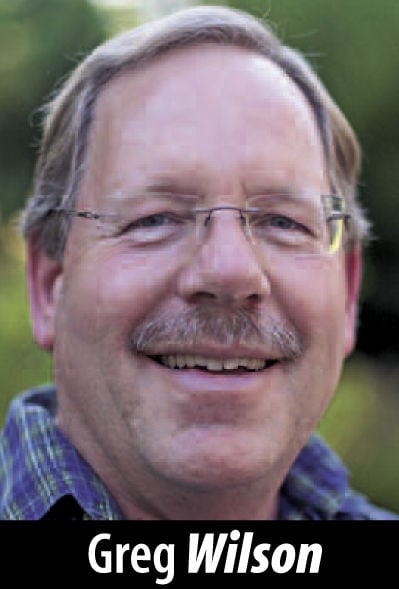
Greg Wilson is the creator of Walking Redwood City, a blog inspired by his walks throughout Redwood City and adjacent communities. He can be reached at greg@walkingRedwoodCity.com. Follow Greg on Twitter @walkingRWC.
worth looking into. good to see something on the table besides mudflats and homes. there's always two sides to a story - sometimes more than two. We already have Bair Island, which attracts more birds than people, and housing would bring in all sorts of problems, mainly traffic. Any other suggestions?
Keep the discussion civilized. Absolutely NO
personal attacks or insults directed toward writers, nor others who
make comments. Keep it clean. Please avoid obscene, vulgar, lewd,
racist or sexually-oriented language. Don't threaten. Threats of harming another
person will not be tolerated. Be truthful. Don't knowingly lie about anyone
or anything. Be proactive. Use the 'Report' link on
each comment to let us know of abusive posts. PLEASE TURN OFF YOUR CAPS LOCK. Anyone violating these rules will be issued a
warning. After the warning, comment privileges can be
revoked.
Please purchase a Premium Subscription to continue reading.
To continue, please log in, or sign up for a new account.
We offer one free story view per month. If you register for an account, you will get two additional story views. After those three total views, we ask that you support us with a subscription.
A subscription to our digital content is so much more than just access to our valuable content. It means you’re helping to support a local community institution that has, from its very start, supported the betterment of our society. Thank you very much!




(1) comment
worth looking into. good to see something on the table besides mudflats and homes. there's always two sides to a story - sometimes more than two. We already have Bair Island, which attracts more birds than people, and housing would bring in all sorts of problems, mainly traffic. Any other suggestions?
Welcome to the discussion.
Log In
Keep the discussion civilized. Absolutely NO personal attacks or insults directed toward writers, nor others who make comments.
Keep it clean. Please avoid obscene, vulgar, lewd, racist or sexually-oriented language.
Don't threaten. Threats of harming another person will not be tolerated.
Be truthful. Don't knowingly lie about anyone or anything.
Be proactive. Use the 'Report' link on each comment to let us know of abusive posts.
PLEASE TURN OFF YOUR CAPS LOCK.
Anyone violating these rules will be issued a warning. After the warning, comment privileges can be revoked.