
In 1962, in her book, "Silent Spring,” Rachel Carson wrote, "For the first time in the history of the world, every human being is now subjected to contact with dangerous chemicals, from the moment of conception until death.”
In 2000, the June 19 issue of "U.S. News and World Report”, featured an article, "Kids at Risk.” It warned us that "Chemicals in the environment come under scrutiny as the number of childhood learning problems soars. One in every six children in America suffers from problems such as autism, aggression, dyslexia, and attention deficit hyperactivity disorder.” Now, in 2010, the "Journal of Pediatrics” has concluded that an association exists between exposure to pesticides and increased risk of ADHD in children.
Between 2000 and 2008, government was eerily silent on the subject. A "Chronicle” editorial described that time as "… two terms of a Republican White House that hired industry insiders, dodged environmental and consumer safety problems, and fervently believed that self-regulation would protect the public. It was a boon for business, but it cost the public dearly.”
In her recent book, "The Body Toxic,” Nena Baker warns us; "In the United States, our chemical neighborhood includes more than 80,000 industrial substances registered for commercial purposes with the EPA. About ten thousand of these chemicals are widely used in everything from clothes, carpeting, household cleaners, and computers to food, food containers, paint, cookware and cosmetics. But the vast majority of them have not been tested for potential side effects because the U.S. Toxic Substance Control act of 1976 does not require it!” The EPA has required testing of only 200 and restricted just five.
As we can see by the above and following reports, it seems we are now being informed about the problem more regularly. The May 24 issue of "Time” magazine included an article titled, "Cancer, Cancer, Everywhere.” It is based on a report by The President’s Cancer Panel” — "On the risk of cancer from chemicals and other substances in the environment.” On May 17, the "Chronicle” featured an article, "Water supply tainted by nitrates.” On June 2, we heard on a television news report that arsenic, cadmium, lead and mercury have been found in protein drinks.
U.S. chemical and manufacturing industries continue to fight regulation, while Europe moves ahead with strict prohibitions against the most harmful toxins. Seems the European Union believes regulation is good for business because it inspires consumer confidence and saves money in the long run. Consider phthalates, the chemicals (along with BPA) that have for been used in babies’ and children’s products for years. In his book, "Exposed,” Mark Shapiro explains the difference between the U.S. and European approach to harmful chemicals. "Facing potential damage to male infants, the European Union determined that action was warranted. Awaiting further definitive confirmation of the links between phthalate exposure and endocrine troubles in infants years later, the United States government has opted not to act.”
Recommended for you
Rich Smith and Bruce Levine, authors of "Slow Death by Rubber Ducky,” describe what we face today. "… Regardless of age, ethnicity, place of work or residence, everyone is contaminated. Even the most clean living among us is polluted. And even the youngest are vulnerable. Unborn babies were found to have hundreds of chemicals in their little bodies, clearly indicating that toxins are passed on to children not only through breast milk during nursing, but also through the placenta during pregnancy.”
"The manmade compounds that end up in the soil, water and air do not disappear; they mix with complex ecosystems of nature that animals depend on. We have made a panoply of discoveries about the havoc man-made chemicals, from pesticides to Prozac, create in the natural systems they invade. Even tiny doses of certain chemicals can have side effects no one ever anticipated. Our better living through chemistry can become nature’s nightmare.” — Daniel Golman, "Ecological Intelligence.”
Shouldn’t we be able to feed our children without worrying about noxious chemicals in and on their food? Shouldn’t we be able to take a shower without being concerned about the poisons emanating from the vinyl curtain, from the spray of water, the shampoo, any scented product that we may wish to apply to our bodies? Shouldn't we feel free to allow the baby to crawl on the carpet and children to play on he lawn without the fear that they are absorbing chemical fabric protection or pesticides? Shouldn’t we be able to trust that our regulating agencies are doing their job?
"For more than three decades, the chemical industry, with the complicity of our elected leaders, has kept us in the dark about the toxicity of everyday substances, successfully resisted policy efforts that would better protect the public. It’s high time for chemical makers and Congress to come clean.” — Baker.
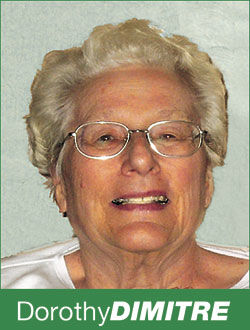
Since 1984, Dorothy Dimitre has written close to 500 columns for various local newspapers. Her e-mail address is gramsd@aceweb.com.


(0) comments
Welcome to the discussion.
Log In
Keep the discussion civilized. Absolutely NO personal attacks or insults directed toward writers, nor others who make comments.
Keep it clean. Please avoid obscene, vulgar, lewd, racist or sexually-oriented language.
Don't threaten. Threats of harming another person will not be tolerated.
Be truthful. Don't knowingly lie about anyone or anything.
Be proactive. Use the 'Report' link on each comment to let us know of abusive posts.
PLEASE TURN OFF YOUR CAPS LOCK.
Anyone violating these rules will be issued a warning. After the warning, comment privileges can be revoked.