Faced with a potential $24 billion shortfall, Gov. Gavin Newsom has proposed a series of budget cuts across a number of key issues. San Mateo County’s state lawmakers say the proposal is prudent while also vowing to continue to fight for Peninsula interests.
From affordable housing initiatives and workforce development to climate resiliency programs and transportation, Newsom has proposed skimming money off the top of programs rather than making massive cuts in a few areas or dipping into the state’s $35.6 billion rainy day fund. Some of the proposed cuts have been categorized as “trigger reductions” that could be reversed if economic trends see a positive shift.
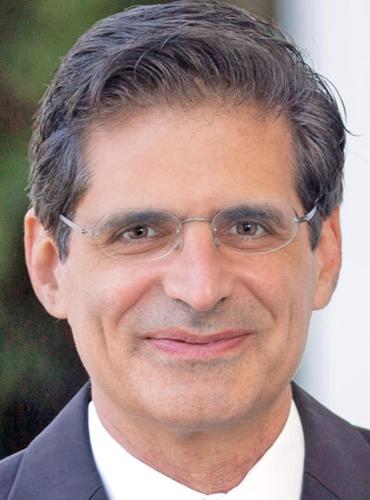
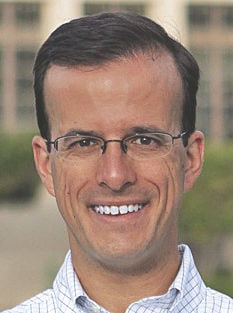
Assemblymember Marc Berman, D-Palo Alto, said the proposal “reflects our uncertain economic reality,” while state Sen. Josh Becker, D-San Mateo, said he’s not very optimistic that trigger reductions will be taken off the table by May when budget revisions will be made public.
Meanwhile, Assemblymember Diane Papan, D-San Mateo, said she feels the proposal presents a wait-and-see approach, allowing state officials to negotiate over smaller cuts while a fuller picture of the state’s economy develops.
“In my gut, I’m leaning toward optimism. I feel like we’re taking incremental steps along the way to see if we can combat inflation. I think what’s been proposed is measured and tailored towards let’s see where we are in May. It’s not doomsday, that’s not what I’m seeing or feeling,” Papan said.
The proposal comes a year after the state celebrated a nearly $100 billion budget windfall, which was largely allocated as one-time bumps to programs. Berman said responsible budgeting practices over the past few years now positions the state to weather a potential financial recession while still investing into public programs.
Recommended for you
Continued public investments have also been made possible, he said, by the state’s rainy day fund that has been built up over the past decade of budget cycles.
“This year, even though we’re anticipating a budget deficit, we’re still fully funding programs that impact the most vulnerable communities,” Berman said. “I think you’ll see us maintaining at-pace going forward. I don’t know that you’ll see us accelerating the pace of things but I don’t anticipate you’ll see us slow down.”
Unlike many other areas, dollars for education has largely gone untouched and in some cases, has been expanded. Becker said he was proud to see the continued support for the state’s expanded transitional kindergarten program, which aims to eventually enroll all children as young as three into public school, and the financial backing for public secondary schools.
But one area he’s concerned to see the state “pumping the brakes” is climate change. Of the $54 billion the state promised to spend over the next five years on its climate agenda in the 2021 and 2022 Budget Acts, the current budget proposal maintains about $48 million or 89% of that promise, according to the state’s summary.
“We’re looking at a budget shortfall of anywhere from $22.5 [billion] to $24 billion, so on the one hand, maintaining about 90% of the money for environmental and climate change programs is terrific news,” said Becker, who will chair a budget subcommittee on resources, environmental protections and energy, in a press release. “On the other hand, if federal money isn’t available to backfill some of those proposed cuts, pulling back on these climate and environmentally-sensitive investments now is going to make progress that much harder.”
Similarly, Papan said she was happy to see $135.5 million committed to urban flood risk reduction but also vowed to continue to fight for protections against the “triple threat” — droughts, floods and wildfires.
But Papan said she’ll also be advocating for the Peninsula’s transportation needs, noting Caltrain has made substantial progress on its electrification efforts that she’s not willing to see stunted.
Like his colleagues, Berman also vowed to advocate for climate initiatives, noting the region and broader state are currently experiencing the impacts of extreme weather, but also highlighted affordable housing and combating fentanyl and illicit drug use as top issues.
“I wish I could fight for everything,” Berman said. “We have no shortage of needs.”
Becker: "But one area he’s concerned to see the state “pumping the brakes” is climate change. Of the $54 billion the state promised to spend over the next five years on its climate agenda in the 2021 and 2022 Budget Acts, the current budget proposal maintains about $48 million or 89% of that promise, according to the state’s summary. "
If Becker, Papan, Bergman were really concerned about climate change and sustainability, why are they constantly fighting FOR more speed and more highway expansions and AGAINST anything involving children on bicycles?
Papan: she voted against bike lanes for children in a low-income neighborhood. The bike lanes were implemented. Then she joined the group that were scheming to take them down again.
After that she was looking for ways to regulate and restrict children on e-bikes rather than making sure they get the infrastructure that makes riding safer.
Becker: He was also looking into discriminating against children and seniors on e-bikes rather than going after drunk and distracted drivers as his Sacramento colleagues have been doing. He also favors a electric market model that would San Mateo County allow to "greenwash" their carbon by trading it with red states (like Arizona, Utah, Idaho) that don't care about their carbon.
Bergman: He wants to increase speed around Menlo Park schools from 15 mph to 20 mph. 20mph is generally where "killing speed" starts.
So why do San Mateo County lawmakers constantly fight the most sustainable form of transportation out there, when they claim they are concerned about Climate Change?
Count the number of wind turbines and bike lanes around San Mateo County schools and you know what these people really think.
Keep the discussion civilized. Absolutely NO
personal attacks or insults directed toward writers, nor others who
make comments. Keep it clean. Please avoid obscene, vulgar, lewd,
racist or sexually-oriented language. Don't threaten. Threats of harming another
person will not be tolerated. Be truthful. Don't knowingly lie about anyone
or anything. Be proactive. Use the 'Report' link on
each comment to let us know of abusive posts. PLEASE TURN OFF YOUR CAPS LOCK. Anyone violating these rules will be issued a
warning. After the warning, comment privileges can be
revoked.
Please purchase a Premium Subscription to continue reading.
To continue, please log in, or sign up for a new account.
We offer one free story view per month. If you register for an account, you will get two additional story views. After those three total views, we ask that you support us with a subscription.
A subscription to our digital content is so much more than just access to our valuable content. It means you’re helping to support a local community institution that has, from its very start, supported the betterment of our society. Thank you very much!












(1) comment
Becker: "But one area he’s concerned to see the state “pumping the brakes” is climate change. Of the $54 billion the state promised to spend over the next five years on its climate agenda in the 2021 and 2022 Budget Acts, the current budget proposal maintains about $48 million or 89% of that promise, according to the state’s summary. "
If Becker, Papan, Bergman were really concerned about climate change and sustainability, why are they constantly fighting FOR more speed and more highway expansions and AGAINST anything involving children on bicycles?
Papan: she voted against bike lanes for children in a low-income neighborhood. The bike lanes were implemented. Then she joined the group that were scheming to take them down again.
After that she was looking for ways to regulate and restrict children on e-bikes rather than making sure they get the infrastructure that makes riding safer.
Becker: He was also looking into discriminating against children and seniors on e-bikes rather than going after drunk and distracted drivers as his Sacramento colleagues have been doing. He also favors a electric market model that would San Mateo County allow to "greenwash" their carbon by trading it with red states (like Arizona, Utah, Idaho) that don't care about their carbon.
Bergman: He wants to increase speed around Menlo Park schools from 15 mph to 20 mph. 20mph is generally where "killing speed" starts.
So why do San Mateo County lawmakers constantly fight the most sustainable form of transportation out there, when they claim they are concerned about Climate Change?
Count the number of wind turbines and bike lanes around San Mateo County schools and you know what these people really think.
Welcome to the discussion.
Log In
Keep the discussion civilized. Absolutely NO personal attacks or insults directed toward writers, nor others who make comments.
Keep it clean. Please avoid obscene, vulgar, lewd, racist or sexually-oriented language.
Don't threaten. Threats of harming another person will not be tolerated.
Be truthful. Don't knowingly lie about anyone or anything.
Be proactive. Use the 'Report' link on each comment to let us know of abusive posts.
PLEASE TURN OFF YOUR CAPS LOCK.
Anyone violating these rules will be issued a warning. After the warning, comment privileges can be revoked.