
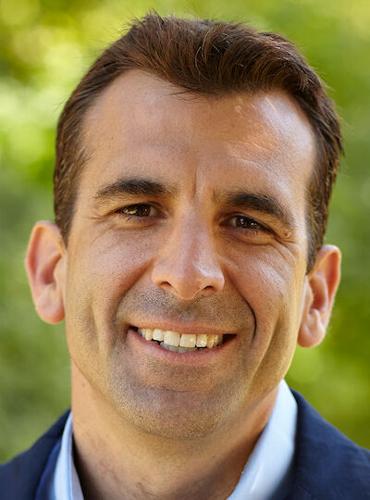
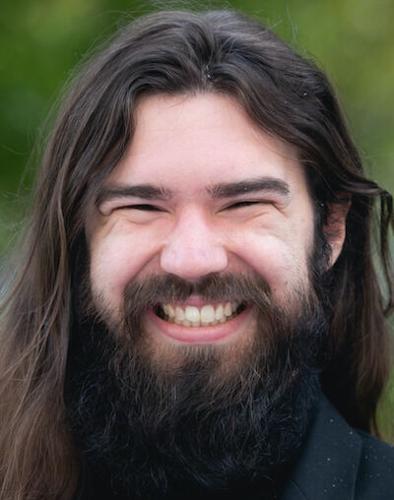
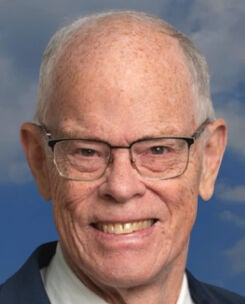
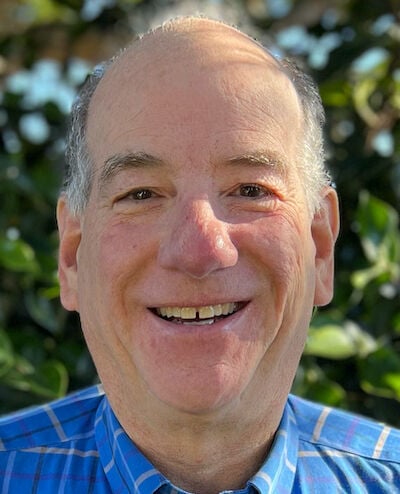

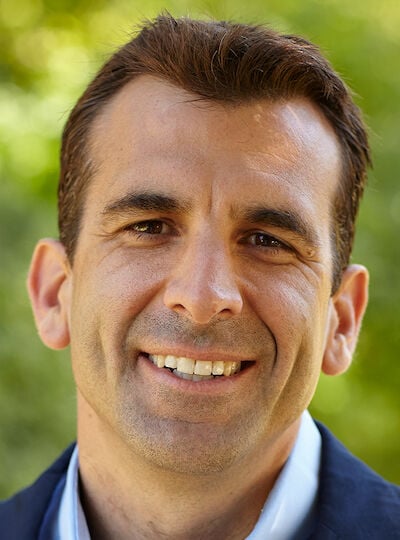

Incumbent U.S. Rep. Sam Liccardo, D-San Jose, is defending the District 16 seat he has held for one term against three challengers: Republicans Kevin Johnson and Peter Soule, a law student and businessman, respectively, and independent Jotham Stein, a lawyer.
Liccardo’s legislative tenure in Congress thus far has been defined by narrowing paths for bipartisan compromise, authoring five bills co-sponsored by Republicans that largely focus on eliminating the red tape on housing production, among other issues.
“If we’re going to find a pathway forward, we need to find ways of identifying those areas on the Venn diagram where Democrats and Republicans can agree,” he said. “That’s one reason why I took on, for example, housing … because it’s a critical and urgent issue for Americans. There was a housing crisis before Donald Trump became president. There’s going to be a housing crisis after Donald Trump leaves office.”
He acknowledged the partisan and unproductive nature of the current Congress presents an ongoing challenge for Democrats, but highlighted work on a tax credit to transform unused office and commercial buildings to housing as a productive step for Americans. As a Democrat, Liccardo has also largely joined his party in pushing back against the Trump administration’s policies whenever possible.
Stein is running for the seat because he believes the two-party system is broken, he said, leaving politicians to fight with one another while ignoring the everyday issues that Americans face.
“I’m an independent. I’ll talk to you about anything. I’ll switch my plan. I’ll modify my plan. I’ll adopt your plan. I don’t have to kowtow to a party who takes a position or platform,” he said.
His platform is ambitious, he acknowledged, and includes plans for constitutional amendments that would end gerrymandering, reforming campaign finance laws and instituting congressional term limits. For Stein, solving the issues that make politicians’ greatest focus the consolidation of power and money is key to working on other issues, like his plan to fix Social Security by eliminating caps on income subject to tax and raising the normal retirement age.
“That’s what’s wrong with our country. Why haven’t they fixed Social Security? Both Democrats and Republicans have been in power over the last 20 years? Nobody’s fixed Social Security, healthcare,” Stein said. “They’d rather fight with each other and not get something done.”
Liccardo, for his part, also said a constitutional amendment declaring that campaign spending is not protected speech was necessary before any meaningful finance reform in the area could be made.
Republican candidate Johnson said his major priorities if elected would be lowering the cost of living through reductions in taxes, as well as investigating government fraud and spending waste. Efficient financial spending would allow for greater investment in infrastructure, for example, including crumbling roads, he said.
Though he voted for Trump in the last election, he said he was uninterested in acquiescing to the president on areas where they might disagree.
“I think that by focusing on the policies rather than the people and the propaganda from either side is the way forward … so that we can get back to kitchen-table issues and actually helping Americans, rather than giving them entertainment via just an absolute fiasco,” Johnson said.
The other Republican candidate in the race, Peter Soule, did not respond to requests for comment. His website presents a host of issues largely in line with the Republican party, however, including withholding federal dollars from sanctuary cities, removing restrictions on oil drilling, ending governmental waste, fraud and abuse and protecting parental school choice.
“Our current congressional District 16 representative does not support making life better, safer and more affordable for the people of California,” Soule’s website reads. “Send me to Congress and I will absolutely advocate for common sense solutions to make the lives of our neighbors safer, more affordable and pave the way for the next generation.”
Affordability
Affordability is a cornerstone issue for most politicians running in local, state and federal elections across the country. The candidates in the District 16 race pointed to differing areas where the federal government could position itself to help Americans struggling to pay for day-to-day necessities.
For Stein, that looks like cutting government spending when it’s not serving people and working ineffectively, highlighting the Trump administration’s focus on immigration enforcement while cutting healthcare subsidies as an example.
“We want to have programs that help the people. But there’s been a lot of wasted spending. For example, there are a lot of policies that are now driving up the cost of things,” he said. “I use immigration as one of them, right? We have a terrible focus on and a completely inefficient focus, and we see, a money focus, on what’s going on in immigration.”
Recommended for you
Spending smarter and addressing government fraud would be integral to saving money at the federal level, Johnson said, also suggesting to invest Social Security money rather than letting it sit.
While Liccardo acknowledged that some of his more ambitious ideas to address the cost-of-living crisis and lack of housing supply, like quadrupling the number of housing choice vouchers for low-income families, for example, had been curtailed, he maintained the issue was one that could still be addressed legislatively.
“It’s not as though we suddenly stopped working on those ideas. We’re still working on many of those ideas,” he said. “We recognize the pathway is narrower, and obviously, as with all legislation, it takes time.”
AI
Aside from housing, Liccardo said he’s been working on the issue of artificial intelligence-related legislation, suggesting alternatives to future Republican proposals that would preempt state regulations on the technology. Instead, the federal government should be incentivizing AI companies to alleviate the risks of their technology, like cybersecurity and privacy concerns.
“I have been engaged with colleagues to propose alternatives that focus on what I would call conditional preemption, ensuring that there are standards and thresholds imposed in federal regulators that would provide incentives for companies to adopt practices that would make AI safer,” he said.
Johnson believes that the federal government should set certain baseline standards for the technology, including around child protections and individuals’ rights to data deletion.
“I understand that it’s a fine balance between safety and overreach, but also we don’t want companies to be overreaching as well, which is why I’m fairly anti-monopolistic,” he said. “I think taking bite-size pieces … would be the way to go.”
Stein said he did not yet have a position on the topic of AI regulation, though, he acknowledged the technology came with both unique pitfalls and benefits.
Foreign, domestic affairs
When it comes to the topic of the United States’ role in foreign affairs, both Liccardo and Stein emphasized that Congress needed to take back its power in the space and pointed to the ongoing war with Iran as an example. Stein brought the issue back to domestic politics and said before reforms were made, institutions would continue to crumble.
“What we need to start doing, however, is fixing the problems we have in our country and the problem with gerrymandering, the problem with campaign finance reform,” he said. “It’s reflective of what happened with respect to Iran, that nobody consulted Congress, and the Congress didn’t say you don’t have a choice.”
Congress should continue to push for a war powers resolution that could halt the “misguided” war in Iran, Liccardo said, noting that he would continue to push Republican colleagues on joining that effort.
“The idea is to try to beat this drum that will engage more of our Republican colleagues into exercising their independent muscles, which have atrophied severely over the last two years,” he said.
Johnson, who described himself as “a bit of an American imperialist, but with a smile,” delineated an approach to foreign policy that centers what he termed American exceptionalism.
“I am in favor of America World Police and ensuring that the oceans don’t have pirates on them, bare minimum, right?” he said. “My foreign policy is like, I want a Pan American highway. I want English to be our main language, with Spanish and Portuguese as our secondary languages, so that we can be like, ‘Hey, these are the languages of the new world.’”
Both Johnson and Liccardo highlighted environmentally-related issues as of specific significance to District 16, with Johnson pointing to conservation efforts and Liccardo focusing on a two-pronged approach to both wildfire mitigation and coastal resilience. Stein maintained that his previously-delineated domestic policy issues would be of equal importance to District 16 residents, however, he said he would happily hear out constituents’ individual concerns.






(1) comment
Folks, it is obvious Democrats don’t put the welfare of Americans first so I’d recommend voting for anyone but Liccardo. Personally, it sounds like Peter Soule has the best ideas.
Welcome to the discussion.
Log In
Keep the discussion civilized. Absolutely NO personal attacks or insults directed toward writers, nor others who make comments.
Keep it clean. Please avoid obscene, vulgar, lewd, racist or sexually-oriented language.
Don't threaten. Threats of harming another person will not be tolerated.
Be truthful. Don't knowingly lie about anyone or anything.
Be proactive. Use the 'Report' link on each comment to let us know of abusive posts.
PLEASE TURN OFF YOUR CAPS LOCK.
Anyone violating these rules will be issued a warning. After the warning, comment privileges can be revoked.