When the Spanish declared ownership of Alta, California, it gave the church the right to govern it and do with it what it seemed fit. However, the Army was to maintain order and protect the church. This arrangement caused friction from the beginning. The church controlled the land and did not give out grants of the land and they also did not allow any exchange of merchandise by any foreign power. This all changed when Mexico gained control of the Spanish Empire in 1822. Commerce was then allowed and land was granted to individuals that were valuable to the Mexican government.
The main merchandise Mexicans had to sell was what came from their lands — cattle.
The meat could not be exported as it spoiled fast so that left the hide as a marketable commodity. Its use as clothes, jackets, hats, etc. was in great demand by the Americans on the East Coast.
The few ships that had sailed into the San Francisco Bay prior to 1822 had used the port that faced the Presidio at the northwest section of the Peninsula. It was inadequate as a port due to the swamp and when the Yankee Schooners began arriving en masse a new port was sought out.
Yerba Buena Port
The best port, although far from perfect, was situated on the east side of the Peninsula. It was called the Yerba Buena Port. A problem immediately arose — the Mission Dolores had been the center of activity for the Spanish and it was a few miles distance for the new port. For years, there had been a trail, called Calle de la Fundacion, that led from the Presidio to the area of Port Yerba Buena.
It was used for travel from the Presidio to an area where a few men grew vegetables such as potatoes. There was a sweat house by Montgomery Street where the natives steam bathed and performed rituals before a big hunting trip.
The lower part of this area had a sandy beach by the Bay then the land began rising in elevation slowly until Kearny Street was reached.
There the Calle de la Fundacion (which was later named Kearny Street) became a border where the terrain became steep and difficult to climb.
In 1835, a pueblo (El Paraje de Yerba Buena) was authorized between Broadway and Pine and Stockton streets and the Bay. There was an area between Kearny, Clay and Washington streets and Brenham Place that was set aside, in traditional Mexican fashion, for the function of the government. Candelario Miramontes, who lived by the Presidio, planted potatoes on the site. Miramontes later was granted a Rancho in the Half Moon Bay area.
Mexican property
In 1834, Capt. Don William Antonio Richardson platted out the area in 100-vera lots (275 square feet each). Richardson had married a Spanish woman, Dona Maria Antonia Martinez, so he was eligible to purchase Mexican property.
Recommended for you
He, his wife and three children pitched a tent on June 25, 1835, at the corner of Washington and Grant streets (827 Grant St.). Three months later, he paid $25 for the lot and built a more substantial house and a fence to protect his family from the mountain lions and bears.
In 1844, the Mexican governor, Jose Figueroa, ordered that a Custom House (56 feet long, 22.5 feet wide) be built at the corner of Brenham Place and Washington Street. He had four rooms, two long verandas and a tile roof.
At 6 a.m., July 9, 1846, the men of the USS Portsmouth were ordered to breakfast then they were to dress in clean white frocks, blue pants, black hats and shoes and prepare for muster. Word had come to Capt. John Montgomery that the American flag had been raised in Monterey and Commodore John Slope had ordered Montgomery to raise the flag in Yerba Buena.
Marines under the command of Lt. Watson were to accompany Montgomery and the group. After landing at Clark’s Point (Yerba Buena cove) the group marched to the Customs house accompanied by the tune of Yankee Doodle.
Alta, California
With 30 or 40 people of all nations looking on, Capt. Montgomery declared Alta, California, in control by the American government.
By Jan. 30, 1847, 20 buildings clustered around Portsmouth Square. Four of them were shops, one was a hide warehouse, one a mule-powered gristmill, one a wash house, two doubled as hotels and tap rooms and one was a saloon.
The first public school was built in the Square in 1847, the first one in California. On May 11, 1848, the discovery of gold was announced from the veranda.
American flag
The first Admission Day celebration was held Oct. 29, 1850, when California became the 31st state. The first American flag was raised here in the square that would eventually be named after the USS Portsmouth that anchored in the Bay and took control of Yerba Buena.
The pueblo was renamed San Francisco in 1847 by the alcalde Washington A. Bartlett (as the mayor was called) and the city had 157 buildings surrounding the plaza.
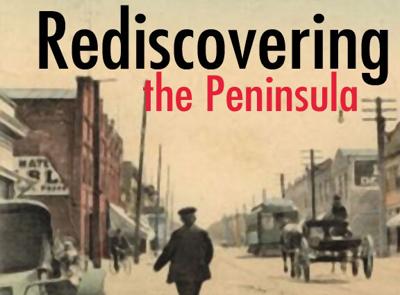
Rediscovering the Peninsula runs every weekend. It is compiled through our archives created by Jim Clifford and the late Darold Fredricks.
Keep the discussion civilized. Absolutely NO
personal attacks or insults directed toward writers, nor others who
make comments. Keep it clean. Please avoid obscene, vulgar, lewd,
racist or sexually-oriented language. Don't threaten. Threats of harming another
person will not be tolerated. Be truthful. Don't knowingly lie about anyone
or anything. Be proactive. Use the 'Report' link on
each comment to let us know of abusive posts. PLEASE TURN OFF YOUR CAPS LOCK. Anyone violating these rules will be issued a
warning. After the warning, comment privileges can be
revoked.
Please purchase a Premium Subscription to continue reading.
To continue, please log in, or sign up for a new account.
We offer one free story view per month. If you register for an account, you will get two additional story views. After those three total views, we ask that you support us with a subscription.
A subscription to our digital content is so much more than just access to our valuable content. It means you’re helping to support a local community institution that has, from its very start, supported the betterment of our society. Thank you very much!










(0) comments
Welcome to the discussion.
Log In
Keep the discussion civilized. Absolutely NO personal attacks or insults directed toward writers, nor others who make comments.
Keep it clean. Please avoid obscene, vulgar, lewd, racist or sexually-oriented language.
Don't threaten. Threats of harming another person will not be tolerated.
Be truthful. Don't knowingly lie about anyone or anything.
Be proactive. Use the 'Report' link on each comment to let us know of abusive posts.
PLEASE TURN OFF YOUR CAPS LOCK.
Anyone violating these rules will be issued a warning. After the warning, comment privileges can be revoked.