Burlingame is moving forward with the creation of a new neighborhood slated to be among the most significant additions of residential units on the Peninsula in recent decades.
The city plans to transform a 0.2-square-mile area surrounding Rollins Road near the Millbrae train station — currently largely low density commercial and industrial buildings — into a walkable, transit oriented community with large multifamily developments that could usher in several thousand new residents in coming years.
The city’s general plan, adopted in 2019, calls for nearly 3,000 units of housing to be added citywide, the Rollins Road area to account for 1,200 of them. But with housing affordability worsening and state goals released indicating Burlingame will need to permit 3,257 units of housing between 2023 and 2031, the city is eyeing the area to expand its original projections.
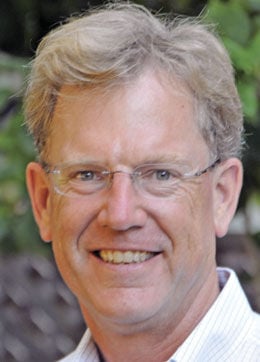
Michael Brownrigg
“This is a crucial and very exciting endeavor by the city,” said Councilmember Michael Brownrigg. “If every city created a general plan that imagined growing its population by 20% in 10 years, we’d solve the housing crisis.”
The council hopes to adopt a specific plan for the neighborhood by spring of next year, a document that will provide detailed guidelines and design standards for developers to follow.
At least two projects in the area have already been approved, a 265-unit building at 1 and 45 Adrian Court and a 298-unit building at 30 Ingold Road. Construction on the projects, which will integrate some commercial uses, is expected to begin in coming years. A third submitted project by developer Hanover Company looks to build another 420 units at 1855 to 1881 Rollins Road.
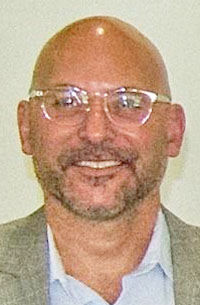
Kevin Gardiner
“As jobs continue to increase, we need more housing for the people taking those jobs.” said Community Development Director Kevin Gardiner. “The City Council has been very cognizant of the need to balance the workforce numbers with the housing numbers and have Burlingame provide its fair share of housing.”
Additionally, falling short of the state goal, called the Regional Housing Needs Allocation, could result in the ability of developers to leverage state laws to force the city to approve developments without them being subject to the city’s usual planning process. It could also limit the city’s ability to receive certain state funding.
Recommended for you
While Burlingame hopes to keep the Rollins Road neighborhood mostly residential, it will join with an area also in the process of a massive transformation in Millbrae. The plans for Millbrae to develop the area surrounding the BART and Caltrain station, which is also planned as a future high-speed rail stop, with multiple biotech campuses, office and retail space, hotels and housing.
Gardiner compared the Rollins Road transformation to the Dogpatch neighborhood in San Francisco, an area transitioning from aging industrial buildings to include housing along with large-scale commercial uses.
“The Rollins Road area in general seems to capture people’s imaginations in that it will be a unique neighborhood unlike anything else in Burlingame,” said Gardiner “It’s a coexistence of industrial uses and residential uses which is unique. That will appeal to other types of households than in other parts of Burlingame, and I think that’s part of the point.”
With the neighborhood bordered by Highway 101 and train tracks, a pedestrian bridge or tunnel is also being explored to link the site with California Drive to the west. Mayor Ann O’Brien Keighran emphasized the need for the future residents to be integrated with the rest of the community.
“We want them also to visit the rest of Burlingame and not be isolated in their own neighborhood,” she said. “I do think Broadway can really benefit from developing this neighborhood.”
Councilmember Donna Colson thanked Burlingame residents for having “open hearts and open minds” and not “battling” the city on the expansion.
“I hope that when people look at the City Council in Burlingame, the city doesn’t get cast as a ‘not in my backyard’ city,” she said. “This is a yes in my backyard.”
Usually with these types of articles, mention is made of the number of affordable housing units. Can we assume none are designated as affordable? Maybe the writer didn’t have time to research the number of affordable units. Or maybe developers were allowed to pay fees and buy their way out of providing affordable housing units? Similar to how someone can buy carbon credits and continue to pollute as much as they want.
So, Burlingame is authorizing a new biotech campus that will employ 2,000 workers. I am almost certain that these are going to be well-paid folks further making starter homes in the area even less affordable. Will they be moving into the new Millbrae housing or buying up homes in the area? Are these city councils connecting the dots or are they just as oblivious as our current president? What about traffic, water, sewage, energy and the general decline in our quality of life?
Of the 563 units that have been approved to date, 81 are designated for Low Income (80% AMI) households. All 81 will be built on site within the buildings.
Again, it is helpful to talk actual dollars when touting low income households. In 2021, that is $146,350 for a family of four, and $102,450 for a single person. Two more categories - "very low" and "extremely low" are completely absent in the promised affordable units. Once built, in maybe 2022, or 2023, or beyond, what are the area median incomes expected to be then? Where do seniors living on fixed incomes live? Where does a couple of average earners live? Not needed in Burlingame. May as well erect a sign.
Keep the discussion civilized. Absolutely NO
personal attacks or insults directed toward writers, nor others who
make comments. Keep it clean. Please avoid obscene, vulgar, lewd,
racist or sexually-oriented language. Don't threaten. Threats of harming another
person will not be tolerated. Be truthful. Don't knowingly lie about anyone
or anything. Be proactive. Use the 'Report' link on
each comment to let us know of abusive posts. PLEASE TURN OFF YOUR CAPS LOCK. Anyone violating these rules will be issued a
warning. After the warning, comment privileges can be
revoked.
Please purchase a Premium Subscription to continue reading.
To continue, please log in, or sign up for a new account.
We offer one free story view per month. If you register for an account, you will get two additional story views. After those three total views, we ask that you support us with a subscription.
A subscription to our digital content is so much more than just access to our valuable content. It means you’re helping to support a local community institution that has, from its very start, supported the betterment of our society. Thank you very much!










(4) comments
Usually with these types of articles, mention is made of the number of affordable housing units. Can we assume none are designated as affordable? Maybe the writer didn’t have time to research the number of affordable units. Or maybe developers were allowed to pay fees and buy their way out of providing affordable housing units? Similar to how someone can buy carbon credits and continue to pollute as much as they want.
So, Burlingame is authorizing a new biotech campus that will employ 2,000 workers. I am almost certain that these are going to be well-paid folks further making starter homes in the area even less affordable. Will they be moving into the new Millbrae housing or buying up homes in the area? Are these city councils connecting the dots or are they just as oblivious as our current president? What about traffic, water, sewage, energy and the general decline in our quality of life?
Of the 563 units that have been approved to date, 81 are designated for Low Income (80% AMI) households. All 81 will be built on site within the buildings.
Again, it is helpful to talk actual dollars when touting low income households. In 2021, that is $146,350 for a family of four, and $102,450 for a single person. Two more categories - "very low" and "extremely low" are completely absent in the promised affordable units. Once built, in maybe 2022, or 2023, or beyond, what are the area median incomes expected to be then? Where do seniors living on fixed incomes live? Where does a couple of average earners live? Not needed in Burlingame. May as well erect a sign.
Welcome to the discussion.
Log In
Keep the discussion civilized. Absolutely NO personal attacks or insults directed toward writers, nor others who make comments.
Keep it clean. Please avoid obscene, vulgar, lewd, racist or sexually-oriented language.
Don't threaten. Threats of harming another person will not be tolerated.
Be truthful. Don't knowingly lie about anyone or anything.
Be proactive. Use the 'Report' link on each comment to let us know of abusive posts.
PLEASE TURN OFF YOUR CAPS LOCK.
Anyone violating these rules will be issued a warning. After the warning, comment privileges can be revoked.