
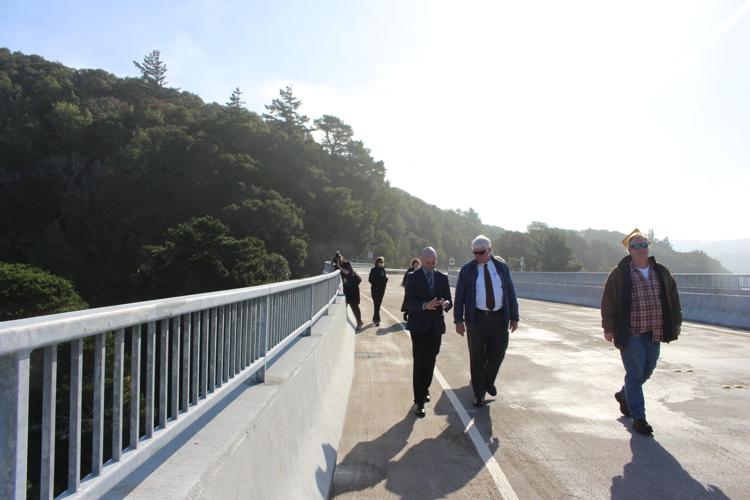
From left: Jim Porter, San Mateo County Public Works director, and Steve Ritchie, the San Francisco Public Utilities Commission’s assistant general manager for water, walk along the new bridge just before it opens to the public Jan. 11.
- Anna Schuessler/Daily Journal
Dam bridge opens to public
The reopening of the scenic stretch of Skyline Boulevard dovetailed last summer with the opening of South Sawyer Camp Trail, which extends more than a mile south of the bridge and ends a quarter mile away from State Route 92.
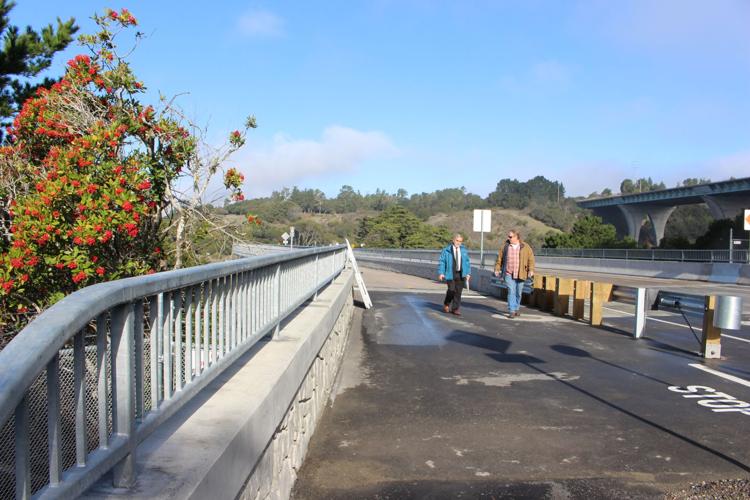
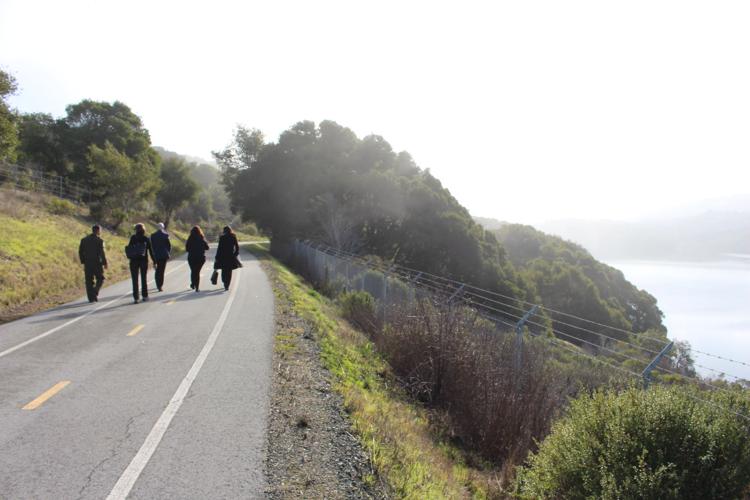
From left: Jim Porter, San Mateo County Public Works director, and Steve Ritchie, the San Francisco Public Utilities Commission’s assistant general manager for water, walk along the new bridge just before it opens to the public Jan. 11.
- Anna Schuessler/Daily Journal
Come Friday afternoon, visitors and commuters using trails and roads tracing along the Crystal Springs Reservoir will be able to take in views of the Peninsula Watershed from a new vantage point once its dam bridge is opened to the public.
The watershed moment follows some 20 years of planning, coordination of several agencies and deferred hopes of bicyclists, pedestrians and motorists eager to access the connection between trails extending north and south of the bridge, located where the Crystal Springs Reservoir meets the San Mateo Creek.
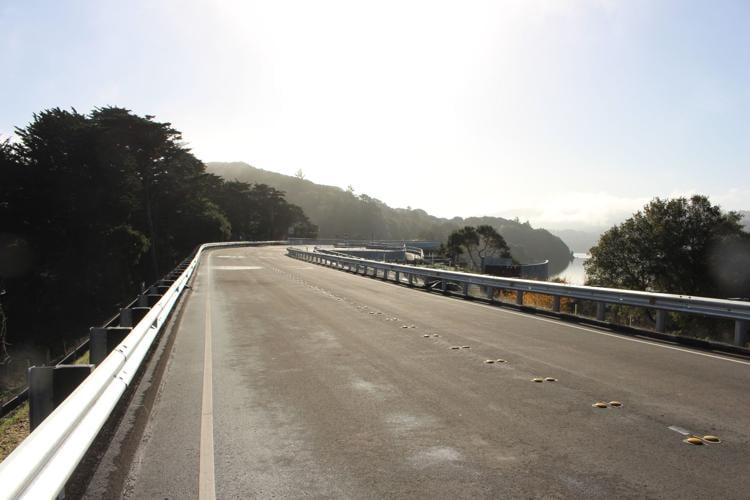
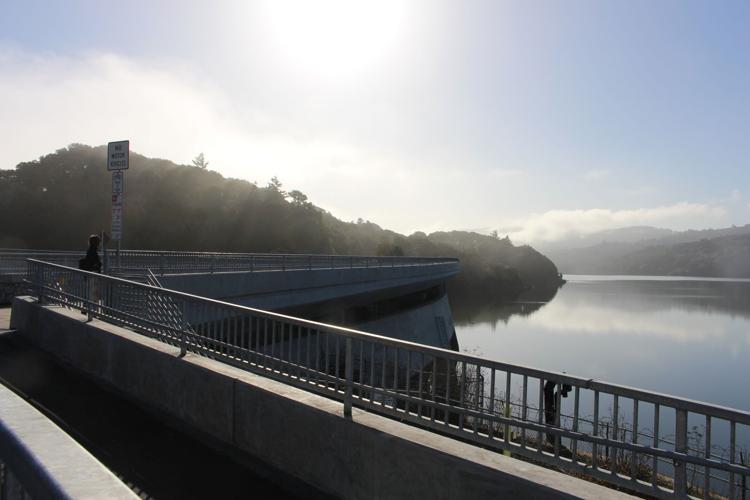
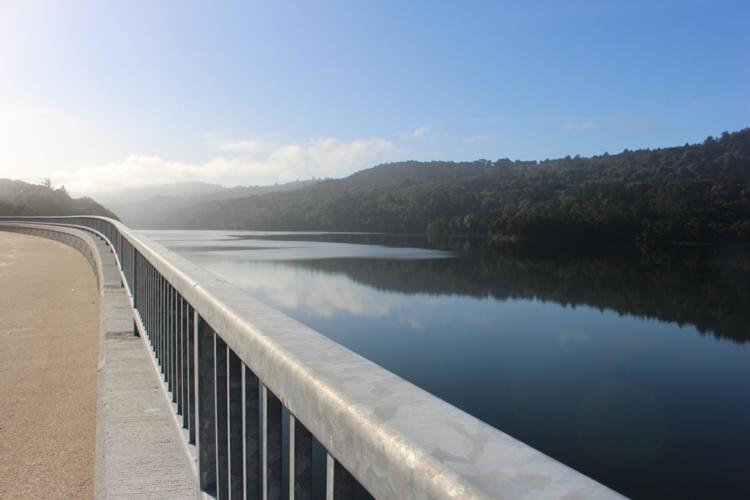
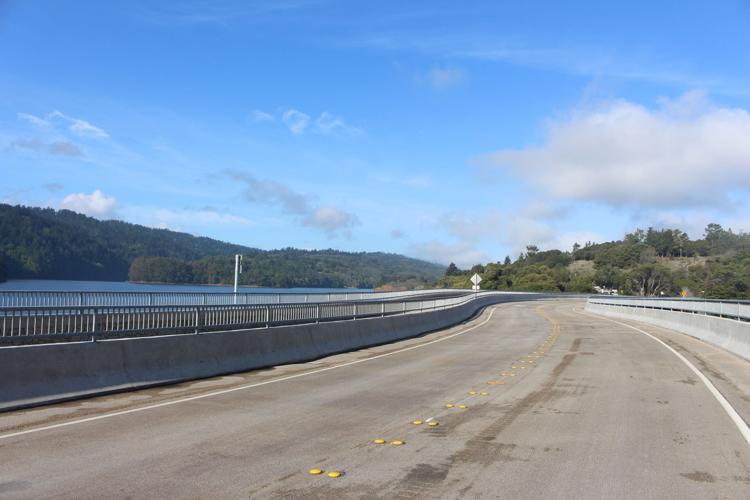
At 626 feet long and 51.5 feet wide, the bridge is the result of efforts to double the width of the Lower Crystal Springs Dam spillway to 200 feet and raise the parapet wall on top of the dam by 9 feet. The bridge was also reconstructed with increased bicycle and pedestrian access and high-voltage transmission lines previously supported by towers placed on either side of the bridge were relocated to another location under it.
The reopening of the scenic stretch of Skyline Boulevard dovetails with the opening of South Sawyer Camp Trail, which extends more than a mile south of the bridge and ends a quarter mile away from State Route 92. With more than 300,000 annual visitors to the Sawyer Camp and Crystal Springs segments of the Crystal Springs Regional Trail, the close of the yearslong project opens recreational opportunities for trail users and commuters and offers another glimpse of the watershed, said Mario Nastari, a San Mateo County park ranger.
“It’s been very much anticipated,” he said.
Plans to reinstate the road atop the dam, which is owned and operated by the San Francisco Public Utilities Commission, began more than two decades ago when the California Division of Safety of Dams found the spillway had to either be expanded so the dam could be used at its full capacity or operate at a restricted level, said Steve Ritchie, the SFPUC’s assistant general manager for water.
Over the years, the project’s timeline has been delayed as efforts took shape to protect threatened species such as the California red-legged frog and federal funding behind the project was temporarily frozen.
Public Works Director Jim Porter said before work on the bridge could start, county planners coordinated with SFPUC officials working to widen the spillway, a $35 million project completed in 2012. After bridge construction was completed in 2018, officials also coordinated with Pacific Gas and Electric to relocate high-voltage transmission lines previously supported by towers placed on either side of the bridge to another location under the bridge.
“The reason why it took so long is it was really three projects,” he said.
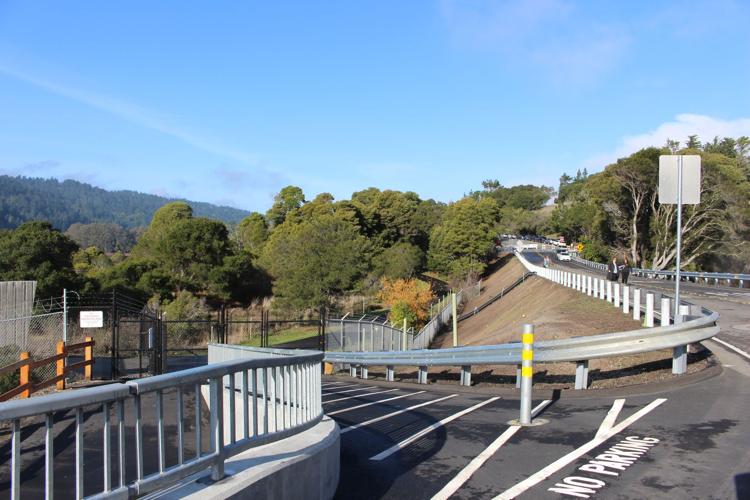
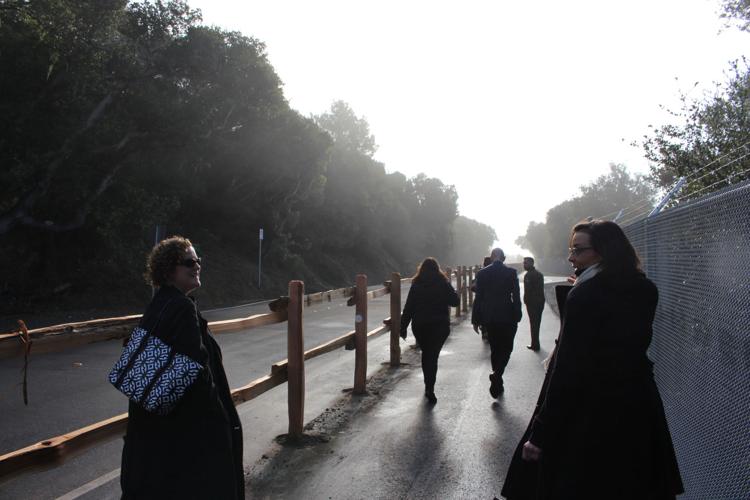
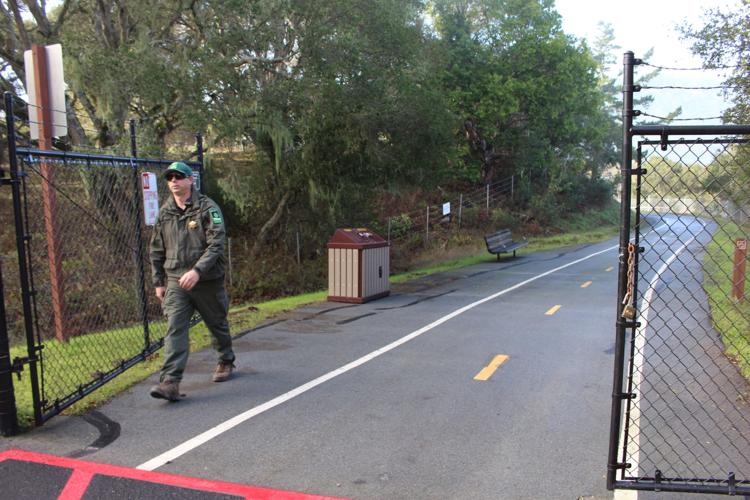
Before they could open Skyline Boulevard back up to the public, crews installed split-rail fencing and striped the road to demarcate bicycle and pedestrian lanes. They also installed fencing to establish a perimeter around the dam structure and the reservoir storing drinking water for millions of Bay Area residents.
Recommended for you
The Crystal Springs Reservoir is a critical part of the SFPUC’s infrastructure, which provides drinking water for some 2.7 million residents in four Bay Area counties, said Ritchie. Capable of holding water that is collected locally, the reservoir can also receive water from the Hetch Hetchy Regional Water System and a water system in Alameda County, he said. Though he acknowledged the importance of public access to the watershed, Ritchie said fencing is aimed at ensuring the water source is protected.
“It’s not just capturing local water, but it’s a place where we can move supplies around, which is great flexible tool,” he said. “We need to make sure we allow the access but protect the resource.”
Ritchie said the San Andreas Fault is some 1,000 feet away from the bridge and runs underneath the reservoir, which is why the bridge is built to the maximum credible earthquake standards and is expected to withstand a 1-foot displacement should an earthquake occur, said Porter. Originally built in 1888 by the Spring Valley Water Company, the Crystal Springs dam has survived the 1906 and 1989 earthquakes without significant damage, noted Porter.
Together with the South Sawyer Creek Trail, the project affords bicyclists, pedestrians and motorists a much safer option when connecting to county trails along the watershed, routes they previously navigated for stretches on the shoulder of Skyline Boulevard, said Deputy County Manager Peggy Jensen, who is currently serving as the county’s interim parks director.
“This is an alternative to a bike lane that is about 6 inches wide,” she said. “The improvement in safety is just incredible.”
Officials looked forward to a ribbon cutting ceremony to bring trail users and bicycle groups who have followed the project together with the many officials and staff members who worked on the project over the years, including state Sen. Jerry Hill, D-San Mateo, who served as a San Mateo County supervisor when the project first got off the ground.
“This is not just a celebration of the completion of an important project, it’s a new beginning for one of our county’s most extraordinary recreational and environmental resources,” he said in a statement.
A ceremony to open the road will be held 2 p.m. Jan. 11 at the north end of the bridge near the intersection of Crystal Springs Road and Skyline Boulevard. Pedestrians and bicyclists will have a chance to experience the new bridge before it is open to car traffic. Due to limited parking at the bridge, shuttle service will be available for the Jan. 11 event with pick-up beginning 1 p.m. from the Youth Services Center parking lot, 222 Paul Scannell Drive in San Mateo.
(650) 344-5200 ext. 106






(0) comments
Welcome to the discussion.
Log In
Keep the discussion civilized. Absolutely NO personal attacks or insults directed toward writers, nor others who make comments.
Keep it clean. Please avoid obscene, vulgar, lewd, racist or sexually-oriented language.
Don't threaten. Threats of harming another person will not be tolerated.
Be truthful. Don't knowingly lie about anyone or anything.
Be proactive. Use the 'Report' link on each comment to let us know of abusive posts.
PLEASE TURN OFF YOUR CAPS LOCK.
Anyone violating these rules will be issued a warning. After the warning, comment privileges can be revoked.