
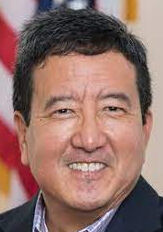
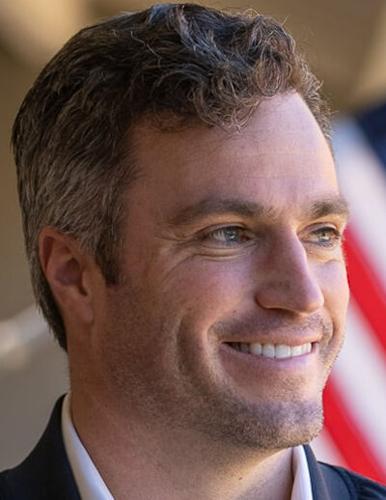
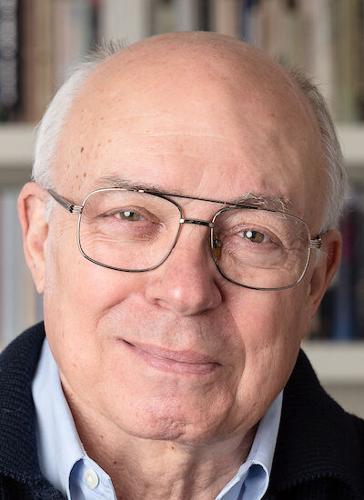



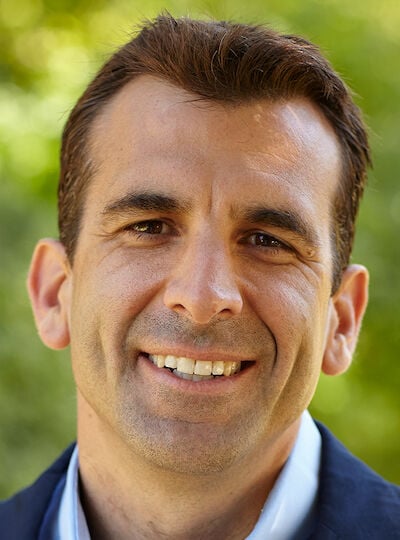

A crowded race to replace U.S. Rep. Anna Eshoo in Congress has formed with 11 candidates all vying for the same seat to represent much of the southern and coastal portions of the Peninsula.
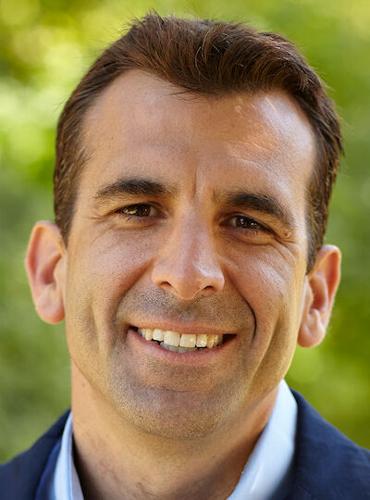
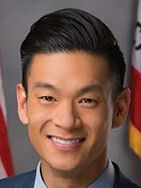
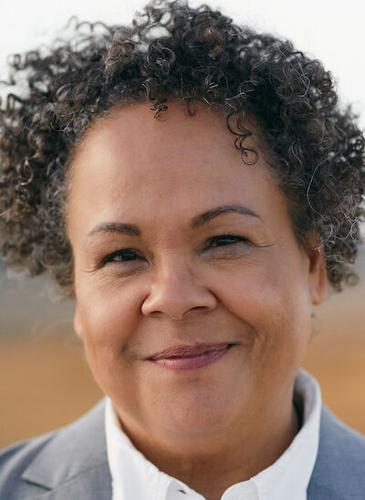
In the race to represent District 16 — a district encompassing the southern and coastal portions of San Mateo County and northern Santa Clara County — are Peter Ohtaki, a Republican financial emergency manager from Menlo Park; Peter Dixon, a Democrat technology entrepreneur, veteran and father living in Portola Valley; Democrat tech executive Rishi Kumar; Joby Bernstein, a Stanford University Masters of Business student and Democrat; Republican Karl Ryan; Joe Simitian, a Santa Clara County supervisor and Democrat; former San Jose Mayor Sam Liccardo, a Democrat; tech policy expert Ahmed Mostafa; Democrat state Assemblymember Evan Low; Palo Alto Councilmember Greg Tanaka, a Democrat; and Julie Lythcott-Haims, an author, activist, speaker, educator and Palo Alto councilmember.
Candidates weighed in on some of the top issues facing the district and nation from immigration reform and addressing tech to working across the aisle and challenges in the Middle East in interviews with the Daily Journal and their campaign websites. (Ryan was the only candidate to not participate in an interview and to not have a campaign website with his stances on issues detailed).
Immigration reform
Regardless of political affiliation, candidates largely agreed immigration reform is vital. In addition to funneling more resources into the asylum system, enabled the nation to add judges and staff to process a major backlog in applications, Simitian and Kumar have argued the nation must also have a strong boarder.
“Folks tend to make this an either/or issue and I think it’s not. I think most folks think we ought to have the ability to secure our border while at the same time treating people with some humanity and dignity,” Simitian said.
Unlike Mostafa, who called for expanding asylum eligibility to those experiencing major climate crises and violent crimes, Liccardo said he would not expand asylum qualifications before addressing the backlog.
But Liccardo and Bernstein did argue in favor of giving green cards to all foreign students who graduate from college or university in the United States. Bernstein and Mostafa also shared support for codifying Deferred Action for Childhood Arrivals into law, allowing individual brought to the country without documentation as children to remain in the country legally.
Ohtaki, Bernstein, Liccardo, Kumar, Low and Dixon said they’d also shared different ideas on the nation’s visa system, proposing changes to work and guest visa programs that would make it so qualified people could fill desperately needed jobs in a variety of sectors.
“You cannot solve the border security issue without comprehensive immigration reform. The two are nested,” Dixon said.
Conflict in the Middle East
The ongoing conflict between Israel and Hamas, a terrorist organization prominent in the Palestinian territory of Gaza, was also addressed by candidates. All acknowledged the immense and growing number of casualties — most of whom are Palestinian — and emphasized the important role the United States must play in bringing all parties to the table to develop a cease-fire agreement and, eventually, a long-term two-state solution.
Low and Bernstein both argued that any cease-fire discussion must also address a hostage release. Liccardo and Low also emphasized the importance of a regime change while Bernstein argued it’s not the job of the United States to facilitate those talks.
“When we talk about a cease-fire, let’s talk about the hostages. That’s part of the narrative that must not be lost. At the same time, it’s not mutually exclusive to say we look for regime change in Hamas and we look for regime change in [Israeli Prime Minister Benjamin Netanyahu],” Low said, drawing connections to defending democracy in other conflicts like that between Taiwan and China, and Ukraine and Russia.
Simitian and Lythcott-Haims also underscored the value of the United States leading with diplomacy in the region. Ohtaki and Simitian both called attention to the role Iran has played in supporting terrorist groups in the region.
Dixon, whose time in military service led him to work with the Israeli Defense Forces and in Palestinian refugee camps, argued Israel has a right to defend itself against attacks from Hamas; and Ohtaki also asserted the United States must stand with its ally, Israel.
Meanwhile, Mostafa, who acknowledged the growing trend of hate crimes against Jewish, Palestinian and Muslim Americans, argued that the onslaught of bombings experienced by Palestinians in Gaza is also to blame for driving some to join fringe terrorist groups.
“So much of what’s happening in Palestine is about hearts and minds and if you have, right now, 30,000 people dead, over half of which of those are civilians, are women and children, how do you expect that population to react when those children grow up?” Mostafa said. “If you want to kill Hamas, you have to kill the idea.”
Tech and the local economy
Recommended for you
As the potential representative of Silicon Valley, each candidate also said they’d support technological innovation while fighting for user protections. Lythcott-Haims, a former IT litigator, argued tech businesses aren’t aiming to hurt the public and asserted the goal is to strike a balance on safety measures to ensure innovation isn’t stifled.
“I understand, firsthand, what this region is about and why it’s different and magnificent,” Lythcott-Haims said. “I’m in favor of innovation and admire what our entrepreneurs and engineers and thinkers are doing and we also need guardrails.”
While in agreement, other candidates also shared concerns about artificial intelligence. Ohtaki said preventing bias in AI is paramount and Dixon said people who misuse the tool should be held accountable.
Addressing misinformation spread through tech was a top concern for Low and Liccardo, who prosecuted people for internet child sex crimes decades ago, stressed the importance of protecting youth.
While the candidates recognized the importance of the tech industry to the district and emphasized economic vitality as a top priority, they were divided on whether the state and local tax cap would be part of their platform.
Liccardo and Ohtaki said they’d support lifting the limit while Dixon and Simitian shared doubts a “one-size-fits-all” approach would work but they’d support changes. Bernstein took the hardest stance on the tax cap, asserting it only benefits the most wealthy and is a detriment to the nation’s ability to address key issues.
“I think the SALT tax deduction is just a pure handout to the rich,” Bernstein said. “Yes, it does affect many people in this district but it does continue to take away money from federal coffers that could be going to where we really want to see it be used in our government — to solve climate change, to improve education, to fix the border and fix immigration.”
Collaboration and other top priorities
Candidates also largely lauded the work done by Eshoo who many said has developed a reputation for being a great listener to her constituents. If elected, they each said they’d like to continue that legacy while arguing they’d be the best to work across the aisle to get tangible change implemented.
“Silicon Valley deserves to have a representative that will be a catalyst to bipartisan change in Congress,” Ohtaki said, who also argued in favor of congressional term limits.
Ohtaki said he’d also like to address rising crime, climate change through renewable energy infrastructure and common sense gun reform. Addressing gun violence and clean energy were also top concerns for Lythcott-Haims along with developing 15-minute walkable cities.
Low said he’d be the perfect candidate to do the “unsexy work” of fighting for the resources needed to address climate change and other local needs like the high cost of living in the region and public safety. And Bernstein said he’d bring a fresh perspective as a 28-year-old Stanford University student fighting for big issues like environmental protections, accessible high education and retaining a quality workforce.
Establishing universal health care and expanding access to public service are Dixon’s top priorities. Similarly, Mostafa called health care a human right and said he’d also fight for environmental justice.
Simitian emphasized climate change and health care as top priorities along with reproductive freedom and Liccardo said homelessness, crime and cost of living are three areas he believes will transcend partisanship.
“I am tired, frankly, of hearing even members of my own party coming home and telling everybody nothing got done because of the other party so we need a commitment from whoever gets out there that we’re going to have to work across the aisle to get things done,” Liccardo said.
Other races
U.S. Rep. Kevin Mullin, D-South San Francisco, is also running for reelection to his District 15 seat against Anna Cheng Kramer, a Republican housing policy advisor.
The Presidential Primary Election will be held Tuesday, March 5. Vote By Mail ballots began being sent out Monday, Feb. 5, and the voter registration deadline will be Tuesday, Feb. 20. The primary is open to all political parties and the top two will run off in the Nov. 5 general election.


(5) comments
Pathetic.
*Fentanyl is coming through our (non) border
*Concerned about San Francisco, our neighbor? Fentanyl combined with a porous border and pro criminal laws
*All polling companies including all leftie MSM, PBS, Harvard/Harris, AP/Norc confirm immigration by way of illegally crossing is a major concern even for dem voters
*Those criminal "migrants" beating the NYPD cops (watch the footage) and being released by Woke Inc has caused both dems and repubs to speak out
And this group, at least by reading this article, is tip toeing and bringing up the Bush era non-solution of "Comprehensive Immigration Reform"
I agree...immigration reform is needed. So why would the bi-partisan Senate bill fail to proceed? Publications such as the WSJ editorial board (hardly a bastion of a liberal stance) concurred that it was one of the most comprehensive bills written in decades. Maybe there really isn't a "crisis"?
FFGig - comprehensive is not the same thing as popular demand to stop the flow of illegal immigrants. The bill essentially authorized and codified the status quo, no limits on illegal crossings and more power for the ultimate loser, Mayorkas. The bi-partisan reference showed a few rino senators siding with the most liberal senate majority leader ever. They were probably paid something or just forgot what their constituents wanted. Read the text and you know why our DC representatives are completely oblivious to the the will of the voters, save for a number of courageous House members. The WSJ is on the side of big money which loves cheap labor and looks the other way when the criminal gangs on both sides of border are profiting. Latin America news papers allege that several senior legislators are actually complicit in the drug and human trafficking business and would not want a solution that most of us want. Which is: Seal the border and wipe out the cartels.
Sorry...I didn't realize you were a leading authority on immigration reform. My bad.
FFGig, I think most, perhaps all, of us would take Mr. van Ulden’s thoughts and authority on immigration reform and most everything else over your thoughts and commentary. So I’d agree, it is your bad.
Welcome to the discussion.
Log In
Keep the discussion civilized. Absolutely NO personal attacks or insults directed toward writers, nor others who make comments.
Keep it clean. Please avoid obscene, vulgar, lewd, racist or sexually-oriented language.
Don't threaten. Threats of harming another person will not be tolerated.
Be truthful. Don't knowingly lie about anyone or anything.
Be proactive. Use the 'Report' link on each comment to let us know of abusive posts.
PLEASE TURN OFF YOUR CAPS LOCK.
Anyone violating these rules will be issued a warning. After the warning, comment privileges can be revoked.