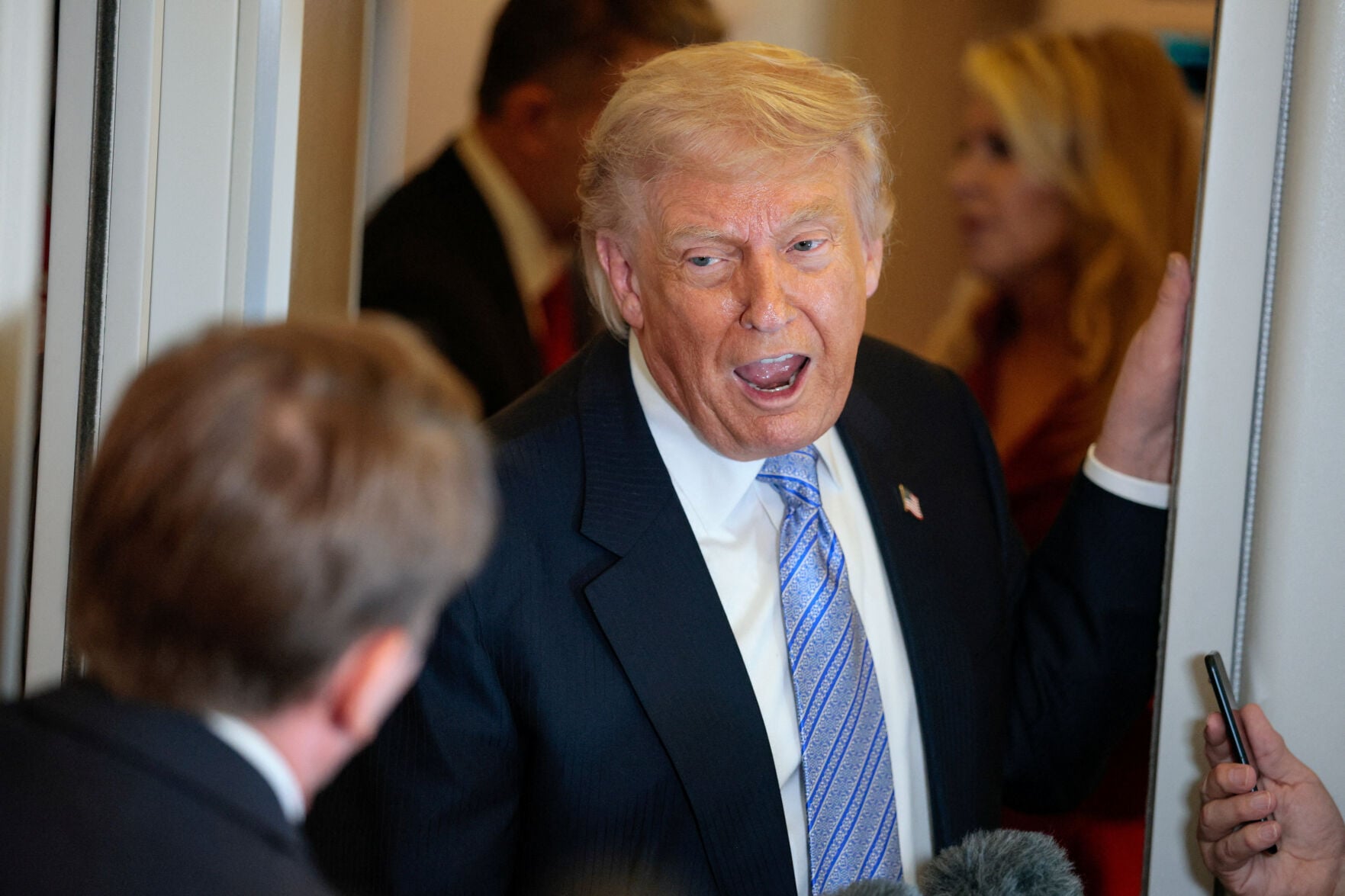
President Donald Trump is asserting that Iran is "negotiating on fumes" and insisting November's midterm elections won't make him rush into a deal to end the nearly 3-month-old conflict that's spurred unease across the global economy. Speaking at the start of a Cabinet meeting Wednesday, Trump expressed confidence that an agreement is near. Over the weekend, he even declared that his administration and Tehran had "largely negotiated" a settlement, but the negotiations were still in flux. The president is looking for a settlement that will reopen the Strait of Hormuz and provide him a credible argument that Iran's nuclear capability has been diminished enough to declare victory, winding down a conflict that's been politically unpopular for Republicans.
By AAMER MADHANI, WILL WEISSERT and SIMINA MISTREANU Associated Press
President Donald Trump says he's not yet made a decision on whether a major sale of U.S. arms to Taiwan can move forward following his three-day visit to China. The president spoke to reporters Friday as he flew back on Air Force One. Trump's Republican administration has authorized the sale, but it has yet to proceed. Some Republicans in Congress expressed displeasure at the president's comments on weapons to Taiwan. China opposes the deal and has suggested that Washington's relationship with the self-governing island is the key factor in China-U.S. relations. Trump also says he raised a potential three-way nuclear deal involving the U.S., Russia and China.
By SHEIKH SAALIQ and ADAM SCHRECK Associated Press
Iran's foreign minister says that a lack of trust remains the biggest obstacle in negotiations to end the war with the U.S. Iranian Foreign Minister Abbas Araghchi said contradictory messages from the U.S. have made Iran reluctant about its intentions in the stalled ceasefire negotiations. U.S. President Donald Trump earlier this week dismissed Iran's latest formal proposal as "garbage." Trump has demanded a major rollback of Iran's nuclear activities while Iran has said that it has a right to enrich uranium. Iran's top diplomat says the issue of its enriched uranium stockpile is another one of the difficult sticking points in its negotiations.
By JON GAMBRELL and MELANIE LIDMAN Associated Press
Kuwait accused Iran of launching a failed attack earlier this month on an island where China is helping build a port in the Middle East nation. The accusation brought Tuesday came just before U.S. President Donald Trump was to depart for Beijing where he'll meet with Chinese President Xi Jinping in a high-stakes visit over the war and other issues. Kuwait said a team of six armed members of the paramilitary Revolutionary Guard tried to infiltrate Bubiyan Island to carry out "hostile acts." Kuwait said that it detained four of the men while two escaped. Iran didn't immediately acknowledge the allegation by Kuwait. With ceasefire negotiations between Iran and the U.S. at a standstill, ongoing attacks threaten to reignite open warfare.
By AAMER MADHANI and SIMINA MISTREANU Associated Press
President Donald Trump has demonstrated greater ambivalence toward Taiwan in his second term. That's raising questions about the Republican president's commitment to maintaining American support for the self-ruled island ahead of this week's summit with Chinese President Xi Jinping. In December, Trump authorized an $11 billion arms package for Taiwan but delayed its delivery and discussed the sale with Xi. Trump said Monday he expects Xi will ask him to hold back on arming Taiwan. Trump has accused Taiwan of "stealing" America's semiconductor business and pressured it to invest in U.S. tech sectors. Analysts say Xi might urge Trump to loosen ties with Taiwan, which Beijing views as its breakaway province.
By JON GAMBRELL, SAMY MAGDY and SEUNG MIN KIM Associated Press
U.S. President Donald Trump says the Iran ceasefire is on "life support" after he rejected Tehran's latest proposal to end the war. Officials said the proposal included some concessions on Iran's disputed nuclear program, but on Monday Trump dismissed it as "garbage." The stalled diplomacy and recent exchanges of fire could tip the Middle East back into open warfare and prolong the worldwide energy crisis sparked by the conflict. Iran's chokehold on the Strait of Hormuz and America's blockade of Iranian ports are still in place. Trump said he would suspend the federal tax on gasoline to help Americans shoulder higher fuel prices caused by the war.
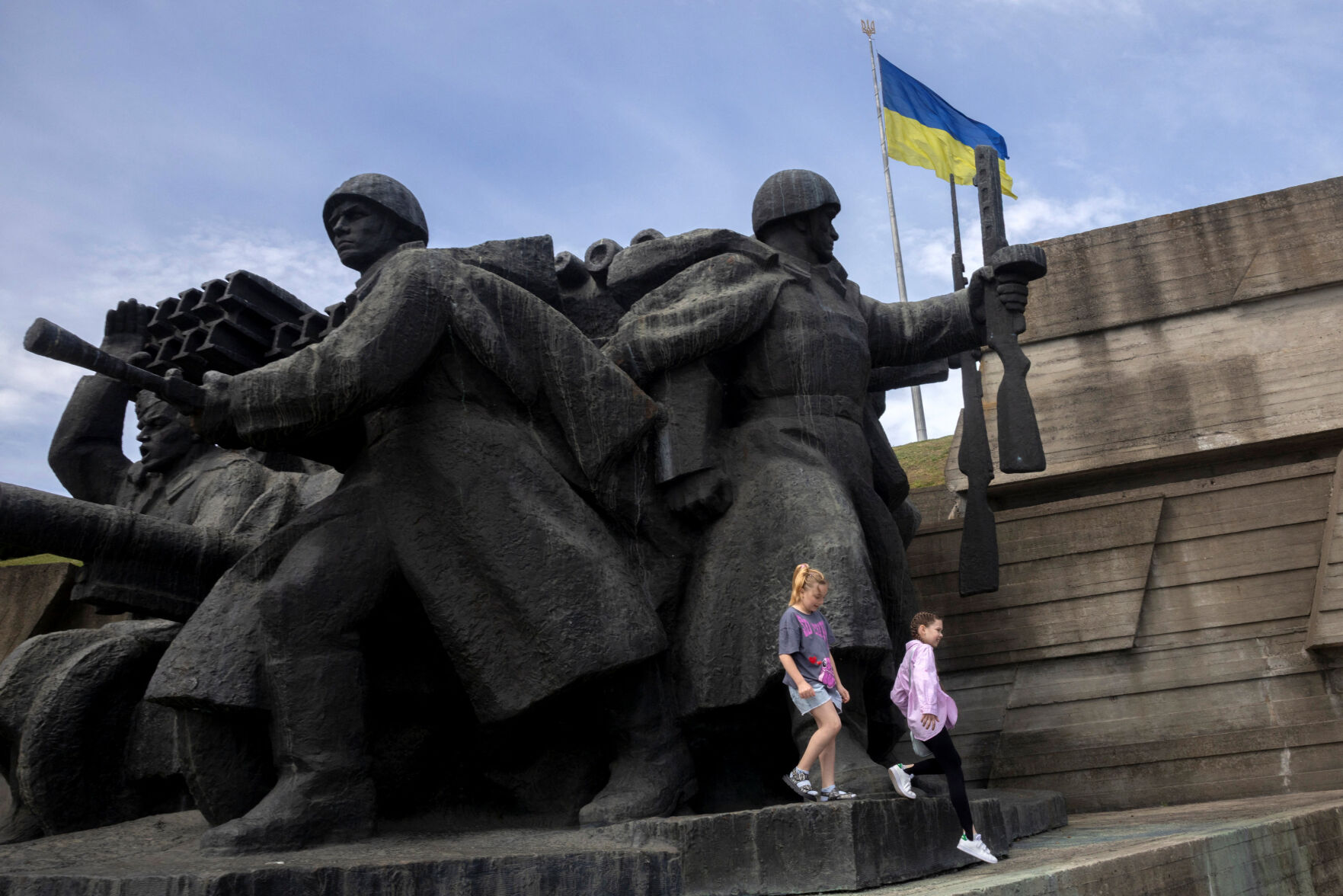
President Donald Trump says the leaders of Russia and Ukraine have agreed to his request for a three-day ceasefire and an exchange of prisoners. Trump said Friday that such a halt to hostilities could be the "beginning of the end" of the long war between them. Trump announced on social media that the ceasefire would run Saturday through Monday. Saturday is Victory Day in Russia, a holiday that commemorates its victory over Nazi Germany 81 years ago in World War II. Trump says he's "pleased to announce that there will be a THREE DAY CEASEFIRE." The Republican president says the ceasefire includes a suspension of all kinetic activity and the exchange of 1,000 prisoners by each country.
By ADAM SCHRECK, DAVID MCHUGH and RUSS BYNUM Associated Press
Iran has created a government agency to control and tax vessels passing through the Strait of Hormuz. That's according to the shipping data company Lloyd's List Intelligence, which reported the move Thursday. The Iranian effort to formalize control over the channel raised new concerns about international shipping as hundreds of commercial ships remained bottled up in the Persian Gulf, unable to reach the open sea. A spokesperson for Iran's Foreign Ministry said officials in Tehran are still reviewing messages from Pakistan, which is mediating peace proposals between the Islamic Republic with the U.S.
By JOSHUA BOAK, BEN FINLEY and RUSS BYNUM Associated Press
The U.S. military fired on an Iranian oil tanker as President Donald Trump sought to pressure Tehran into reaching a deal to end the war. The military said in a social media post that a fighter jet shot out the rudder of the tanker Wednesday in the Gulf of Oman as the vessel tried to breach the American blockade of Iran's ports. The attack occurred as Iran and the U.S. are officially in a ceasefire. Trump threatened Tehran with a new wave of bombing if a deal is not reached that includes opening the critical Strait of Hormuz. The president posted on social media that the two-month war could soon end.