

It’s better to teach a man to fish — that is the essence of the largest gardening education organization in San Mateo County, teaching people of all ages the transformative power of growing your own produce in your neighborhoods.
Each Green Corner was launched by founder and CEO Sandie Nierenberg in the fall of 2019 after she saw firsthand the resource disparities between residents even living within the same block through her work in the County Attorney’s Office providing pro bono legal services.
“It was always surprising to see in one of the wealthiest counties in the country we had such persistent food insecurity,” Nierenberg said. “And there was a disconnect between awareness in the community.”
Many individuals who aren’t personally experiencing food insecurity are not cognizant of how big of an issue access can be for others even living down the street, Nierenberg said. Since Nierenberg founded the nonprofit, food insecurity has only become further exacerbated, affirming her decision to switch careers and commit to teaching a man to fish — or children how to respect and love the life cycle of food.
“This should not be the issue it is today and that it continues to be,” Nierenberg said. “We can inspire and teach people of all ages, especially younger people, to help themselves to grow their own food and growing culturally relevant food, highly nutritious food.”
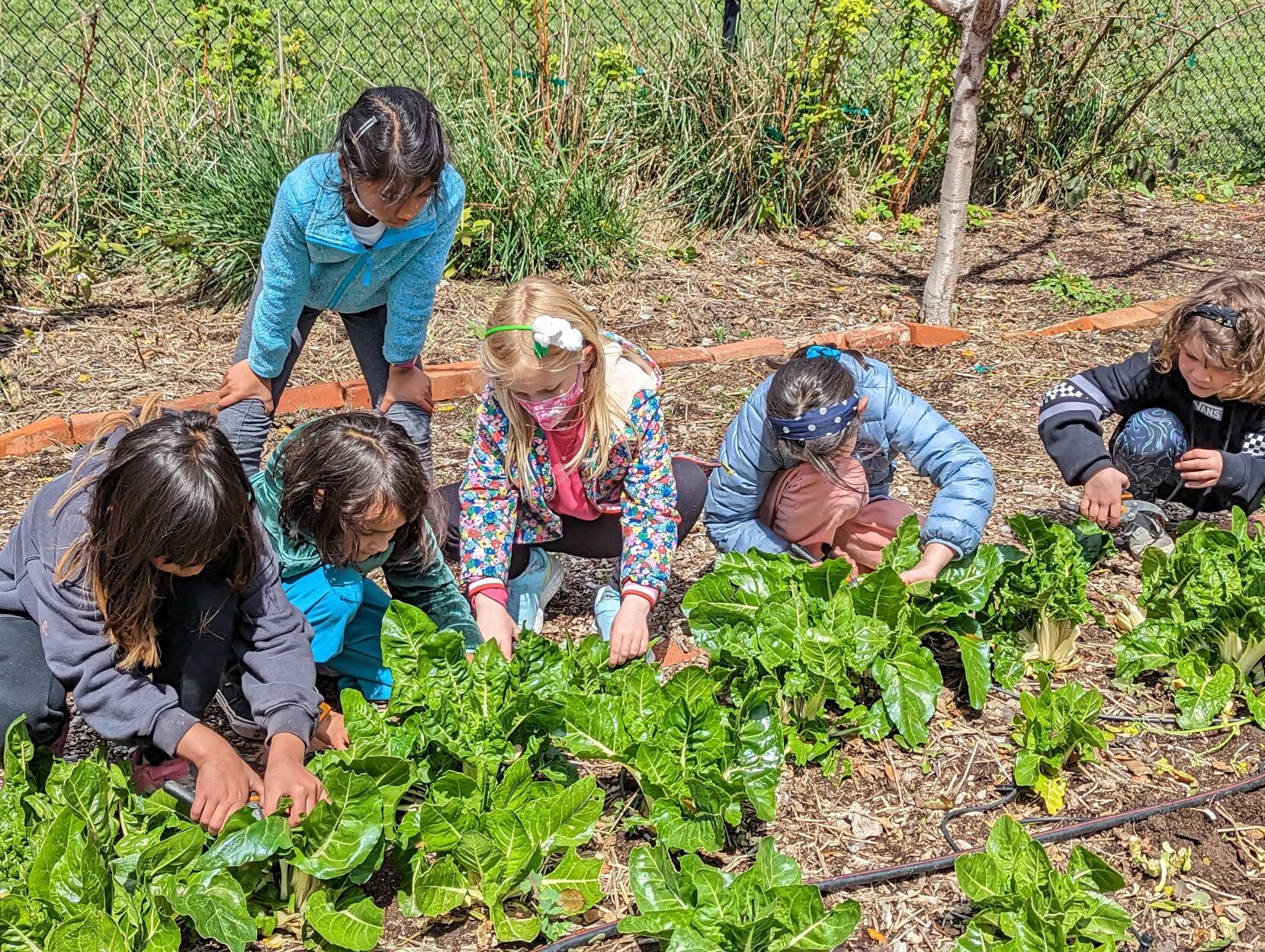
Each Green Corner hosts a variety of programs focused on sustainable gardening. A key component of the organization’s work is its living campus program that works with 17 schools throughout the county providing curriculum about the food cycle for students as young as 4 and 5 years old in transitional kindergarten.
Teaching young students, and even adults, where their food comes from — and that it doesn’t just miraculously appear on their plates — makes them much more appreciative of what they eat every day, Nierenberg said.
“When people understand that and what choices they really have in their day-to-day lives around food and how it affects them, when people are equipped with that knowledge, they gain an understanding of their power to make a difference and they’re more likely to make positive choices,” Nierenberg said.
While other subjects in school may feel disconnected to some students, food is something “every single kid confronts on a daily basis” and students are particularly excited to spend lessons outside with their hands literally in the dirt to learn more, Nierenberg said.
In addition to the educational curriculum, Each Green Corner grows thousands of seedlings every season. Distribution days throughout the year invite community members to take free organic soil, compost and seedlings to grow at their own homes.
The seedling starter program helps diversify the gardens and produce provided to the community, Nierenberg said.
Each Green Corner’s goal is not only to provide fresh food to communities in need, but culturally-specific food as well. Offering a variety of options, such as Japanese mustards or various peppers in the summer, provides options that people love and are more familiar with, which means they’re more likely to cook with, Nierenberg said.
Recommended for you
A regular role Each Green Corner plays is growing fresh produce that may not be available at food banks — which primarily provides nonperishables or food with a long shelf life — and brings them to local distributors. This can include berries, soft persimmons and various herbs typically too fragile to go through the distribution system.
This year in particular, Each Green Corner is going the extra mile and also bringing food directly to people in their daily lives.
Nierenberg, like many throughout the county, has noticed the hesitancy of many residents to access assistance or services. Following the temporary hiatus of the Supplemental Nutrition Assistance Program in early November due to the government shutdown and the increase in immigration enforcement threats throughout the country, Each Green Corner is an organization working to provide consistent, trustworthy hyperlocal food access.
At each of the six Title I school sites Each Green Corner serves, produce from gardens are available for anyone — nobody needs to register, sign up or schedule a time to pick up, Nierenberg said. At the Boys and Girls Club in North Fair Oaks, one of the nonprofit’s food educators on-site established a community refrigerator for people to take produce at will.
“We are not coming in to do things to a community, but we’re listening and responding to a community’s needs and giving them what they want,” Nierenberg said. “It’s about empowering community members to do this on their own.”
While other gardening organizations do take an off-season in the winter, Each Garden Corner continues its lessons as long as school is in session. This allows students to see the variety of produce that thrives in the colder climate, Nierenberg said, which primarily includes dark leafy greens.
“It’s maybe not the type of stuff they’d gravitate to, but there is so much enthusiasm once kids become aware and spend time watching chard grow or broccoli, snap peas, arugula, and they get to taste that in the garden and develop favorites among all these greens,” Nierenberg said.
With access to school gardens that include plants at various stages of growth, students develop a sense of ownership over the plants they watch develop and mature, Nierenberg said.
At the school garden hosted at Portola Elementary in San Bruno last year, a particularly large Swiss chard that grew 3-feet wide and 3-feet tall with leaves spanning 10 inches was dubbed “gigachard” by the students who “loved eating it and were so happy,” Nierenberg said.
The lessons learned in the dirt and throughout the community are 10-fold, and starting young gives students an extra boost, Nierenberg said. Learning about food and growing your own has “lifelong impacts” on a student’s preferences and health, Nierenberg said.
“A central theme is a love of food and a love of fresh food,” Nierenberg said. “That runs through everything we do.”
Visit www.eachgreencorner.org for information on ways to volunteer or donate to the cause.


(0) comments
Welcome to the discussion.
Log In
Keep the discussion civilized. Absolutely NO personal attacks or insults directed toward writers, nor others who make comments.
Keep it clean. Please avoid obscene, vulgar, lewd, racist or sexually-oriented language.
Don't threaten. Threats of harming another person will not be tolerated.
Be truthful. Don't knowingly lie about anyone or anything.
Be proactive. Use the 'Report' link on each comment to let us know of abusive posts.
PLEASE TURN OFF YOUR CAPS LOCK.
Anyone violating these rules will be issued a warning. After the warning, comment privileges can be revoked.