


Digital artist Michael Charlow, degreed in art and Japanese, explained the de Young Museum’s “Art of Manga” exhibition to his father — me. Reciprocity for my explaining sumi-e and Ch’an painting to him years before.
“Each culture has its own comics and a visual language as distinct as the spoken,” explained the younger Charlow.
Prepare to be astounded and overwhelmed.
You may want a knowledgeable guide or docent, a preview lecture or an audio headset. There’s that much to see here with so much variance. It’s beyond expectations if you just think comic books.
Pictorial story telling is literally as old as human art. From Lascaux cave paintings to Egyptian tomb frescoes, the Bayeux Tapestry to “George Washington Crossing the Delaware,” stories in pigment have always been with us. Pictures predate writing, which actually comes from pictographs.
Some attribute manga’s origins to the 12th century. Yet the story of Japanese picture books ascends in the 18th century, with Hokusai, Hiroshige and Utamaro taking on bright colors, everyday subjects, stylized costumes, exaggerated facial expressions and dramatic perspectives.
You couldn’t have missed Hokusai’s “The Great Wave.”
They were so startlingly new to European eyes that they inspired the Impressionists, helping kick off modern art in the West. Van Gogh, Toulouse Lautrec and contemporaries copied them.
Manga is the modern inheritor, a narrative form with its own visual vocabulary, far more than just comic book illustration.
Originating in the early 20th century, exploding in popularity after World War II, growing up in Japan you were weaned on it. Growing up in late 20th century America, you ate a diet of manga and its moving version, anime.
Manga is a complex brutally demanding industry that produces hundreds of stories weekly for years on end. Some storylines extend over lifetimes of the characters, and also of the artist/authors who created them.
Recommended for you
There are two directions to view manga, literary form (the story) or art form (the picture). In truth, it’s impossible to divorce them.
The museum chooses the story aspect claiming that manga is not a genre, because it crosses literary boundaries (romance, sci-fi, historical, etc.) True, as manga is basically story-telling in pictures.
However, I do view the pictorial dimension as an artistic genre, a distinct way of depicting life. It has its own vocabulary the same as predecessors sumi-e and ukiyo-e. The form of each element is shorthand with meaning its fans understand. Gestures, shading, sounds in words or symbols, bodies and features, each have instantly visible standard interpretations.
Technique-wise, manga relies on line and hatching, not gradation. Lines depict movement, emotion and time itself. It’s mostly a black and white style designed specifically for mass printing.
Amid myriad panels in the show similar to Marvel Comics, a few classical ukiyo-e style scenes harken to Hiroshige. Yet they range far into Araki Hirohiko’s stylized beefcake heroes and fashions, even European stories and elements: a book about Steve Jobs, a panel of Frog’s Leap wine, books about ancient Rome and Pompeii.
The quintessential picture of the dying boxer that ends a classic “Tomorrow’s Joe” series by Tetsuya Chiba echoes the “Dying Gaul” or the “End of the Trail” (defeated Indian warrior.) A stunning full color dynamic composition by Oda Eiichiro from his “One Piece“ is reminiscent of Peter Max if he had met modern digital dimensional technique. “What Did You Eat Yesterday?” novels by Fumi Yoshinaga would tickle the Food Network.
There is more here than you can imagine, all highly imaginative.
Take a young person with you to this first U.S. exhibition, and take this art form seriously. It has a long life behind and ahead of it.
You Can Create Too: The De Young and Legion of Honor have docents and lectures to aid in appreciating exhibits, art demos for children and adults. They allow sketching in galleries on a limited basis, during drop-in dates when you can join a sketching group, or on your own by permit. famsf.org/events/sketching-in-the-galleries.
The de Young Museum, Golden Gate Park, 50 Hagiwara Tea Garden Drive, San Francisco, famsf.org/visit/de-young, (415) 750-3600.
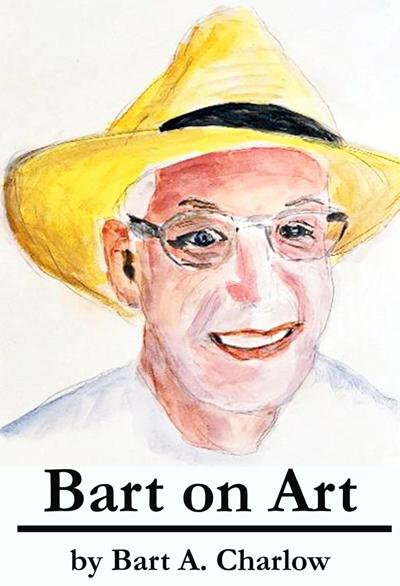
Bart Charlow, consultant and author, has been sketching all his life and painting for over 45 years, had a professional photography business, and leads plein air painting groups. Come along as he shares his insights about the local art scene, and bring your sketchbook. His art and story is at: bartsart.weebly.com.





(0) comments
Welcome to the discussion.
Log In
Keep the discussion civilized. Absolutely NO personal attacks or insults directed toward writers, nor others who make comments.
Keep it clean. Please avoid obscene, vulgar, lewd, racist or sexually-oriented language.
Don't threaten. Threats of harming another person will not be tolerated.
Be truthful. Don't knowingly lie about anyone or anything.
Be proactive. Use the 'Report' link on each comment to let us know of abusive posts.
PLEASE TURN OFF YOUR CAPS LOCK.
Anyone violating these rules will be issued a warning. After the warning, comment privileges can be revoked.