
This year the Metropolitan Transportation Commission and the Bay Area Air Quality Management District provided free rides all day on the first six Spare the Air days in June and July (There were no funds to provide free rides in August and September). Twenty-six transit operators participated (including BART, Caltrain and SamTrans). The cost: $13.3 million for advertisements and fares. The goal: to reduce air pollution and increase transit ridership on especially hot smoggy days when emission levels are expected to exceed federal limits.
MTC and the Air District were satisfied with the results: Transit ridership increased by approximately 15 percent region-wide, resulting in an additional 227,700 riders. Emissions were reduced although national ozone standards were exceeded on four of the six Spare the Air days. There’s a penalty if you have too many of these bad emission days — loss of federal highway funds. In a telephone poll, 49 percent of respondents said they would be more likely to ride transit on Spare the Air days if it were free.
Critics say the costs were too high compared to other methods of reducing air pollution, about $10 for each new transit rider. No one knows whether the program attracted new riders on a permanent basis. Other Air District programs, such as buying and crushing old smog-producing cars and replacing the engines of aging diesel school buses reduce smog at a lesser cost and are long lasting. One critic suggested a summer driving fuel surcharge to discourage auto use on hot days; the surcharge revenue would help fund free transit on bad days.
Transit operators and transit users liked the program but may prefer it is used in the future only at peak travel times. BART commuters complained about passengers riding the trains all day just to stay cool and creating noise, litter and discomfort for the regulars. Ferries saw the greatest increase: for example, ridership on the Golden Gate Sausalito ferry was up 350 percent. MTC and the Air District will be evaluating results from this year. But the program may be a little different in the future.
***
In the spirit of Spare the Air, I walked to downtown San Mateo last Sunday to catch an exhibit at the Central Park Recreation Center. I passed by baseball players with red and blue jerseys who were in the midst of a game. Many spectators were in the stadium and a few were buying cold drinks at the little stand across from the city’s ceramic studio. The tennis courts were full and families were wheeling strollers around the park and enjoying the perfect weather. Inside the Rec. Center, the San Mateo Bonsai annual exhibit was in full swing. There were dozens of artistically formed dwarf trees on display and many viewers admiring the unusual presentations.
Recommended for you
Bonsai originated in China thousands of years ago but the Japanese have made it an important part of their culture. The San Mateo Bonsai Club is 43 years old. It started at about the same time as the Japanese Tea Garden with the involvement of many of the same members of the Japanese-American community who created and donated the prize-winning Tea Garden to the city.
Sam Fukudome, the city staff person in charge of the garden, is well known among park visitors. He dispenses Cheerios to the children who wish to feed the koi fish. Sam is a bonsai expert. Another is Jo Witt who this year displayed a bristlecone pine. This short-needle pine with white resin dots is believed to be more than 4,000 years old and comes from the White Mountains in Southern California. It can range from 5 to 20 feet. But the bonsai rendition was under a foot. Each year at these events, there is a demonstration on how to create bonsai. I watched Steven Prevost, a dentist from Half Moon Bay, and Fred Shimo of the local club, skillfully cut the branches and roots from an ungainly juniper to transform it into a small, graceful plant. Unfortunately the exhibit and demonstration occur just once in the fall. But watch for next year’s event. It’s free and a great complement to all the other activities going on at San Mateo’s Central Park.
***
One of this year’s People Who Care awards winners is Susan Houston, director of Senior Services at the Family Service Agency, a job she has held for 20 years. I can’t think of anyone more deserving. Susan runs employment programs for seniors 65 and older. In fact, her entire staff is made up of seniors, many of them low income, who are on paid internships .She helps seniors find regular employment following training. Her program serves about 400 to 500 people a year at the San Mateo Second Avenue headquarters and at the Fair Oaks Intergenerational Center in Redwood City. In addition to job training, Susan supervises bilingual services, a daily lunch program and a program to match seniors with paratransit. I know a senior who Susan hired several years ago. The job was a life saver. The woman, who had lost her husband in a freak accident and had raised her children by herself, never had the opportunity for full-time employment. She had lost a part-time job and was desperate. Family Service provided her with employment, a steady source of income and moral support when she was in need. Definitely, people who care.
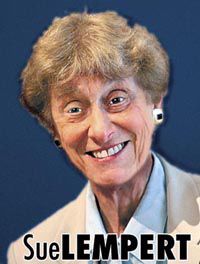
Sue Lempert is the former mayor of San Mateo. Her column runs every Monday. She can be reached at sue@smdailyjournal.com.
<


(0) comments
Welcome to the discussion.
Log In
Keep the discussion civilized. Absolutely NO personal attacks or insults directed toward writers, nor others who make comments.
Keep it clean. Please avoid obscene, vulgar, lewd, racist or sexually-oriented language.
Don't threaten. Threats of harming another person will not be tolerated.
Be truthful. Don't knowingly lie about anyone or anything.
Be proactive. Use the 'Report' link on each comment to let us know of abusive posts.
PLEASE TURN OFF YOUR CAPS LOCK.
Anyone violating these rules will be issued a warning. After the warning, comment privileges can be revoked.