Cloudy with periods of rain. High 64F. Winds SSW at 10 to 20 mph. Chance of rain 100%. Rainfall near a quarter of an inch..
Tonight
Rain early...then remaining cloudy with showers overnight. Potential for heavy rainfall. Low 54F. Winds SSW at 10 to 15 mph. Chance of rain 90%. Rainfall near a quarter of an inch.
Some years ago I ran into a puzzle I’ve never forgotten. It involves connecting nine dots, arrayed in a 3x3 grid, with no more than four lines. Solving it involves thinking outside a box which most people see in the picture but isn’t there. There are also three-line and one-line solutions as well. All depend on not making assumptions about supposed constraints.
The puzzle highlights a common feature of challenging problems: solving them often requires looking at things differently. More generally, it involves seeing the world for what it is rather than what we think it is.
If you study how Einstein developed his special theory of relativity you’ll quickly notice something odd. The empirical data it’s based on was discovered 18 years before he published his revolutionary work. For all those years, smart people worked hard to fit the data into what they’d been taught, without success. Einstein instead asked, “how can we look at the world differently to explain the data?” A simple shift in perspective. With profound consequences.
Challenging ourselves to see the world clearly is important in everything we do. But it’s nowhere more important than in leading a representative democracy. Because the simplest public decisions involve the interests of thousands of people.
No one elected can truly represent the views of all his or her constituents. All anyone can do is use their best judgment, their compassion and their empathy, to inform their decision-making. And hope the results do more good than harm, while remaining ready to change course.
But what defines “good?” There are as many opinions about that as there are people. Unlike the private sector, where the overriding goal is making money, the public sector has no single goal. Which is more valuable, another park, more housing or better roads and mass transit? Ask a thousand people and get a thousand answers.
But here’s something I think works: Which choice would make the most people want to be part of our community?
Bill Gates did not get to be the richest man in the world by personally writing and selling a few copies of Windows to a handful of wealthy people. He did it by connecting thousands of employees, vendors and others to millions of people who could benefit from having access to computing power.
In the process everyone’s lives were enriched. For that to happen, those individuals all needed each other. Communalism and individualism can be mutually re-enforcing, benefiting everyone.
Recommended for you
The need for personal safety is commonly given as the reason people form communities and governments. Living among others helps shield us from life’s challenges. But thriving, desirable communities can offer much more. They let people lead better, fuller lives by interacting with each other. Consequently, decisions which make more people want to live in a community make its residents both safer and better off.
Considering the views of “outsiders” seems counter-intuitive. But electeds owe their constituents more than just a good set of ears. They owe them a duty to exercise good judgement. Even if that means going against local perspectives. Because community members want their future secured as part of a larger world. Voters fire electeds who do too many things they dislike. But they also fire ones who avoid doing things voters may dislike but which risk the community’s future.
A decade ago the San Carlos Elementary School District Board of Trustees had to redraw its attendance area boundaries. That’s guaranteed to get a lot of people angry regardless of the details. One man excoriated the board for its decision. He was not satisfied with the explanations he was given. But a year later something amazing happened. He apologized for his earlier remarks. Acknowledging his family was better off because of the change.
Part of leadership is figuring out what path to take. That involves a lot of listening.
Another part is selling choices to the community. That involves a lot of talking.
But an equally important part is doing what needs to be done to adapt the community to a changing world.
That requires courage.
Challenge your assumptions. Challenge people who tell you something can’t be done, or it’ll take too long or cost too much. Your expert advisors will always know more than you do. But remember Einstein: Simply accepting what you’ve been taught can constrain thinking, preventing problems from being solved.
And consider making choices based on which ones make the most people want to live in San Carlos. Because just as individuals are better off being part of a larger community, San Carlos benefits from being part of the larger region and the world, open to outside viewpoints and people.
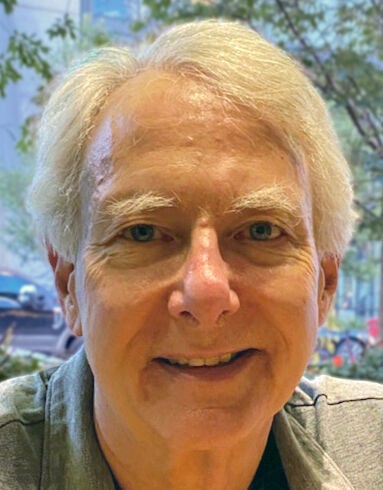
Mark Olbert recently retired from the San Carlos City Council, after serving on it and the San Carlos Elementary School District Board of Trustees for 19 years.
I enjoyed reading your op-ed piece. It comes from your many, many years of public service. Thank you for that service...
I was scratching my head re: your line, "Unlike the private sector, where the overriding goal is making money, the public sector has no single goal." I don't know... maybe the public sector does have a single goal. Maybe it all comes down to service, i.e. serving constituents by doing things those constituents could not do by themselves. You cited some good examples... parks, affordable housing, roads and mass transit. A single person can not create or improve those things. So, we look to our elected leaders to serve constituents by bringing resources together to provide what a city needs.
Years ago... more than 30 years ago... I was taking public administration courses at the College of Notre Dame. Dick DeLong was the instructor. He said that local government only had to do two things... 1) make sure potable water comes out of tap when a faucet is turned on, and 2) make sure the police show up when someone calls 9-1-1. Now, Dick was saying that with tongue in cheek, but his belief that a city's government should serve its constituents cannot be overstated. And he understood more than most that service to constituents involves much more than tap water and public safety. It also cannot be overstated that constituents should decide how short or how long the list of priorities should be...
I don’t disagree with your basic assertions. But they do not go far enough, IMHO. Which was the point of my op ed, so I won’t belabor things by repeating stuff 😀.
Agreed. I wanted to keep the focus on service... and example of service.
Yes... the government's function is more detailed. Borrowing a page from Albert J. Nock, government "should attend to national defense, safeguard the individual in his civil rights, maintain outward order and decency, enforce the obligations of contract, punish crimes belonging in the order of malum in se [evil in itself] and make justice cheap and easily available.”
Keep the discussion civilized. Absolutely NO
personal attacks or insults directed toward writers, nor others who
make comments. Keep it clean. Please avoid obscene, vulgar, lewd,
racist or sexually-oriented language. Don't threaten. Threats of harming another
person will not be tolerated. Be truthful. Don't knowingly lie about anyone
or anything. Be proactive. Use the 'Report' link on
each comment to let us know of abusive posts. PLEASE TURN OFF YOUR CAPS LOCK. Anyone violating these rules will be issued a
warning. After the warning, comment privileges can be
revoked.
Please purchase a Premium Subscription to continue reading.
To continue, please log in, or sign up for a new account.
We offer one free story view per month. If you register for an account, you will get two additional story views. After those three total views, we ask that you support us with a subscription.
A subscription to our digital content is so much more than just access to our valuable content. It means you’re helping to support a local community institution that has, from its very start, supported the betterment of our society. Thank you very much!



(4) comments
Hello, Mark
I enjoyed reading your op-ed piece. It comes from your many, many years of public service. Thank you for that service...
I was scratching my head re: your line, "Unlike the private sector, where the overriding goal is making money, the public sector has no single goal." I don't know... maybe the public sector does have a single goal. Maybe it all comes down to service, i.e. serving constituents by doing things those constituents could not do by themselves. You cited some good examples... parks, affordable housing, roads and mass transit. A single person can not create or improve those things. So, we look to our elected leaders to serve constituents by bringing resources together to provide what a city needs.
Years ago... more than 30 years ago... I was taking public administration courses at the College of Notre Dame. Dick DeLong was the instructor. He said that local government only had to do two things... 1) make sure potable water comes out of tap when a faucet is turned on, and 2) make sure the police show up when someone calls 9-1-1. Now, Dick was saying that with tongue in cheek, but his belief that a city's government should serve its constituents cannot be overstated. And he understood more than most that service to constituents involves much more than tap water and public safety. It also cannot be overstated that constituents should decide how short or how long the list of priorities should be...
Hi Ray,
I don’t disagree with your basic assertions. But they do not go far enough, IMHO. Which was the point of my op ed, so I won’t belabor things by repeating stuff 😀.
Agreed. I wanted to keep the focus on service... and example of service.
Yes... the government's function is more detailed. Borrowing a page from Albert J. Nock, government "should attend to national defense, safeguard the individual in his civil rights, maintain outward order and decency, enforce the obligations of contract, punish crimes belonging in the order of malum in se [evil in itself] and make justice cheap and easily available.”
No, I think it’s more than that. All those things “merely” preserve the status quo ante. Government is also one of the guardians of the future.
Welcome to the discussion.
Log In
Keep the discussion civilized. Absolutely NO personal attacks or insults directed toward writers, nor others who make comments.
Keep it clean. Please avoid obscene, vulgar, lewd, racist or sexually-oriented language.
Don't threaten. Threats of harming another person will not be tolerated.
Be truthful. Don't knowingly lie about anyone or anything.
Be proactive. Use the 'Report' link on each comment to let us know of abusive posts.
PLEASE TURN OFF YOUR CAPS LOCK.
Anyone violating these rules will be issued a warning. After the warning, comment privileges can be revoked.