The first fire I remember fighting happened in the dense mountains of Shasta-Trinity National Forest. Giant ponderosa pines crashed down around us with little warning, weakened by fire and shooting off embers like fireflies in smoke.
It was one of the few times in my life when I thought I might die at any moment — which is saying something, because I had already served 13 years in prison.
While the blazes in Los Angeles this year illuminated this disparity for the first time for many people, it has existed for far too long.
California has relied on incarcerated firefighters since 1915, when the Conservation Camp Program began. Today there are 35 conservation camps, also known as fire camps, across the state. Over the years, incarcerated people working in these camps have accounted for as much as a third of California’s force fighting wildfires, which grow larger and more terrible each year.
At one point, while I was incarcerated, I worked 24-hour shifts for 42 straight days fighting fire, before I could rest at a base camp.
In 2018, during the record-breaking fires in Santa Barbara and Ventura Counties, my fellow firefighters and I not only protected people’s homes but had the painful job of looking for their bodies in the aftermath of mudslides.
The work was mentally and physically grueling, but we had a sense of purpose and the chance to do good.
As incarcerated firefighters, we were told very early on that we would likely be barred from serving on a city, county or state fire crew upon release because of our records, however, we have some of the lowest recidivism rates in the state.
Recommended for you
When I was inside, I felt all the pride and satisfaction of working hard to help my community. But when I was out of the fire, the haze cleared, and I felt numb and exploited for how little we had to show for putting our lives on the line.
Like thousands of others, I got out of prison with a concrete set of skills that I could not use to rebuild my life or support my family. I had to rely on them for so much because all the work I had done had paid so little.
Thankfully, as the California State Legislature considers bills to prepare for and prevent future wildfires, they are also honoring the important and heroic work of incarcerated firefighters. One particularly important slate of seven bills this year, the Firefighting to Freedom package, would ensure that incarcerated firefighters earn a fairer wage, death benefits and real pathways to reentry.
When the next fire erupts, these incarcerated firefighters will be placed at the foot of the flames, just as I was years ago.
They will hike into burning landscapes where bulldozers can’t travel, create containment lines to stop the spread of fires that break record after record and try to survive while saving untold lives.
Between active fires they will clear brush to prevent future flames, work to avert deadly mudslides and help Californians flood-proof their homes. And with critical fire prevention hampered by the National Guard’s deployment to Los Angeles this year, their work will be more needed — and more dangerous — than ever. They are heroes.
Investing in their future by passing the Firefighting to Freedom package is not just a matter of fairness — it is an investment in the health and safety of all Californians.
I want the incarcerated firefighters of today and tomorrow to get the support they need to come home and continue helping our communities. Their work gets more dangerous each year, as California fires get fiercer and more frequent.
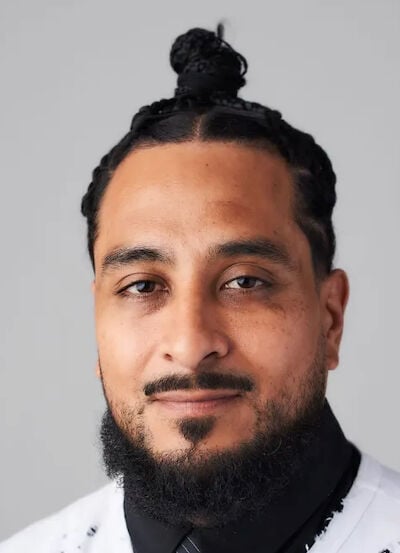
Andony Corleto is a former incarcerated firefighter who now works as a program associate for Vera California, part of the Vera Institute of Justice.
Thanks, Andony, for a great guest perspective piece. You are absolutely correct... incarcerated firefighters should be treated fairly, and reasonable compensation for their services is a good place to start.
Thanks for your letter, Mr. Corleto, relating your personal experience. If I recall correctly, those who are incarcerated have the opportunity to volunteer to be firefighters and as such, those who volunteer understand what comes and what does not come with the job. It is the same with any job. If folks aren’t satisfied with their job, they can opt for another job. Of course, that job may not have a sense of purpose or the chance to do good. Regardless, good luck in promoting your cause.
Keep the discussion civilized. Absolutely NO
personal attacks or insults directed toward writers, nor others who
make comments. Keep it clean. Please avoid obscene, vulgar, lewd,
racist or sexually-oriented language. Don't threaten. Threats of harming another
person will not be tolerated. Be truthful. Don't knowingly lie about anyone
or anything. Be proactive. Use the 'Report' link on
each comment to let us know of abusive posts. PLEASE TURN OFF YOUR CAPS LOCK. Anyone violating these rules will be issued a
warning. After the warning, comment privileges can be
revoked.
Please purchase a Premium Subscription to continue reading.
To continue, please log in, or sign up for a new account.
We offer one free story view per month. If you register for an account, you will get two additional story views. After those three total views, we ask that you support us with a subscription.
A subscription to our digital content is so much more than just access to our valuable content. It means you’re helping to support a local community institution that has, from its very start, supported the betterment of our society. Thank you very much!



(2) comments
Thanks, Andony, for a great guest perspective piece. You are absolutely correct... incarcerated firefighters should be treated fairly, and reasonable compensation for their services is a good place to start.
Thanks for your letter, Mr. Corleto, relating your personal experience. If I recall correctly, those who are incarcerated have the opportunity to volunteer to be firefighters and as such, those who volunteer understand what comes and what does not come with the job. It is the same with any job. If folks aren’t satisfied with their job, they can opt for another job. Of course, that job may not have a sense of purpose or the chance to do good. Regardless, good luck in promoting your cause.
Welcome to the discussion.
Log In
Keep the discussion civilized. Absolutely NO personal attacks or insults directed toward writers, nor others who make comments.
Keep it clean. Please avoid obscene, vulgar, lewd, racist or sexually-oriented language.
Don't threaten. Threats of harming another person will not be tolerated.
Be truthful. Don't knowingly lie about anyone or anything.
Be proactive. Use the 'Report' link on each comment to let us know of abusive posts.
PLEASE TURN OFF YOUR CAPS LOCK.
Anyone violating these rules will be issued a warning. After the warning, comment privileges can be revoked.