
The U.S. Supreme Court has accepted a case with potentially catastrophic consequences for homeless people in California — and for the Constitution.
On its face, City of Grants Pass v. Johnson appears relatively straightforward, as lawyers for the Oregon city framed the case: “Does the enforcement of generally applicable laws regulating camping on public property constitute cruel and unusual punishment prohibited by the Eighth Amendment?”
In the courts and on the ground, a lot is at stake.
In 2018, relying on a 1962 Supreme Court case from California holding that the government cannot punish people for their involuntary status, the Ninth Circuit Court of Appeals ruled in Martin v. Boise that punishing homeless people for sleeping outside in the absence of available shelter beds constituted cruel and unusual punishment. Last year, the Ninth Circuit barred enforcement of anti-camping ordinances in Grants Pass that punished people for having basic bedding, such as a blanket, pillow or even cardboard.
Though often mischaracterized, the Ninth Circuit cases neither prohibit enforcement of public health and safety laws, nor do they prevent local officials from addressing issues like encampments.
The Supreme Court declined to hear Boise’s appeal of the Martin case, but last week it took the Grants Pass case after Republican appointees on the Ninth Circuit issued a scathing dissent to the full circuit court’s decision last year not to review the ruling. Homelessness policy creates strange bedfellows, and Gov. Gavin Newsom and city attorneys across California filed briefs asking the nation’s highest court to weigh in.
The Supreme Court has gone out of its way to take Grants Pass, which does not bode well for the protections afforded by the Eighth Amendment or the basic rights and wellbeing of homeless people.
For more than a century, the court has held that the Eighth Amendment “may acquire wider meaning as public opinion becomes enlightened by humane justice.” In 1958, the court said the amendment “must draw its meaning from the evolving standards of decency that mark the progress of a maturing society,” which became settled doctrine.
Recommended for you
This Supreme Court, however, seems determined to set the clock back by prioritizing history and tradition over evolving standards of decency. In this revisionist reading, articulated most recently in the dissent last week by a Ninth Circuit Trump appointee in a San Francisco case, the “history” of the Eighth Amendment and the long “tradition” of anti-vagrancy laws suggest an original meaning of the Constitution that imposes little or no judicial constraint on laws like those at issue in Martin and Grants Pass.
Newsom and others have sided with this cramped view of the Constitution because they say the courts have tied their hands, but this is disingenuous. The governor and city attorneys are explicitly asking the Supreme Court to permit them to use criminal and civil penalties to punish people because of a collective government failure to provide affordable housing and adequate shelter across the state.
Critiques of Martin and Grants Pass are also shortsighted. Studies are clear that enforcing these kinds of laws perpetuate homelessness and impose substantial health and material harms on unhoused people.
Overturning Martin and Grants Pass would be a mistake. Since 2018, lower court decisions have actually spurred cities to invest in solutions. Three years ago, Chico officials complained bitterly when a federal court said that providing homeless people access to an asphalt tarmac without a roof, walls, water or electricity was inadequate.
Barely a year later, the city relented and built 177 tiny homes.
Of course, the Supreme Court could affirm the Ninth Circuit’s holding in Grants Pass, sending a message that homeless people are protected by the Constitution like everyone else. The justices could also reverse the circuit court on narrow grounds without undermining many decades of Eighth Amendment cases.
Whatever the outcome, officials across California should not return to criminalizing homelessness or use inhumane shelter options like sweltering asphalt as a cover for failed policies.
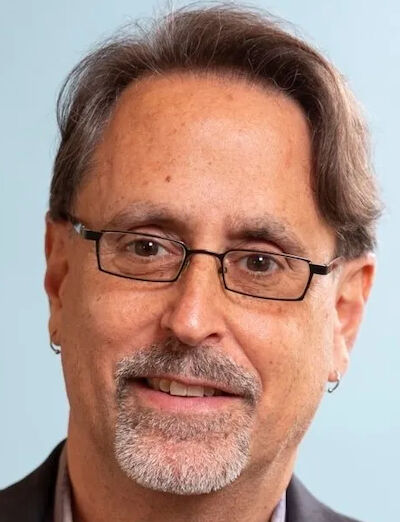
Jeffrey Selbin is a law professor at UC Berkeley and co-director of the Policy Advocacy Clinic at the UC Berkeley School of Law. He wrote this for CalMatters.org, a nonprofit, nonpartisan media venture explaining California policies and politics.


(7) comments
Thanks for your editorial, Professor Selbin. I’d say that laws regulating camping on public property will not constitute cruel and unusual punishment. If there are existing laws on the books, they should be enforced. If new laws are passed, they can be challenged but can no longer rely on the Hail Mary of cruel and unusual punishment. Meanwhile, for all those who support housing the homeless, why aren’t these folks setting an example by housing some homeless? If they’re not willing to house a few, why should taxpayers foot the bill to house them? Meanwhile, what solutions are you proposing, Professor Selbin? We already know throwing money at the problem, a la Newsom, is only helping to pay homeless industrial complex salaries more than helping the homeless. Perhaps we can dismantle the homeless industrial complex and instead pay folks to house some homeless?
Hey, Terence... the writer suggests "criminalizing" urban camping will cause an increase in homelessness... maybe not. While Coronado down south did not have the same numbers of homeless, that city started enforcing local ordinances AND at the same time providing access to services to get unsheltered folks into safe spaces. So, if advocates see SCOTUS decide in their favor re: camping, could we expect that cities and counties would be empowered to take action against strewing refuse about or leaving human waste in public or using dangerous drugs in public? There comes point when we, as a society, must ask ourselves... how long can we encourage bad behavior? That being said... factoring out the mentally ill and their special needs... let's help folks get into safe sheltered spaces. If they choose to decline assistance, do we then hold them to the same standards that would apply to everyone reading these comments?
This is not easy... and throwing more money at the problem is not working.
Thanks for this! I've been doing a series of columns on homelessness and am also anxious to see how the Supreme Court decides on this. The City of Sacramento has an interesting program that I'm hoping to learn more about and cover. https://sacramentocityexpress.com/2024/01/05/city-to-open-new-shelter-and-service-campus-for-people-experiencing-homelessness/
C'mon, Craig... what will this Sacramento program do create affordable housing? Dedicating small parcels for tents, trailers, and tiny pre-fab cabins may make people feel good, but it is not a solution to this crisis. Playing "musical" tents is not the answer.
Ray, good observations above and below. I’m not sure Sacramento is capable of creating affordable housing unless you consider $478,000 per unit affordable (https://californiaglobe.com/articles/478000-per-unit-homeless-tiny-apartments-now-open-in-sacramento/). I don’t see coverage as to what happened to the 180 previous paying residents (are they now homeless?). (Perhaps in a follow-up article.) Meanwhile, if you’re bored, some of the comments are informational and offer alternative solutions (such as housing some in Susanville prison).
Hi, Terence
No one can be serious about Susanville, although the photo of units in that article looks like something out of Manzanar from 80 years ago. Craig and I definitely want the same thing... real solutions to the homelessness crisis. I think everybody does. As you pointed out, the exorbitant amounts of money being spent is not producing results. There was one thing conspicuously absent in that article... cost. However, there was one interesting number published. During the lasty three months of 2023, the City of Sacramento cleaned up 3.5 million pounds of trash associated with area encampments. The term paradigm shift is almost a cliche these days, but that's what we need... a whole new way of thinking about homelessness solutions... new thinking by the helpers and those seeking help.
An update… The cost of a unit isn’t $478,000, its $567,000 (https://www.kcra.com/article/sacramento-homeless-housing-saint-clare-capitol-park/46449313), more than $100,000 higher than the median listing home price for the Sacramento area. Still no word on the 180 folks kicked out. Perhaps they got first dibs? With those plush accommodations, I wouldn't be surprised if homeless folks in the Bay Area migrate to Sacramento.
Welcome to the discussion.
Log In
Keep the discussion civilized. Absolutely NO personal attacks or insults directed toward writers, nor others who make comments.
Keep it clean. Please avoid obscene, vulgar, lewd, racist or sexually-oriented language.
Don't threaten. Threats of harming another person will not be tolerated.
Be truthful. Don't knowingly lie about anyone or anything.
Be proactive. Use the 'Report' link on each comment to let us know of abusive posts.
PLEASE TURN OFF YOUR CAPS LOCK.
Anyone violating these rules will be issued a warning. After the warning, comment privileges can be revoked.