I’ve long had a special fondness for Disneyland. Growing up in Southern California, I was fortunate to be able to visit the park every few years. As an adult, my wife and I have gone several times, both with and without our kids. I find Disneyland fascinating. While it may not be everyone’s cup of tea, part of its magic is in how it can appeal to young and old.
The pandemic has done a number on Disneyland. Both it and its sister park, Disney California Adventure, closed to the public almost exactly one year ago, and have essentially remained closed to this day (parts of California Adventure have reopened to a limited number of people, but only for shopping and dining). Prior to the pandemic, though, Disneyland had become a victim of its own success, with its popularity often resulting in record attendance. It had gotten to the point where, on certain days, the park had to stop selling tickets and then temporarily close its gates, only reopening them once enough people had exited.
In thinking about Disneyland, it occurred to me that, in a way, its prepandemic problems mirror our local housing issues. Just as Disneyland has become too popular for its own good, so has the Bay Area. In both cases, demand has outstripped supply, resulting in real inequities both in who can go to Disneyland and who can live here in the Bay Area.
When supply and demand are out of balance, normally you increase supply, decrease demand or both. With both Disneyland and Bay Area housing, increasing supply is made difficult by the fact that essentially all developable land has already been developed. Unlike with the Bay Area, over the years Disney has been able to purchase a couple of surrounding properties, giving them some options for expansion. But their largest option came from increasing density in a fashion; by replacing existing surface parking lots with massive multistory parking garages. Just one of those garages — the seven-story, 10,250-car Mickey & Friends parking structure — enabled the creation of Disney California Adventure, which increased resort capacity by an estimated 60%.
Recommended for you
The Bay Area can do something similar, although not all in one fell swoop, and likely not to the same degree. We have countless surface parking lots that could be replaced with parking garages. For instance, although the giant parking garage the county is currently building in Redwood City isn’t actually freeing up land, it is addressing future anticipated demand from the county office building soon to rise along Marshall Street. And up and down the Peninsula we’re seeing increasing number of high-density housing projects, making more efficient use of the limited land we have and increasing our housing supply.
Dealing with supply helps, but that alone won’t solve the problem. Thus, we also have to address demand. Being a corporation, Disney can take direct steps — such as closing its park gates — that governments cannot. Instead, governments have to rely on the natural consequences of overcrowding, such as increased traffic, to decrease the quality of life and thereby reduce our area’s desirability. Of course, this works for Disneyland as well: A crowded park is a real turn-off. But both here at home and at Disneyland, demand has so outstripped supply that even the inconveniences that overcrowding brings have not been enough to put demand on a level with supply.
Pricing is another major mechanism that is often used to bring demand and supply into balance. Disney has done this by raising ticket prices steadily for a number of years now. In the Bay Area, housing prices have risen more organically, but to similar effect. In both cases, prices are now so high that only the privileged few can afford them. Disney has tried to alleviate the resulting inequities by instituting variable pricing; on days with less demand, tickets are more affordable. But without a similar ability to directly control rents and selling prices, governmental agencies have fewer options to bring down housing prices. Forcing developers to include affordable units in their otherwise market-rate developments is one, as is encouraging affordable housing organizations to build and manage affordable developments. But creating affordable units costs real money, and that has to come from somewhere, be it from taxpayers, from donations or from inflated prices of the “market-rate” units. Those costs ultimately limit the number of affordable units that can actually be created.
Disneyland is a wonderful place. In many ways, I wish the Bay Area was more like it. Unfortunately, Disneyland is an elaborate fantasy, while the Bay Area is real. Both have real problems, with no magic solutions. Once the pandemic is largely behind us, and life returns to something close to normal, I for one will be watching both to see how they deal with them.
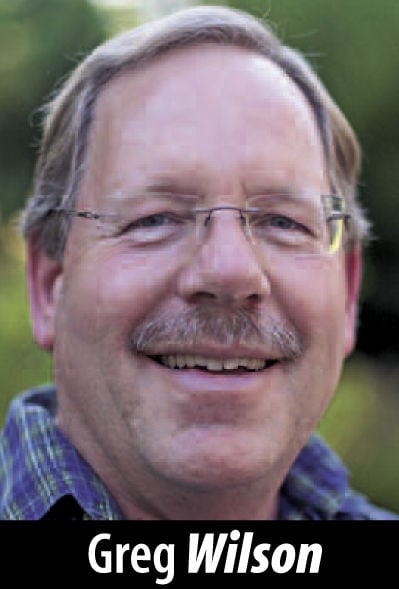
Greg Wilson is the creator of Walking Redwood City, a blog inspired by his walks throughout Redwood City and adjacent communities. He can be reached at greg@walkingRedwoodCity.com. Follow Greg on Twitter @walkingRWC.
Greg - I think you are missing the boat on this one. In the past, a city would look at the impact of establishing a business that would include housing for the employees, traffic, schools, and utility arrangements. In their drive to increase the tax base, these cities, and all of them around us, have totally ignored those environmental issues and have welcomed new employers with open arms. Now the city leaderships are telling us that we need more affordable housing. That should have been the responsibility of the planners and they should have demanded that these new companies include the required infrastructure and resources in their decision to locate here. In other words, very poor planning and now we may be stuck with a housing shortage for years to come.
Keep the discussion civilized. Absolutely NO
personal attacks or insults directed toward writers, nor others who
make comments. Keep it clean. Please avoid obscene, vulgar, lewd,
racist or sexually-oriented language. Don't threaten. Threats of harming another
person will not be tolerated. Be truthful. Don't knowingly lie about anyone
or anything. Be proactive. Use the 'Report' link on
each comment to let us know of abusive posts. PLEASE TURN OFF YOUR CAPS LOCK. Anyone violating these rules will be issued a
warning. After the warning, comment privileges can be
revoked.
Please purchase a Premium Subscription to continue reading.
To continue, please log in, or sign up for a new account.
We offer one free story view per month. If you register for an account, you will get two additional story views. After those three total views, we ask that you support us with a subscription.
A subscription to our digital content is so much more than just access to our valuable content. It means you’re helping to support a local community institution that has, from its very start, supported the betterment of our society. Thank you very much!









(1) comment
Greg - I think you are missing the boat on this one. In the past, a city would look at the impact of establishing a business that would include housing for the employees, traffic, schools, and utility arrangements. In their drive to increase the tax base, these cities, and all of them around us, have totally ignored those environmental issues and have welcomed new employers with open arms. Now the city leaderships are telling us that we need more affordable housing. That should have been the responsibility of the planners and they should have demanded that these new companies include the required infrastructure and resources in their decision to locate here. In other words, very poor planning and now we may be stuck with a housing shortage for years to come.
Welcome to the discussion.
Log In
Keep the discussion civilized. Absolutely NO personal attacks or insults directed toward writers, nor others who make comments.
Keep it clean. Please avoid obscene, vulgar, lewd, racist or sexually-oriented language.
Don't threaten. Threats of harming another person will not be tolerated.
Be truthful. Don't knowingly lie about anyone or anything.
Be proactive. Use the 'Report' link on each comment to let us know of abusive posts.
PLEASE TURN OFF YOUR CAPS LOCK.
Anyone violating these rules will be issued a warning. After the warning, comment privileges can be revoked.