

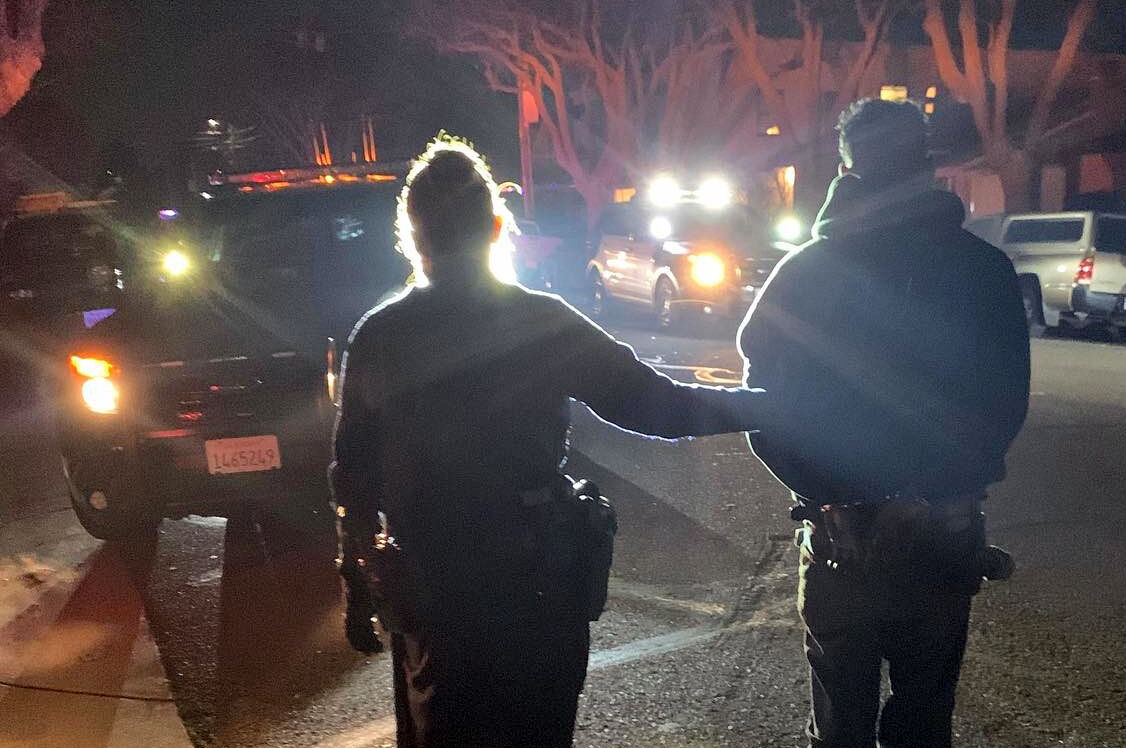
It’s been a little over two years since three police departments — Daly City, San Bruno and San Mateo — started a joint task force to combat increasing levels of organized retail theft.
The program, made possible by a state grant, was created in response to soaring retail theft rates throughout the county, especially in those three cities, which have malls that have attracted a higher concentration of theft.
Daly City saw a 240% increase from 2019-23, and San Mateo saw a roughly 75% increase in retail theft arrests between 2020-23.
According to data from the Public Policy Institute of California, San Mateo County had a 53% spike in shoplifting during that same time period, making it the largest such increase out of the state’s 15 largest counties.
According to a recent press release, the task force has made 372 arrests since it started on Oct. 1, 2023, with about $170,000 worth of stolen merchandise recovered.
But public records data for theft arrests in those cities show a more complicated picture of how long it could take before retail theft declines for good.
Right before the task force was formed — between Jan. 1 and Oct. 1, 2023 — there were approximately 100 retail theft arrests made in San Mateo, compared to about 250 and 275 arrests during that same time period in 2024 and 2025, respectively. In Daly City, during the same January to October periods, there was more than a 40% increase in shoplifting and petty theft arrests between 2023 and 2025.
Daly City police Capt. Ignacio Reyes said he couldn’t weigh in on the reasons behind a potential increase, however, San Mateo Police Chief Ed Barberini said that between the task force formation and Proposition 36 — which went into effect at the end of 2024 and imposes harsher penalties for repeat theft offenders — retail stores are more inclined to report incidents.
“Our ability to collaborate more has encouraged a lot of businesses to be more proactive and report these types of crimes,” Barberini said. “Prior to Prop. 36, there was a lot of frustration, where they didn’t call because they didn’t feel like it was going to be addressed or there wasn’t going to be a solution to the problem.”
According to the press release, the number of reported incidents, or calls for service related to retail theft, declined between 2024 and 2025 by 16%.
Recommended for you
Prop. 36 stipulates that by the third shoplifting conviction, offenders receive a felony and can be sentenced to up to three years in state prison. Prior to the new law, those cases — provided the value of stolen goods was under $950 — would almost always remain as misdemeanors, no matter how many offenses piled up, and hardly ever resulted in more than a few days in jail.
As of mid-October, the county has seen more than 600 Prop. 36 retail theft cases.
However, San Bruno saw a significant drop in arrests in 2025, compared to 2022-23, between January to Oct. 1. San Bruno Police Chief Matt Lethin attributed the drop to a few factors, including the new BART fare gates, as much of the shoplifting occurs from individuals outside the county.
“The BART station leads to people coming from out of town, and they come off and they’re right here by Tanforan,” Lethin said. “That’s linked to fare evasion, so in August, BART also installed the new fare gates, and I think that’s helped.”
San Bruno’s Shops at Tanforan doesn’t have the high-end retailers like San Mateo’s Hillsdale Shopping Center or Daly City’s Serramonte Center, he said, which could also explain the different theft patterns over the past year or two.
“Tanforan is on the cusp on redevelopment so it doesn’t have quite as many stores,” he said. “I would suspect if Tanforan had some of those [high-end] stores, like Lululemon or Sephora, there might be potential to have a greater occurrence there.”
By the time Prop. 36 went into effect, Lethin said the task force had built up a robust, well-run operation and was ready to hit the ground running with enforcing the new law.
“Now they’re being booked in jail, and the District Attorney’s Office has the ability to hold them more accountable,” Lethin said.
The state grant supporting the task force ends at the end of this year, and Lethin said it’s yet to be seen whether more funding will be made available or if a downward trend generates demand for investment in other areas.
“If the trends continue in this way ... we’ll want to reflect on how we spend resources and money on public safety issues, and is retail theft the same issue it was three years ago, or are there better issues we can spend our money on?” he said. “It’ll be interesting to see if this trend continues.”


(0) comments
Welcome to the discussion.
Log In
Keep the discussion civilized. Absolutely NO personal attacks or insults directed toward writers, nor others who make comments.
Keep it clean. Please avoid obscene, vulgar, lewd, racist or sexually-oriented language.
Don't threaten. Threats of harming another person will not be tolerated.
Be truthful. Don't knowingly lie about anyone or anything.
Be proactive. Use the 'Report' link on each comment to let us know of abusive posts.
PLEASE TURN OFF YOUR CAPS LOCK.
Anyone violating these rules will be issued a warning. After the warning, comment privileges can be revoked.