
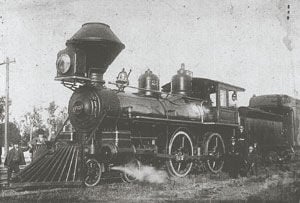
We can claim that Sunset, the magazine about Life in the West, is really ours. It was born in 1898, however, in San Francisco as an advertising tool of the Southern Pacific Railroad Company.
SP wanted to increase rail usage as well as to sell some of the real estate it owned. The image of the West was tarnished by the rough-and-tumble vision of a wild area held by many Easterners. The company sought to counteract this by publicizing the more positive aspects of life out here.
Named after the Sunset Limited railroad line, the magazine began its first issue with the wonders of Yosemite and pictures of garden-filled neighborhoods of Los Angeles. Using lavish illustrations and essays by bright writers, the magazine spread word to the country about the West. The plan was to entice people to move out here. The healthy climate, beautiful scenery and luxurious living were supposed to boost interest. A growing population would not only buy SP land, it would increase rail traffic in general. By 1914, the railroad felt that job had been accomplished, so it sold the magazine to a group of its employees.
Freed from the agenda of the railroad, Sunset widened its horizon to include fiction written by such writers as Mark Twain and Jack London. It became a truly national magazine written from the perspective of the West. Keeping a magazine successful is a tricky business, though, and eventually Sunset began to fade.
In 1929, Lawrence W. Lane bought the magazine. He had previous experience as an advertising executive at Better Homes and Gardens. His vision was to have Sunset present information on the best of Western living as a service magazine. The newcomers here as well as in the other growing western states needed information on gardening, cooking with local ingredients and travel in their new, unfamiliar environments. Originally from Iowa, perhaps Lane personally recognized this need. During and after World War II, the population of California boomed, as did the magazine. Lavish color illustrations returned after the drab war years.
Lane moved the offices of Sunset from San Francisco to Menlo Park in 1951. The family had lived in Palo Alto for years by then and also had a ranch in the Santa Cruz Mountains where many business meetings had been held. Mrs. Lane had often conducted experiments in gardening and cooking at home. Management of the operation eventually passed to the younger generation of the Lane family.
Recommended for you
Sunset not only issued the magazine, but it published books to cover certain topics in greater depth. It has become a basic resource on gardening, travel, cooking, entertaining and home decorating to reflect local lifestyles. It was one of the early innovators in the "how-to book” phenomenon.
In recent years, Sunset Magazine and books has become part of the Time-Warner family and it now operates under the name Sunset Publishing Corporation. It publishes regional editions to highlight local information, but it is still dedicated to travel, garden, home and food of the West. The magazine has thrived, never having missed an issue since it first appeared in 1898. The prosperity of the West has contributed to the success of this service to affluent, sophisticated enthusiasts for western living, wherever they may live. The main offices are still in Menlo Park.
Rediscovering the Peninsula appears in the Monday edition of the Daily Journal. For more information on this or related topics, visit the San Mateo County History Museum, 750 Middlefield Road, Redwood City.<








(0) comments
Welcome to the discussion.
Log In
Keep the discussion civilized. Absolutely NO personal attacks or insults directed toward writers, nor others who make comments.
Keep it clean. Please avoid obscene, vulgar, lewd, racist or sexually-oriented language.
Don't threaten. Threats of harming another person will not be tolerated.
Be truthful. Don't knowingly lie about anyone or anything.
Be proactive. Use the 'Report' link on each comment to let us know of abusive posts.
PLEASE TURN OFF YOUR CAPS LOCK.
Anyone violating these rules will be issued a warning. After the warning, comment privileges can be revoked.