
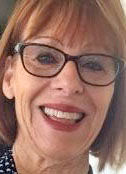
For Bettina Graf, Monday mornings are dedicated to stories.
As the restorative practices lead for the San Mateo County Office of Education, every Monday and Thursday morning Graf sits in a circle with recently incarcerated youth at the San Mateo County Youth Services Center, also known as juvenile hall.
Whether a teen is describing members of his family or is talking how inspirational her best friend is, Graf listens to stories that, in many cases, haven’t been told before. Knowing many of the teens in her Monday and Thursday sessions have been sitting in jail cells and thinking for hours about what landed them there, Graf’s focus is on helping the teens separate their actions from their identities before they begin classes in the county’s court and community schools.
For Graf, talking to incarcerated teens about how their behavior affects their family and friends can be among the steps that breaks through the shame they feel about their situations.
“Oftentimes when they have been sitting in trauma, they don’t feel like they matter,” she said. “In the circle and in our services, that’s one of our main goals, is [to tell them] you do matter, your story matters, you’re getting better matters, you matter.”
Creating spaces where teens can have these discussions is part of a restorative approach Graf has been working for the past two years to incorporate in the culture of programming created for youth at juvenile hall and San Mateo County’s court and community schools.
At the Gateway Community School where Graf also facilitates restorative circles, students from the Youth Services Center are walked a short distance to the school each day to attend six single-subject classes as they work toward a high school diploma.
In both juvenile hall and the Gateway Community School, Graf has found restorative circles can give youth who may be facing a complex set of challenges at home or school a chance to repair their relationships. Having previously served as assistant principal at the continuation high school in San Bruno, Graf saw how punitive measures like repeated school suspensions and interactions with the juvenile justice system can make complex situation even more complicated for some students.
She said feelings of shame can be very deeply entrenched for the students she works with, and she has observed students develop a sense of self-worth through the restorative circles, where they have been able to piece together their stories with others who are listening.
“People get stuck in that [shame],” she said. “The only way to remove that shame is to tell your story.”
Shelly Johnson, a court support teacher set to become juvenile hall’s assistant principal in July, also facilitates restorative circles twice a week in an orientation for new and returning students at juvenile hall. Johnson said even a brief incarceration can be traumatic for youth, many of whom have several questions about why they are incarcerated or what the next steps are for their court cases when they are let out of their units for the first time at orientation.
Recommended for you
Johnson said spending a few minutes listening to what is on students’ minds can go a long way toward allowing them to focus on the classes they are required by state law to enroll in within 24 hours of their arrests. She has also seen them develop a stronger sense of trust in their teachers and other professionals who work with them in the juvenile justice system, giving her hope they will be better equipped to re-enter their communities and maintain a positive relationship with adults.
“I see big changes in their mentality in school and just overall trust of adults,” she said. “[They] know people are for them and not always against them because they’re taking the time to get to know their stories.”
For Jeneé Littrell, deputy superintendent of student services for the San Mateo County Office of Education, the effort to weave restorative practices into the education received by the more than 300 students in the county’s court and community schools last year has paid off, marking a shift in school culture she hopes can be translated into the county’s 23 school districts. Littrell said the County Office of Education partners with several agencies and professionals like the San Mateo County Probation Department and mental health clinicians to integrate these practices into the school setting, and noted several partners have observed a transformation in some of the students they’ve worked with since the practices were first used some two years ago.
Littrell said practices like restorative circles or smaller sessions have helped shape a foundation for the disciplinary model used with incarcerated students. By allowing them to share their experiences, the practices have given both students and educators a voice in finding ways to move forward, an experience she expects to help everyone work through conflict more effectively.
“There’s a foundation now for we handle things together as a community,” she said. “We talk things through and your voice matters.”
Graf is working to develop ways to introduce families of incarcerated students to restorative strategies, which she expects will help students transition back into their homes and communities and decrease their chances of interacting with the juvenile justice system again.
She said she has been looking forward to seeing the framework applied to a May 29 graduation ceremony for some of the students she works with, which she said is designed to highlight their resilience in pursuing their education as well as goals they have set for themselves.
Graf said graduations usually draw a crowd, with social workers, mental health staff, probation officers, among others, joining the families of graduates to celebrate the positive effects of their choice to pursue their education.
“You see all of these people who love them [and] who have been affected by their behavior for years,” she said. “For them to come to their graduation, to actually get to be affected in a positive way, and feel … so proud and like their student has turned a corner, it’s huge.”
(650) 344-5200 ext. 106





(1) comment
Thank you, Bettina, for doing this very much needed and urgent work. -Marco/San Bruno
Welcome to the discussion.
Log In
Keep the discussion civilized. Absolutely NO personal attacks or insults directed toward writers, nor others who make comments.
Keep it clean. Please avoid obscene, vulgar, lewd, racist or sexually-oriented language.
Don't threaten. Threats of harming another person will not be tolerated.
Be truthful. Don't knowingly lie about anyone or anything.
Be proactive. Use the 'Report' link on each comment to let us know of abusive posts.
PLEASE TURN OFF YOUR CAPS LOCK.
Anyone violating these rules will be issued a warning. After the warning, comment privileges can be revoked.