The Spanish had their joyous times. Because there was very little money in the communities, the Spanish and Mexicans expressed themselves by wearing beautifully adorned clothes. They displayed them at dances — fandangos at their haciendas of the rancheros. Social events like rodeos were also a good opportunity to strut themselves. When the Americans, Chileans, Europeans and other ethnic groups descended on San Francisco they brought their ideas of culture to the West. At first, parades were a big celebrating event in Yerba Buena — Jacob Leese (who married one of Vallejo’s daughters) celebrated with a two-day event held at his home for the Fourth of July. Beyond that, few social events for the community occurred.
When the miners were producing a lot of gold, gambling and drinking was abundant. But when the gold dust was thin, fewer frequented the gambling dens. What could be the first formal entertainment occurred on June 22, 1849, at the school house on Portsmouth Square. Stephen Massett, a native of New York and composer of “The Moon on the Lake is Beaming,” plus others, produced a “concert of vocal music.” His lengthy program was well received and he made $500 for the performance. This opened the flood gates for other performers to begin the tradition of culture in San Francisco. In 1850, a group rented the second floor of a building and produced a melodrama, “The Wife” and Shakespeare’s “Richard III.” These events moved to a large tent and continued to sell out to large crowds. In April 1951, the town’s first theater was built. On July 4, the Dramatic Museum on California Street, just off Montgomery Street, opened. A month later, the Jenny Lind opened across from Portsmouth Square. It enjoyed much success until it was destroyed by a fire in 1851. The rebuilt theater of brick and stone was later sold to the city and became City Hall. The circus became a common means of entertainment. By the end of 1850, three circuses were drawing large crowds: one on Kearny Street between Clay and Washington streets, a second on Montgomery near California streets, and a third on the western side of Portsmouth Square.
It was music that satisfied most of the male population that made up the frontier city of San Francisco. It was to become known as a very cultured city and traveling companies of actors and singers made it a must stop for their group. In May 1853, a famous dancer named Lola Montez arrived in San Francisco and shook up the musical community. Lola (born Eliza Rosanna Gilbert February 1821-January 1861) had led a fabulous and public life, marrying often and with very rich people. When 16, she eloped with a Lt. Thomas James and separated five years later in Calcutta. After this, she made her professional debut in London under the name of “Lola Montez.” After much scandal and many romances, she moved to Paris but was unsuccessful as a dancer. The Bohemian society of Paris accepted her as one of her own but, after the death of her lover, newspaperman Alexandre Dujarier, she moved to Munich where she was discovered by, and became the mistress of, Ludwig I of Bavaria. She became the countess of Landsfeld from which she received a large annuity. With the abduction of Ludwig in 1848 she fled Bavaria and eventually arrived in the United States and, after adjusting her career’s direction by doing her famous erotic spider dance in Australia in 1855, she became the rage to see. The erotic spider dance marked her for life as being “utterly subversive to all ideas of public morality.”
After an appearance in San Francisco she married a newspaperman, Patrick Hall, and retired to Grass Valley where she discovered a red-haired, black-eyed girl with an impressive laugh, Lotta Crabtree. Lotta became a sensation after performing in numerous miner camps. The public loved her and her mother edged her on in this career. She learned jigs, flings, wild polkas and a whole range of soft shoe dancing as well as songs accompanied by a banjo. She liked wearing men’s clothes and smoking cigars and soon became the richest performer in America.
While performing in San Francisco, she presented the city with a cast iron fountain on Sept. 9, 1875. It is located off of Market Street, where Geary and Kearny streets connect. During the devastation of the 1906 earthquake, the site became a meeting place for survivors of the city and it is now a San Francisco Landmark, No. 73. Each year, at 5:12 a.m. April 18, the survivors of the 1906 earthquake meet to commemorate the event.
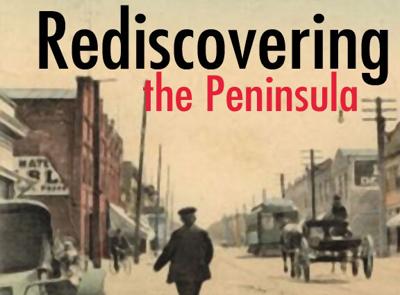
Rediscovering the Peninsula runs every weekend. It is compiled through our archives created by Jim Clifford and the late Darold Fredricks.
Keep the discussion civilized. Absolutely NO
personal attacks or insults directed toward writers, nor others who
make comments. Keep it clean. Please avoid obscene, vulgar, lewd,
racist or sexually-oriented language. Don't threaten. Threats of harming another
person will not be tolerated. Be truthful. Don't knowingly lie about anyone
or anything. Be proactive. Use the 'Report' link on
each comment to let us know of abusive posts. PLEASE TURN OFF YOUR CAPS LOCK. Anyone violating these rules will be issued a
warning. After the warning, comment privileges can be
revoked.
Please purchase a Premium Subscription to continue reading.
To continue, please log in, or sign up for a new account.
We offer one free story view per month. If you register for an account, you will get two additional story views. After those three total views, we ask that you support us with a subscription.
A subscription to our digital content is so much more than just access to our valuable content. It means you’re helping to support a local community institution that has, from its very start, supported the betterment of our society. Thank you very much!



(0) comments
Welcome to the discussion.
Log In
Keep the discussion civilized. Absolutely NO personal attacks or insults directed toward writers, nor others who make comments.
Keep it clean. Please avoid obscene, vulgar, lewd, racist or sexually-oriented language.
Don't threaten. Threats of harming another person will not be tolerated.
Be truthful. Don't knowingly lie about anyone or anything.
Be proactive. Use the 'Report' link on each comment to let us know of abusive posts.
PLEASE TURN OFF YOUR CAPS LOCK.
Anyone violating these rules will be issued a warning. After the warning, comment privileges can be revoked.