The Bay Area is one of the most expensive places to live in the nation and one nonprofit is taking a new approach to trauma-informed care by assisting community members who need stable housing.
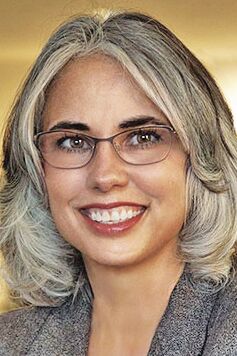
Kate Comfort
For 50 years, HIP Housing has helped people secure housing through its various programs. Executive Director Kate Comfort Harr said the nonprofit has recently implemented a new technique to its repertoire, trauma-informed care. The technique is based on the theory that past traumas can affect day-to-day adult life, health and the ability to be self-sufficient, Comfort Harr said.
“Instead of asking what’s wrong with someone, we ask what happened to them,” Comfort Harr said.
The new technique will be implemented by offering participants a twice-yearly assessment to figure out the kinds of trauma they experienced and monitoring it over time. Depending on the outcome of the assessments, HIP’s staff works with a marriage and family therapist who specializes in trauma-informed care. Participants will have an opportunity to see the therapist for 10 free sessions paid for by HIP, Comfort Harr added.
HIP’s staff will be fully trained on how to recognize and interact with those who have been affected by previous traumas. They will be equipped with interpersonal communication skills, calming exercises, mindfulness techniques and how to regulate their own reactions toward participants, she said.
Also, various self-help reading material, modules, workbooks and activities will be available for participants in need. The range of help varies, Comfort Harr added, from parenting skills, budgeting tools to whatever is needed to live a self-sufficient life.
“What we are doing in the future is creating robust programs that allow for more housing opportunities. And simultaneously, recognizing how past experiences can affect people’s lives,” Comfort Harr said. “When trauma is prevalent in someone’s life, it impacts how they react to stress, their health, their decision-making and can affect their ability to be housed.”
The nonprofit’s philosophy toward trauma-informed care is to understand, recognize and empathize the impacts trauma has on people’s lives and then provide them with tools to get past the barriers that trauma creates, Comfort Harr said.
The technique was first introduced to Comfort Harr when she attended a conference where Dr. Nadine Burke Harris, the state’s first surgeon general, spoke about trauma-informed care seven years ago.
“It opened up the possibilities for how HIP could better support its participants,” said Comfort Harr, adding it was a transformative experience.
In 2022, the county counted 1,808 people experiencing homelessness, 1,092 unsheltered. Results from a survey revealed 32% of the county’s homeless population slept on the street or in a tent, according to the county’s one day count and survey.
“Countywide, we are seeing the idea that trauma plays a much more significant role in our success and how it can impact the community and people’s ability to find housing and remain housed and to have a clear understanding why the work HIP Housing is doing is so important,” Comfort Harr said.
Recommended for you
HIP assists more than a thousand community members every year. It serves its participants through three main programs: self-sufficiency, property management and development and home sharing.
The self-sufficiency program offers housing opportunities and rental scholarships while parents are in school. The program exists as a way to break the poverty cycle, Comfort Harr said. It is designed to offer resources and support services to low-income parents or emancipated foster youth in school. The goal is to help participants into a self-sustaining life within one to five years. Participants receive subsidized rent while completing job training programs or reaching their academic goals, according to HIP’s website.
The self-sufficiency team was also the first to be trained for trauma-informed care and Comfort Harr said it was so useful she believed all of her staff should be trained for the techniques.
The property management and development program is geared toward the nonprofit’s 11 deed-restricted multi-family housing developments. The developments were bought and managed throughout the county. The homes are reserved for very-low-income residents who make under 60% of the average median income in the county, or $ 76,740 per year for a one-person household, according to the county’s website.
The program is a way to ensure low-income renters don’t become displaced, Comfort Harr said.
The home sharing program matches homeowners, who are looking to provide housing and needed income, with renters in need of a room to rent. HIP facilitates matches by vetting applicants, running background checks and offers an array of free services to ensure all parties have stable and safe housing, Comfort Harr said.
“It’s great for single people who are looking for a roommate and it’s a great alternative for homeowners who don’t want to use Craigslist,” Comfort Harr said.
The nonprofit is funded by grants and donations. It’s largest fundraiser, an annual luncheon, will be at the Grand Bay Hotel in Redwood City 11 a.m. to 1:30 p.m. May 5. The fundraiser will feature Burke Harris who will speak about how she discovered childhood trauma, its effects on adult life and its connection to housing disparities. The goal this year is to raise $125,000, Comfort Harr said, all of which goes to the three programs.
Burke Harris started a pediatric clinic in San Francisco’s Bayview District after she finished her medical residency. She was focused on addressing health disparities and serving underserved communities, she said.
“I had a patient who was a 7-year-old boy and was the height of a 4-year-old. He experienced a trauma at 4 and, essentially, stopped growing. And that was the catalyst for me to dive into the science of how experiencing trauma in childhood affects the developing brains and bodies of children,” Burkes Harris said. “My one goal is for people to really understand that healing from childhood adversity requires us to have trauma-informed systems.”
Luncheon tickets are still available for $125. Email, kgoodman@hiphousing.org to reserve a ticket or visit hiphousing.org for more information on services or ways to donate.
Keep the discussion civilized. Absolutely NO
personal attacks or insults directed toward writers, nor others who
make comments. Keep it clean. Please avoid obscene, vulgar, lewd,
racist or sexually-oriented language. Don't threaten. Threats of harming another
person will not be tolerated. Be truthful. Don't knowingly lie about anyone
or anything. Be proactive. Use the 'Report' link on
each comment to let us know of abusive posts. PLEASE TURN OFF YOUR CAPS LOCK. Anyone violating these rules will be issued a
warning. After the warning, comment privileges can be
revoked.
Please purchase a Premium Subscription to continue reading.
To continue, please log in, or sign up for a new account.
We offer one free story view per month. If you register for an account, you will get two additional story views. After those three total views, we ask that you support us with a subscription.
A subscription to our digital content is so much more than just access to our valuable content. It means you’re helping to support a local community institution that has, from its very start, supported the betterment of our society. Thank you very much!








(0) comments
Welcome to the discussion.
Log In
Keep the discussion civilized. Absolutely NO personal attacks or insults directed toward writers, nor others who make comments.
Keep it clean. Please avoid obscene, vulgar, lewd, racist or sexually-oriented language.
Don't threaten. Threats of harming another person will not be tolerated.
Be truthful. Don't knowingly lie about anyone or anything.
Be proactive. Use the 'Report' link on each comment to let us know of abusive posts.
PLEASE TURN OFF YOUR CAPS LOCK.
Anyone violating these rules will be issued a warning. After the warning, comment privileges can be revoked.