While it’s hard to forecast past October, the Bay Area and San Mateo County should expect the dry season to continue as the state faces fire season and the ongoing drought.
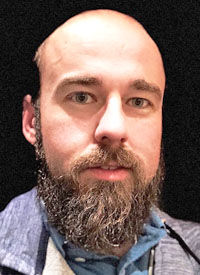
Roger Gass
“It’s unlikely that we’re going to get significant precipitation through at least the month of October. It’s pretty unlikely that we see heavy rainfall move in, until we reach the winter month,” said Roger Gass, meteorologist at the National Weather Service.
A little bit of rainfall across the region could start in October and then pick up more in November and December. The current drought conditions bring concerns for if there is any strong offshore wind, a wildfire would have the potential to spread rapidly, he said.
“It is typically during the fall that we get offshore wind that really crank up and are really strong at times in the hills and at higher elevation. And that’s something that we all need to monitor closely, especially given the ongoing drought,” he said.
Over the past five to 10 years, fire season has started earlier and lasted longer across the state of California which is also due to the ongoing dry conditions and rainfall starting later, he said.
“In the last decade plus, California has been setting some kind of new wildfire record almost every year, whether it’s the size of fire, dollar value of damages from fire, the number of acres burned,” Jeanine Jones, interstate resources manager and drought manager at the California Department of Water Resource, said. “And that reflects that we have this condition of ongoing aridity and high temperatures.”
The water year 2021, which runs from Oct. 1 to Sept. 30 has been dry statewide. From the historical climate records, August, September and October are typically pretty dry. And on average, 50 percent of California’s precipitation occurs in December, January and February, she said.
“And it really is that period from December on that’s really important for how we do with the water year. And that is, unfortunately, the period that no one can predict with any lead time,” she said.
Recommended for you
To better facilitate this transition to drier conditions, she said there needs to be improved forecasting at a longer time scale, particularly for precipitation, to get a longer lead time about what to expect for the next year and what do they need to do about it now.
“And that really falls on NOAA because they are the experts at meteorology,” she said.
NOAA, The National Oceanic and Atmospheric Administration, is an agency within the U.S. Department of Commerce that forecasts weather, monitors oceanic and atmospheric conditions.
Droughts are a normal part of California’s hydrologic cycle but since 2000, the state has experienced a preponderance of dry years, she said.
“We’re seeing a transition from drought that only occurs occasionally, which has been historically normal, to dry conditions becoming essentially drier and warmer conditions becoming essentially an ongoing thing,” she said. “And what we’re really doing is transitioning to a different climate state so we need to stop thinking about drought as being an emergency and think about a transition to drier conditions.”
The longer dry conditions persist, the larger the deficit in terms of atmospheric or climatic moisture, such as low levels of lakes and reservoirs, low stream flows and soil moisture. The coming wet season will have to have well above average precipitation to get average runoff, Jones said.
Keep the discussion civilized. Absolutely NO
personal attacks or insults directed toward writers, nor others who
make comments. Keep it clean. Please avoid obscene, vulgar, lewd,
racist or sexually-oriented language. Don't threaten. Threats of harming another
person will not be tolerated. Be truthful. Don't knowingly lie about anyone
or anything. Be proactive. Use the 'Report' link on
each comment to let us know of abusive posts. PLEASE TURN OFF YOUR CAPS LOCK. Anyone violating these rules will be issued a
warning. After the warning, comment privileges can be
revoked.
Please purchase a Premium Subscription to continue reading.
To continue, please log in, or sign up for a new account.
We offer one free story view per month. If you register for an account, you will get two additional story views. After those three total views, we ask that you support us with a subscription.
A subscription to our digital content is so much more than just access to our valuable content. It means you’re helping to support a local community institution that has, from its very start, supported the betterment of our society. Thank you very much!






(0) comments
Welcome to the discussion.
Log In
Keep the discussion civilized. Absolutely NO personal attacks or insults directed toward writers, nor others who make comments.
Keep it clean. Please avoid obscene, vulgar, lewd, racist or sexually-oriented language.
Don't threaten. Threats of harming another person will not be tolerated.
Be truthful. Don't knowingly lie about anyone or anything.
Be proactive. Use the 'Report' link on each comment to let us know of abusive posts.
PLEASE TURN OFF YOUR CAPS LOCK.
Anyone violating these rules will be issued a warning. After the warning, comment privileges can be revoked.