
Coyote Point has served many functions for the Peninsula over the years. Now it is back in the news.
It used to be an island, surrounded by shallow marshland. Separated from the shore, it is not likely that any coyotes actually lived there. There was no source of fresh water, so it was not likely to have been a home for our native Ohlone Indians, either. They probably did visit the area though, as small shell mounds have been found there.
When the last of the Mexican land grants were given out, Coyote Point was part of the 6,500-acre Rancho San Mateo that was given by Governor Pio Pico to Cayetano Arenas in 1846. It has been speculated that the name of Coyote Point came from the first name of Arenas. A more likely theory points to the word as a variation on the Native American term used to refer to the island. No actual coyotes were involved.
Arenas sold his land to the San Francisco firm of Mellus and Howard in 1850. Mellus sold his half to Howard and it became the Howard family estate. Although the property was divided up over the years, the portion at Coyote Point remained in the family. The Howards constructed a pier there for loading lumber, and they filled in the marsh between the mainland and the island to create a dairy pasture.
It was the third husband of Mrs. Howard, Henry Bowie, who is credited with having the grove of Eucalyptus planted there in the 1890s. Their gardener, William McLaren, is supposed to have overseen the project. McLaren became the superintendent of Golden Gate Park.
There had always been a beach at Coyote Point, and the Howards added a bathhouse for the convenience of bathers. It became a destination for yachters and picnickers. In 1922, Pacific City Amusement Park was erected at Coyote Point. It was to be a Coney Island of the West, with rides and concessions and swimming. That turned into a failure after the second year, as the afternoon fog and unfortunate sewage contamination made it less than ideal.
A golf course came to the area of the old marsh in 1932, and the Howard family gave the city permission to put in a firing range. By 1940, people were urging the county to buy the property from the Howard family for use as a public park.
Recommended for you
During World War II, the original island area became a Cadet School used by the U.S. Merchant Marines. In 1946, their buildings were sold to the College of San Mateo that then operated a campus there until moving to its present site.
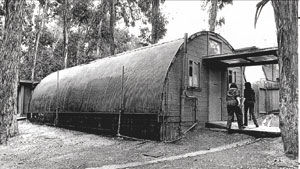
In 1962, the county finally acquired the land for use as a recreation area. It had the golf course, firing range, yacht harbor and beach. There was already a museum located there, also. In 1953, The San Francisco Junior League and the Association of Junior Museums had joined forces to create a museum in one of the old Merchant Marine Quonset huts. In 1954, the museum had opened, dedicated to teaching children about the local natural history of the Peninsula. In 1981, an improved version of the environmental science museum was opened, and the adjoining Wild Habitat Center was added in 1991.
Whatever happens in the future, the county is sure to continue the tradition of providing a significant local learning center for the children of the Peninsula.
Rediscovering the Peninsula appears in the Monday edition of the Daily Journal. For more information on this or related topics, visit the San Mateo County History Museum, 750 Middlefield Road, Redwood City.<





(0) comments
Welcome to the discussion.
Log In
Keep the discussion civilized. Absolutely NO personal attacks or insults directed toward writers, nor others who make comments.
Keep it clean. Please avoid obscene, vulgar, lewd, racist or sexually-oriented language.
Don't threaten. Threats of harming another person will not be tolerated.
Be truthful. Don't knowingly lie about anyone or anything.
Be proactive. Use the 'Report' link on each comment to let us know of abusive posts.
PLEASE TURN OFF YOUR CAPS LOCK.
Anyone violating these rules will be issued a warning. After the warning, comment privileges can be revoked.