In San Ysidro School District, more than a quarter of the district’s nearly 4,400 students are unhoused, according to Superintendent Gina Potter. It highlights the question of how school funding should be determined, she said, while weighing the pros and cons of a switch from the current attendance-based funding formula to an enrollment-based formula during an EdSource roundtable discussion on how a change to California’s funding formula could impact school districts across the state.
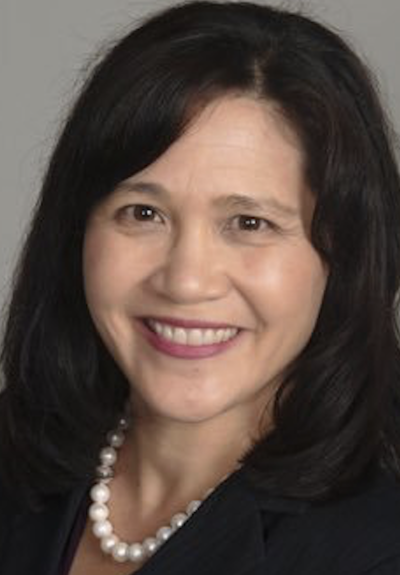
Gina Potter
“I have to say that’s not the system in California that provides a system of support for these families that are so vulnerable,” Potter said. “We really need support, and they don’t want penalties. These are the very children that need our resources.”
She weighed that issue alongside the declining enrollment trends affecting districts across the state as she and other district officials, researchers and lawmakers spoke on the Thursday panel. Historically, California has funded its schools based on their average daily attendance — one of six states to still follow that model and one of several contemplating a shift away from it.
Panelists at the roundtable considered several factors as they weighed the shift, including which groups the change would impact most, how declining enrollment would factor into funding and possible incentives to keep attendance high.
As the attendance-based funding formula stands now, high school districts and districts with more low-income students, English learners and foster youth students are the ones receiving the short end of the stick.
A change to an enrollment-based formula would boost funding across such districts, according to senior director of policy and strategy at the Opportunity Institute Carrie Hahnel. Hahnel is also a senior fellow at the research nonprofit Policy Analysis for California Education, which published a report this month evaluating the potential impact of a change in formula and which noted that 90% of school districts across the state would benefit from the change.
“Oftentimes, it’s for reasons that have to do with community factors like asthma, transportation barriers and other things that are outside of the control of the school district,” she said. “Not to say that the district and the school can’t do anything to improve attendance — of course they can — but that is one compelling reason that advocates have raised for attention.”
A shift in the formula would allow for an alignment of funding and district budgets, she added, referencing how, though the money comes from attendance, decisions over how it’s spent are based on the number of students, not on how often they are present.
Potter, along with the other two district representatives present at the roundtable, agreed that now would be the best time to shift to an enrollment-based formula in light of this year’s booming state revenue.
Recommended for you
“I think it’s not going to hurt; we pilot something for a year or two, as we are moving out of this pandemic to see how our kids can have more resources and thrive,” said Erin Simon, the assistant superintendent of school support services at Long Beach Unified. “I think it’s definitely worth the conversation. And I think definitely worth more research to see how we can support our students at a higher level.”
“We’ve got an influx of resources, we’ve got staffers who are willing to think about things differently, and the whole education community has had to do a lot of shifting,” said Holly Cybulski, director of elementary and K-8 schools at San Juan Unified.
But with a shift to an enrollment-based formula comes the need to tackle the state’s declining enrollment, which has only been exacerbated by the Covid-19 pandemic. According to the report from PACE, enrollment across California dropped by nearly 3% last school year — the equivalent of 160,000 students and a rate 10 times higher than the annual rates of the last five years.
Though Public Policy Institute of California research fellow Julien Lafortune acknowledged the state has hit a steep drop, he also said he considered it a short-term drop because future projections are fairly consistent with projections made prior to the pandemic. Overall, the decline in enrollment is expected to hit 9% between now and 2030, according to the state.
As the state continues to deal with the decline, districts would have to prepare for budget cuts, state Sen. John Laird, D-Santa Cruz, said. The state could address the issue through hold-harmless provisions, which would help districts avoid fiscal shocks as enrollment declines, but that would mean the state would fund phantom seats to offset the changes.
“In the ideal world, it probably makes much more sense to have an enrollment system, given what was said about preparing for everybody that’s there,” he said. “But in the practical world, it requires billions of more dollars to hold some people harmless. And we have a whole series of choices of what to do to the money. And we should look at what the priorities are that we really think will push schools ahead.”
A shift to an enrollment-based formula would require $3.4 billion more annually. That funding is available through Proposition 98 funds but would mean that policymakers have a decision to make: They can direct the money toward base funds by changing the formula or direct it toward funding specific education programs, Hahnel said.
In moving away from an attendance-based formula, the state would also have to consider how else to incentivize districts to keep attendance high. The state currently runs a dashboard of attendance numbers for accountability and enforces attendance through truancy laws that include escalating levels of intervention. It could consider more of these accountability and truancy measures or, as an option, tie in an incentive to the enrollment funding, Hahnel said.
“I think the thing that we have to remember is that educators really want to serve students,” Hahnel said. “There is this idea that we need to have an incentive and a push to drive attendance is kind of a strange one, when really the charge of school is to serve students, so I think there’s a lot we can do.”
Keep the discussion civilized. Absolutely NO
personal attacks or insults directed toward writers, nor others who
make comments. Keep it clean. Please avoid obscene, vulgar, lewd,
racist or sexually-oriented language. Don't threaten. Threats of harming another
person will not be tolerated. Be truthful. Don't knowingly lie about anyone
or anything. Be proactive. Use the 'Report' link on
each comment to let us know of abusive posts. PLEASE TURN OFF YOUR CAPS LOCK. Anyone violating these rules will be issued a
warning. After the warning, comment privileges can be
revoked.
Please purchase a Premium Subscription to continue reading.
To continue, please log in, or sign up for a new account.
We offer one free story view per month. If you register for an account, you will get two additional story views. After those three total views, we ask that you support us with a subscription.
A subscription to our digital content is so much more than just access to our valuable content. It means you’re helping to support a local community institution that has, from its very start, supported the betterment of our society. Thank you very much!






(0) comments
Welcome to the discussion.
Log In
Keep the discussion civilized. Absolutely NO personal attacks or insults directed toward writers, nor others who make comments.
Keep it clean. Please avoid obscene, vulgar, lewd, racist or sexually-oriented language.
Don't threaten. Threats of harming another person will not be tolerated.
Be truthful. Don't knowingly lie about anyone or anything.
Be proactive. Use the 'Report' link on each comment to let us know of abusive posts.
PLEASE TURN OFF YOUR CAPS LOCK.
Anyone violating these rules will be issued a warning. After the warning, comment privileges can be revoked.