President Biden’s signing this week of the nearly $1 trillion federal infrastructure bill delivers a big booster shot for strategies recently adopted by the Metropolitan Transportation Commission and the Association of Bay Area Governments to make our region more affordable, connected, diverse, healthy and economically vibrant for all eight million of our region’s current residents and the millions more who will call the Bay Area home by 2050. Among the most important of these strategies is to transform the Bay Area’s preposterous patchwork of 27 public transit agencies into a coherent, customer-focused network that’s as great as the people it serves.
As it did in other metro areas around the world, COVID-19 created a catastrophe for Bay Area transit. But the crisis also forced a long-overdue conversation about what we can do to provide passengers an experience on par with what they find at the other end of a long flight out of SFO. The Blue Ribbon Transit Recovery Task Force convened by MTC identified five key outcomes:
• Fares and payment: Simpler, consistent and equitable fares and payment options;
• Customer information: integrated mapping, signage and real-time schedules;
• Management: services are equitably planned and managed as a unified, efficient and reliable network;
• Accessibility: efficient and coordinated services for seniors, people with disabilities and people with lower incomes are coordinated efficient; and
• Funding: more efficient use of existing money plus new dedicated revenue for both capital investments and operations.
This doesn’t mean the end of BART, Caltrain, SamTrans, Muni or other agencies. But it must mean the end of business as usual.
We need to reform the way our transit network is managed from stem to stern. Whether it’s planning, prioritizing projects or collecting data, we need a new approach based on cooperation, collaboration and customer service rather than power, politics or protectionism.
We need a transit network that protects the safety and health of all riders. We need a fare integration policy for all Bay Area agencies, building on cooperative current efforts like the Clipper card and the Clipper START program. We need bus priority lanes on state highways and local arterials alike to make travel faster and more reliable. We need to build on the Regional Transit Connection platform to take the hassles out of paratransit for disabled riders and to incorporate paratransit into the next generation of Clipper. We need uniform mapping and wayfinding standards; uniform mobile and technology standards; and coordinated marketing and public information efforts. And we need to zero in on cost-saving efficiencies before putting a new transit funding measure on the ballot.
Recommended for you
All told, the Task Force identified 27 actions that can be taken in the next one to three years to begin putting Bay Area transit on a new trajectory. Each can be achieved through a combination of existing resources, increased efficiency and new money. Polling conducted this spring shows overwhelming support for the Task Force’s recommendations:
• 80% want dedicated travel lanes for buses and carpools along key transit routes;
• 88% want a regional network that can set fares, and align routes and schedules;
• 89% want a single set of fares, passes, discounts and transfer policies;
• 90% want a single mobile app for planning, schedules and information;
• 91% want more direct service, fewer transfers and shorter wait times;
• 92% want real-time information on wait times and vehicle locations; and
• 92% want uniform and easy-to-use maps and transit station signs.
As elected officials, we know these are the kinds of poll numbers that demand attention. The Blue Ribbon Task Force’s action plan is ambitious yet achievable. And as with Plan Bay Area 2050, the question is not whether we can afford to transform the Bay Area’s regional transit network. The real question is whether we can afford not to.
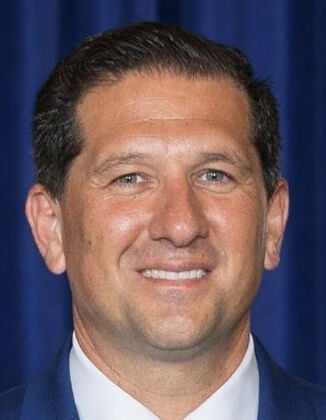
David Canepa, president of the San Mateo County Board of Supervisors, and Millbrae Councilmember Gina Papan both serve as members of the Metropolitan Transportation Commission. Ms. Papan also served as a member of the Blue Ribbon Transit Recovery Task Force.
Keep the discussion civilized. Absolutely NO
personal attacks or insults directed toward writers, nor others who
make comments. Keep it clean. Please avoid obscene, vulgar, lewd,
racist or sexually-oriented language. Don't threaten. Threats of harming another
person will not be tolerated. Be truthful. Don't knowingly lie about anyone
or anything. Be proactive. Use the 'Report' link on
each comment to let us know of abusive posts. PLEASE TURN OFF YOUR CAPS LOCK. Anyone violating these rules will be issued a
warning. After the warning, comment privileges can be
revoked.
Please purchase a Premium Subscription to continue reading.
To continue, please log in, or sign up for a new account.
We offer one free story view per month. If you register for an account, you will get two additional story views. After those three total views, we ask that you support us with a subscription.
A subscription to our digital content is so much more than just access to our valuable content. It means you’re helping to support a local community institution that has, from its very start, supported the betterment of our society. Thank you very much!





(0) comments
Welcome to the discussion.
Log In
Keep the discussion civilized. Absolutely NO personal attacks or insults directed toward writers, nor others who make comments.
Keep it clean. Please avoid obscene, vulgar, lewd, racist or sexually-oriented language.
Don't threaten. Threats of harming another person will not be tolerated.
Be truthful. Don't knowingly lie about anyone or anything.
Be proactive. Use the 'Report' link on each comment to let us know of abusive posts.
PLEASE TURN OFF YOUR CAPS LOCK.
Anyone violating these rules will be issued a warning. After the warning, comment privileges can be revoked.