An elderly diabetic homeless man spent his days and nights outside a fast food restaurant in the Sacramento area, often drunk, in dire straits, causing dozens of calls to first responders and trips to the hospital.
As anyone working with chronically homeless people knows, it can take dozens of times for someone like this man to accept any offer of help, let alone accept an invitation to a shelter. Getting a chronically unhoused person to go to a congregant shelter is incredibly difficult but Sacramento had something new to offer. One afternoon, when the man was a bit more sober, an outreach worker offered him his own tent in a “Safe Ground” campsite. He said “Yes” and was driven to Miller Park. Three weeks later, Ben Worrall, director of Outreach for the city of Sacramento’s Department of Community Response, walked through Miller Park and spotted the man he knew all too well, and he had made a complete turnaround. He had begun working with behavioral health to reduce his drinking, got his diabetes back under control, had put on a little weight and was walking, talking and strong. Today, months later, he is paying for stable permanent supportive housing. His story is one of many recent positive outcomes thanks to creative solutions like Miller Park.
The city and county of Sacramento are doing something historic and new, working together in partnership with many traditional and nontraditional organizations, in a tightly coordinated way, to move as many people off the streets and out of ramshackle encampments as they can. Most importantly, they are achieving the holy grail of success metrics, “positive exit rates,” moving people from homelessness into secure, permanent housing.
Last year, 61% of families who were temporarily housed in the city’s motel program had positive exits. And in the short time “Safe Ground” campsites have been operational, they’ve had a 45% positive exit rate. Now the city is taking the concept one step further, opening a new campus on Roseville Road where upwards of 240 people can eventually be housed in sleeping cabins and trailers. Like our own San Mateo County Navigation Center, this type of housing overcomes the resistance homeless people have to accepting help by offering them private space rather than dorm-style congregant shelters. Getting folks to accept shelter is just the first step though, in the important work of figuring out what issues each individual is facing and working to overcome those difficulties to help reach that positive exit.
With 10,000 unsheltered people in the Sacramento area, the problem is daunting but Director Worrall feels good about the progress being made, especially in the last year and a half. Just in the last six months, his team enrolled 1,765 people into HMIS, the Homeless Management Information System, a federally mandated database that helps track and coordinate services to people. In just about any endeavor, having accurate data is crucial to success and getting that many people enrolled in such a short time is a testament to Worrall’s staff and their dedication to helping people.
Recommended for you
In my interview with Worrall and Tim Swanson, the city’s communications manager, I asked what they thought might be the key to overcoming such a massive issue as having 10,000 unhoused people in the area. Their answer was that they are making a little progress every day through teamwork, a hub and spoke system connecting the city, county and all of the agencies working together in a coordinated way.
Sacramento, like many places, spent years with local municipalities, police departments, fire departments, county social service agencies, NGOs and other organizations working separately, with the problems only getting bigger.
“The continuum of care has made huge progress,” Worrell said, since the city and county entered into a legally binding partnership. “I just wish I could take a few stairs to chat with one of my county colleagues instead of going across town,” he said. Despite a little distance between offices, everyone is working together in a way that they never had before. It’s working and he goes to work happy every day. He should.
Yes, California has more unhoused people than any other state. Yes, we’ve made mistakes, spent billions of dollars and the problem has gotten worse but I do believe we are on a new and better track. California needs thousands of more behavioral health beds for voluntary and compulsory (CARE Court and conservatorship) treatment, more temporary shelter beds, and much more affordable housing. We should audit everything, scrutinize every penny, replicate successful programs and abandon failures.
“Safe Ground” campuses and San Mateo County’s Navigation Center are examples from which everyone can learn. Community First! outside Austin Texas is also worth looking at. Community, collaboration, teamwork, transparency and accountability are keys to success.
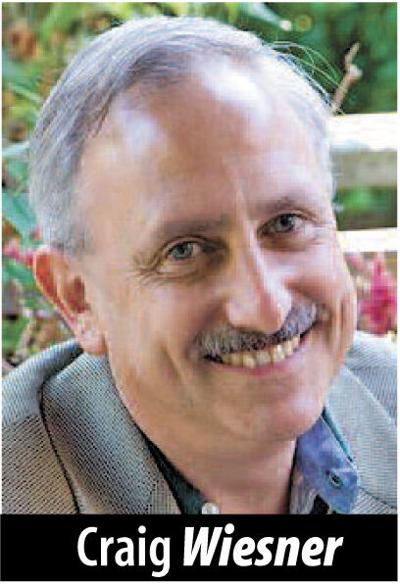
Craig Wiesner is the co-owner of Reach And Teach, a book, toy and cultural gift shop on San Carlos Avenue in San Carlos.
Thanks for your column, Mr. Wiesner and providing some statistics on exits. It should be noted that your 45% positive exit rate means there’s still a 55% negative exit rate. Regardless, highlighting another “diamond in the rough” does not negate the hundreds (thousands?) of unsuccessful homelessness industrial complex programs. How about a few more statistics on this program and most important, how much is paid out in salaries vs dedicated to helping the homeless? What is the cost per capita of those being helped and how does it compare to others ($1000/person, $10,000/person, $100,000/person, more)?
If this program is as successful as you say it is shall I start requesting and recommending homeless folks head northeast to Sacramento instead of north to SF? As stated before, we know plenty of taxpayer money has been tossed into the homeless industrial complex (over $20 billion by the state and another $150 million budgeted for the county) yet homelessness is getting worse. Statistically, there will be some successes, but at what cost and what level of inefficiency? This program sounds like a success, but at what level of inefficiency?
As you say in your summary "Community, collaboration, teamwork, transparency and accountability are keys to success." Without these keys, separate agencies are wasting time and money replicating efforts and working at odds with each other with little hope of real progress.
Keep the discussion civilized. Absolutely NO
personal attacks or insults directed toward writers, nor others who
make comments. Keep it clean. Please avoid obscene, vulgar, lewd,
racist or sexually-oriented language. Don't threaten. Threats of harming another
person will not be tolerated. Be truthful. Don't knowingly lie about anyone
or anything. Be proactive. Use the 'Report' link on
each comment to let us know of abusive posts. PLEASE TURN OFF YOUR CAPS LOCK. Anyone violating these rules will be issued a
warning. After the warning, comment privileges can be
revoked.
Please purchase a Premium Subscription to continue reading.
To continue, please log in, or sign up for a new account.
We offer one free story view per month. If you register for an account, you will get two additional story views. After those three total views, we ask that you support us with a subscription.
A subscription to our digital content is so much more than just access to our valuable content. It means you’re helping to support a local community institution that has, from its very start, supported the betterment of our society. Thank you very much!



(2) comments
Thanks for your column, Mr. Wiesner and providing some statistics on exits. It should be noted that your 45% positive exit rate means there’s still a 55% negative exit rate. Regardless, highlighting another “diamond in the rough” does not negate the hundreds (thousands?) of unsuccessful homelessness industrial complex programs. How about a few more statistics on this program and most important, how much is paid out in salaries vs dedicated to helping the homeless? What is the cost per capita of those being helped and how does it compare to others ($1000/person, $10,000/person, $100,000/person, more)?
If this program is as successful as you say it is shall I start requesting and recommending homeless folks head northeast to Sacramento instead of north to SF? As stated before, we know plenty of taxpayer money has been tossed into the homeless industrial complex (over $20 billion by the state and another $150 million budgeted for the county) yet homelessness is getting worse. Statistically, there will be some successes, but at what cost and what level of inefficiency? This program sounds like a success, but at what level of inefficiency?
As you say in your summary "Community, collaboration, teamwork, transparency and accountability are keys to success." Without these keys, separate agencies are wasting time and money replicating efforts and working at odds with each other with little hope of real progress.
Welcome to the discussion.
Log In
Keep the discussion civilized. Absolutely NO personal attacks or insults directed toward writers, nor others who make comments.
Keep it clean. Please avoid obscene, vulgar, lewd, racist or sexually-oriented language.
Don't threaten. Threats of harming another person will not be tolerated.
Be truthful. Don't knowingly lie about anyone or anything.
Be proactive. Use the 'Report' link on each comment to let us know of abusive posts.
PLEASE TURN OFF YOUR CAPS LOCK.
Anyone violating these rules will be issued a warning. After the warning, comment privileges can be revoked.