
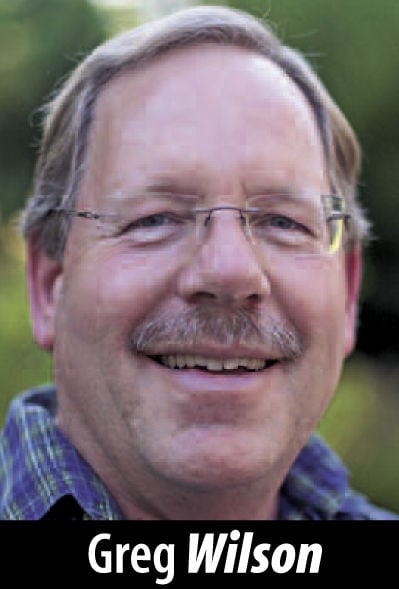
Over the years, some of you have gotten to know me through my writing, but there’s a much quicker way to find out who I really am — simply step into my dining room.
For that is where you’ll find the heart of my pride and joy, my roughly 10,000-volume book collection.
I first learned to read in kindergarten. Even though those first books were extremely simple and rather short on plot (“See Spot run. Run, Spot, run.”), I was captivated. The more I learned to read, the more time I spent reading. In elementary school, I discovered the library. I soon found myself spending much of my free time not outside at recess, but in the library. Libraries quickly became my happy place: thousands of books, just waiting to be read. I was free to dip into subjects I knew little or nothing about — from UFOs to famous inventors — and read stories that took me to real or imagined far-off places.
My love of reading has only grown since those early days. For many years I didn’t accumulate that many. I had neither the money nor the inclination to keep packing them up and moving them. But once my wife and I settled down and bought our first home, my collection began. Although she doesn’t collect nearly the way I do, my wife also loves to read, and has accumulated quite a few books of her own. Thankfully, she allowed me to add built-in bookshelves to all three of our home’s bedrooms as well as to our den.
Built-in bookshelves scattered across four rooms of our house helped a lot, but even those were not enough to house my ever-growing collection. Thus, we turned our attention to the one room in our house that still had room for more bookshelves, our dining room. My wife and I don’t make improvements to our house to make it a better investment, but to make it a place in which we want to live. We decided to do something unconventional and line every square inch of the dining room walls with bookshelves. In the end, we did end up making a compromise on one wall — there, the bottom 3 feet or so contain deep drawers full of dishes — but other than that, except for windows and doorways, the room consists entirely of custom floor-to-ceiling bookshelves holding roughly 2,000 hardback books.
Recommended for you
These days, I enjoy many a meal sitting in what we refer to as our “library-themed dining room,” gazing around at the books. My family teases me a bit, but it’s true, as I eat, I often spend time thinking about whether I should rearrange the way I’ve shelved my books. Over time, I’ve learned that I get almost as much pleasure out of organizing my books as I do reading them. And I do read them. Almost nothing makes me happier than to finish a book, put it back on its shelf, and then wander throughout my house browsing my collection for my next read.
Book collections are highly personal, and over time mine has come to reflect my very personality. My collection is pretty well organized, although not to the degree that a real library is (I don’t have a listing of all of my books, for one thing). I have classified my books by genre, including history, biography, reference, science fiction, classics and mysteries. Large sections are dedicated to topics of particular interest to me, ranging from flight, to the space program, magic tricks, and Disneyland (I grew up in Southern California). Reflecting how I spent the bulk of my career, I have a large number of books on computers and computer programming. And in the fiction section, I have complete, or as-yet nearly complete, collections of the works of authors I particularly enjoy. Finally, I even have a kid’s section of sorts. Thanks to my fond memories of my early days of reading, I’ve tracked down many of the books I loved in my youth.
I don’t collect for investment purposes. Indeed, most of my books aren’t worth a great deal. I have some first editions, but I don’t often go out of my way to buy them. My books are primarily intended to be read, and the fact that a book is a first edition doesn’t alter the reading experience. I also don’t go out of my way to collect signed books; although, I’ll take them if offered, and if they don’t cost significantly more.
These days, physical books are out of fashion for many. That’s too bad. Looking through someone’s book collection can quickly tell you a lot about them, and provide some great topics of conversation. I’m proof of that. Drop by my house and you’ll quickly see that I’m an open book.
Greg Wilson is the creator of Walking Redwood City, a blog inspired by his walks throughout Redwood City and adjacent communities. He can be reached at greg@walkingRedwoodCity.com. Follow Greg on Twitter @walkingRWC.


(14) comments
Oh, my goodness, Greg, that one hit home - a home chuck full of books. When looking around, I have to wonder: Where in the world did they all come from? When the kids still were in nearby schools, asking me if I had a book on such-and-such for an assignment, it was aways with great pleasure and some pride whenever I could point to a book on the subject, or say I know I have one somewhere, - just start looking. The passion for real books, i.e. those you can hold in your hand, hasn’t diminished with time and age, - I still buy and read at least one a month, but have long since run out of bookcases, - or a place for just one more.
Uh-oh, Jorg... you may have opened yourself up to a slew of book recommendations from other DJ readers to "help" you select your book of the month. I'll be the first...
My future son-in-law knows I enjoy history particularly WWII. He actually reads legit reviews before purchasing me a birthday or Christmas gift. I can recommend "The Mosquito Bowl" by Buzz Bissinger. It's a well-researched account about the Marines from two different regiments who played a football game on Guadalcanal on Christmas Eve in 1944. If those young men had suited up on the same team back in the US, they probably would have been the No. 1 college team in America during the war years. They were good. The second half of the book follows them until the end of the war... not too many Hollywood endings. The other book is "The Bomber Mafia" by Malcom Gladwell. It is an eye-opening treatment of how the Army Air Corps' bombing strategy developed during WWII. It goes deep into the personalities of the generals who pushed for precision bombing instead of using the RAF's area bombing strategy. It's a great companion to Steven Spielberg's "Masters of the Air" series which is currently airing on TV. Both books are fairly quick reads.
Thank you, Ray! I will keep those in mind when I’m done with the pile already waiting for my attention. I just finished Brian Klaas’ “Fluke” about our very uncertain, chance-controlled world, and am now reading Harari’s “Sapiens”, a very heavy book, literary. It reminds me of a recent street question by a TV-reporter: “What do you think we should do with the homo sapiens? Not too surprisingly, many of the responses were like “Lock’m up”, “Send’m back to where they came from”, “Oh, can’t stand’m”, and the like. Yeah.
More in line with the books you recommended, “The Winter Fortress – The epic mission to sabotage Hitler’s Atomic bomb” popped out of an overflowing bookshelf, begging to be reread.
Instead of wasting time on those books you may want to educate yourself by reading Supreme Court opinions in regards to rulings on the Second Amendment and the Electoral College. They’ll explain why your interpretations of both concepts are on the track to nowhere. Jorg, there are plenty of books on the Second Amendment and the Electoral College, too, but you’ll need to buy/borrow them as apparently, you don’t have any in your library.
Ray - did Gladwell's book also include information on the Norden Bombsight? I was reading somewhere that this very sophisticated instrument was sought after by the Nazis and they recovered them from shot-down bombers. Interestingly or ironically, they became useless in many bombing raids because the generals insisted on formation flying with predetermined targets so the bombardiers could not use them anyway. Was that mentioned at all? I will buy that book by Gladwell. Thank you.
Dirk, unless you want the physical book to own, you can easily check out an e-book or audio book from a public library. You can sign up/sign in and be reading the book in minutes. If your first choice of library doesn’t have a copy, sign up/sign in at another library.
Also, Malcolm Gladwell has a Revisionist History podcast that includes a three-part series on The Bomber Mafia (https://podbay.fm/p/revisionist-history/e/1594285200; https://podbay.fm/p/revisionist-history/e/1594890000, https://podbay.fm/p/revisionist-history/e/1595494800). Don’t worry, Gladwell’s Revisionist History podcast isn’t Jorg’s fantasy of revisionist history and is worth a listen (at least the episodes that sound appealing). If you have time, a funny podcast episode is the one where Gladwell takes part in a debate (https://podbay.fm/p/revisionist-history/e/1681358400). Hint, he gets destroyed, but he’s a good sport about it. There’s also a multi-part series on guns.
Good Sunday to ya, Dirk
Yes. The book starts with the story of how the bombsight was developed by Carl Norden. He was certainly an odd duck. The "Bomber Mafia" was a group of Army aviators who developed the strategic bombing doctrine in the 1930s. It clashed with the area bombing tactics preferred by the RAF, and Churchill nearly convinced FDR to adopt the Brits' bombing strategy. I don't want to give the ending away, but let's just say that when things switched from the European theater to the Pacific... things really switched.
Hey, Terence... that's a fair assessment. There is a revisionist bent to Gladwell's writing, but he does a lot of homework. I particularly enjoy his take on the pycho-historical aspect of the events he writes about. It's not just about dates and numbers... he goes into what motivated and challenged the major characters in his book and that includes a close look at the psychology associated with the characters' successes and failures.
Ray - further research on my part showed that this book deals with fighter pilots whose planes may not have been equipped with the Norden bombsight. Correct me if I am wrong, thank you.
Dirk, the book does talk about the Norden bombsight. (I haven't read the book so I'm unsure as to what degree.) As a footnote, Gladwell gave a TED talk on Norden and his bombsight (https://www.ted.com/talks/malcolm_gladwell_the_strange_tale_of_the_norden_bombsight?language=en).
No... the book focuses nearly exclusively on B-17s and B-29s. Think Curtis LeMay.
I was too young to remember but my parents recalled the hundreds of B-17 and B-25 bombers flying over our town (Leiden, the Netherlands) on their way to bomb Germany. The Dutch were dancing in the streets at that sight. If the Nazi occupiers saw that they would start shooting. My Dad told us it was awesome to see that military might. The Brits only flew at night and missed most of their targets including a whole neighborhood next to the Leiden railroad station where V-2 rockets from Germany were offloaded before launching. No love lost for the Brits after the war in our town.
Dirk: I remember much more from WWII, probably because I’m a few years older than you! I was almost 3 when Norway was attacked in 1940, and almost 8 when it finally, ended I ’45. On occupation day, April 9, my mom was walking home after her night shift as a long-distance telephone operator, wondering about all the heavily armed foreign soldiers she saw on her way home. 4 days later my brother was born.
I will never forget the almost nightly air raids by the British, bombing German installations, at times missing and hitting civilian houses, including leveling the house of a later classmate of mine. My brother and I were huddled down to the basement, where we sat and listened to the anti-aircraft guns on an open field right across the street from our 4-plex. Stuck in my memory are also the heavy banging on the door in the middle of the night, getting my dad out of bed to answer. It happened several times, but not until after the war could he tell me that it was the Gestapo, who with a gun to his head demanded to know where our neighbor was hiding, a prominent attorney and labor leader, who among 11 others had been singled out for execution, just to show who was in charge. Ten were rounded up and shot at the old Kristiansten fortress, one disappeared, and our neighbor was saved thanks to my dad, he says. Risking torture or worse, I’ll forever admire my dad for what he did, knowing full well where our neighbor was hiding, while feeding him info. After the war, this attorney was assigned as defense attorney for some of the worst Nazis and collaborators.
Not until after the war, did the family learn what happened to my uncle Leif, a merchant marine officer who was killed when his ship was torpedoed by a German submarine outside Brooklyn in 1943. He was among over 12.000 Norwegians killed because of the war. Oh, I could go on and on …
Thanks Greg! Your home sounds lovely! One of my favorite people was a political science professor whose home was floor to ceiling books, many many many on bookshelves and many many many others in huge piles and it was amazing how quickly he could find a particular book amidst all of the thousands!
Welcome to the discussion.
Log In
Keep the discussion civilized. Absolutely NO personal attacks or insults directed toward writers, nor others who make comments.
Keep it clean. Please avoid obscene, vulgar, lewd, racist or sexually-oriented language.
Don't threaten. Threats of harming another person will not be tolerated.
Be truthful. Don't knowingly lie about anyone or anything.
Be proactive. Use the 'Report' link on each comment to let us know of abusive posts.
PLEASE TURN OFF YOUR CAPS LOCK.
Anyone violating these rules will be issued a warning. After the warning, comment privileges can be revoked.