
Silicon Valley’s tech economy is hotter than ever, but many residents are being left behind.
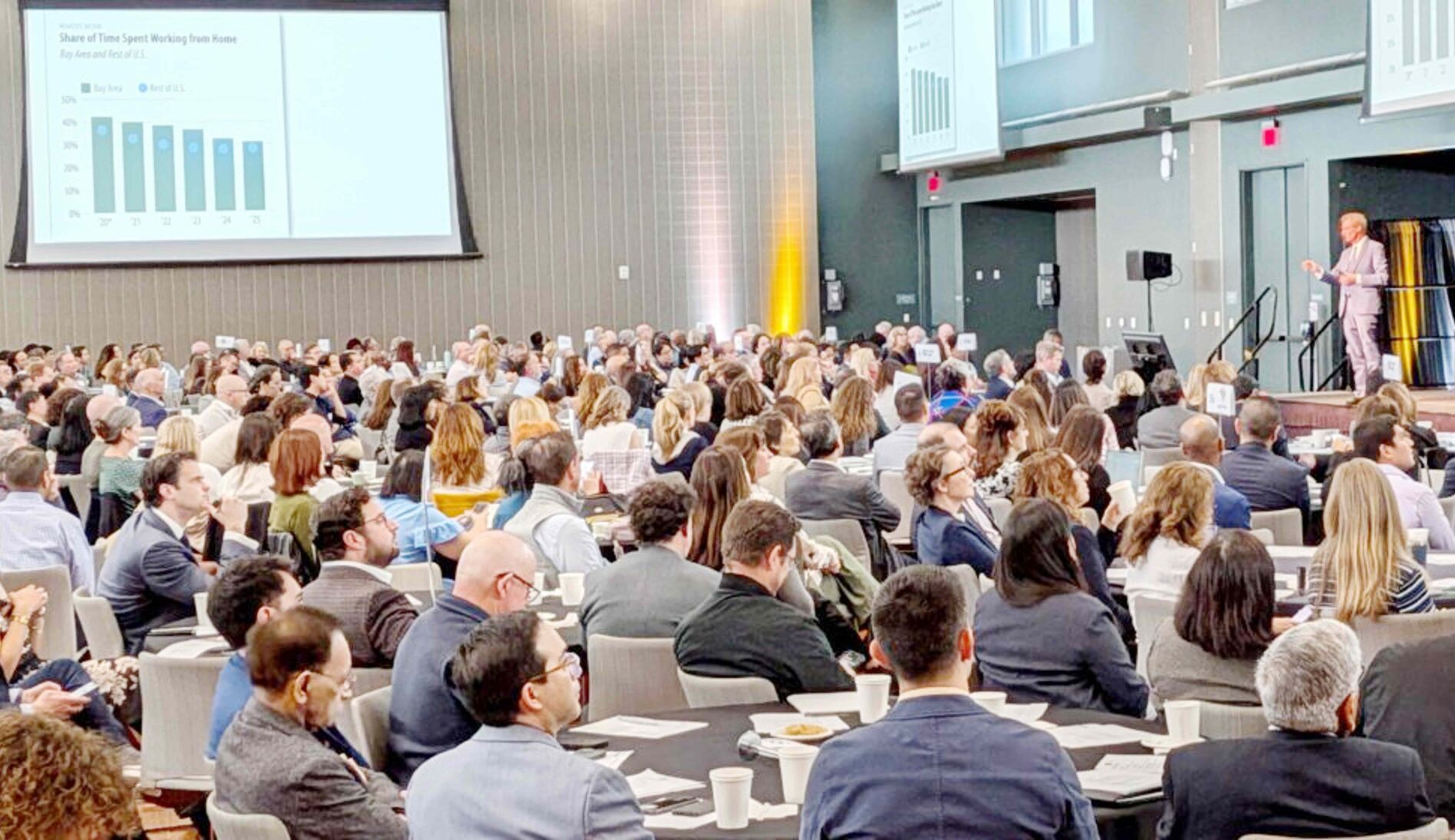
That’s one key message from this year’s Silicon Valley Index, an in-depth annual report card for the region from local think tank Joint Venture Silicon Valley. The group presented the report at its annual State of the Valley event Friday at San Jose State University to a capacity crowd of 500.
The report shows the local economy boomed by 38% in the last decade from 2015 to 2025, faster than California as a whole at 19% and the entire U.S. at 22%. Venture capitalists poured $92 billion into Bay Area companies last year, nearly matching the record of $100 billion in 2021. Inventors in Silicon Valley racked up 23,000 patents — just below the all-time high in 2024.
“Silicon Valley’s innovation engine is as hot as it’s ever been,” Russell Hancock, president of Joint Venture, said in a call with reporters Wednesday. “The highest-skill jobs are still located here, the ones making the electrons dance.”
At the same time, income inequality and stratospheric housing costs make life a struggle for residents working outside of tech.
The top 10% of Silicon Valley households own 75% of the region’s wealth, the report shows, while in Europe the top 10% control only 25%. The bottom half of households in Silicon Valley own just 1% of wealth. Roughly 28% of local households require outside assistance — from family members, charities or government programs — to survive.
“We see firsthand how widening income inequality undermines economic mobility and weakens the fabric of our community,” Don Taylor, CEO of Catholic Charities of Santa Clara County, told San Jose Spotlight. “Many families are working full time — often holding multiple jobs — yet still cannot achieve self-sufficiency because wages have not kept pace with the high cost of living. When minimum wage is not a living wage, assistance becomes a bridge to survival rather than a pathway to long-term stability.”
Jim Beall, a former state lawmaker and current Valley Water board member, attended Joint Venture’s Friday event. He said the lack of job growth is a dark cloud in an otherwise healthy regional economy. Total employment remains slightly above pre-pandemic levels, the reports shows, but declined by 0.8% between mid-2024 and mid-2025, with little net growth since 2022.
“I’m worried about the younger generation,” Beall told San Jose Spotlight. “A lot of younger people coming up are looking for work. We need to find answers for that, such as science and math training programs.”
Recommended for you
Repeating a theme from last year’s findings, Hancock said Friday the region’s wealth disparity is the starkest income and wealth gap anywhere on the planet and represents “the conditions for instability” that in the past have caused “blood in the streets.”
A major contributor to the wealth gap is housing. The median price tag last year for a single-family home in Silicon Valley hit $1.98 million — almost five times higher than the national average, according to the report. A family of four would need to earn $488,000 per year to afford that without being under financial pressure, based on federal guidelines.
Silicon Valley’s population of roughly 2.7 million people has returned to pre-pandemic levels, which the report said is driven by migrants from outside the U.S. who are arriving in greater numbers than current area residents who are moving elsewhere in the country. The report defines Silicon Valley as Santa Clara and San Mateo counties, as well as Fremont, Newark and Union City in Alameda County and Scotts Valley in Santa Cruz County.
But population gains might not last. Stephen Levy, senior economist at the Center for Continuing Study of the California Economy in Palo Alto and an advisor to Joint Venture, said federal immigration policies are shutting off the flow of migration — affecting tech professionals and service workers.
“We have two challenges to our future competitiveness: making the U.S. welcoming to immigrants and housing affordability,” Levy told San Jose Spotlight. “High-tech firms can’t exist without the (immigrant-driven) service economy.”
There’s also a shift in the age of Silicon Valley’s population, with residents age 65 and above increasing 29% since 2014 and children under 18 declining by 15%, the report shows. Hancock said this “silver tsunami” is already having an impact as local school districts with declining enrollment closing schools.
Maria Nicoladoudis, chief executive officer of Hearts & Minds Activity Center in San Jose, which offers day care programs for both pre-school children and older adults with dementia, said residents are struggling to find care for older family members. Adult grandchildren in their 20s and 30s are often stepping into caregiver roles, she said.
“If they’re taking time out of work and school, then they’re putting their own futures on hold,” Nicoladoudis told San Jose Spotlight. “They’re deferring their ability to build up wealth and stay in this valley.”





(0) comments
Welcome to the discussion.
Log In
Keep the discussion civilized. Absolutely NO personal attacks or insults directed toward writers, nor others who make comments.
Keep it clean. Please avoid obscene, vulgar, lewd, racist or sexually-oriented language.
Don't threaten. Threats of harming another person will not be tolerated.
Be truthful. Don't knowingly lie about anyone or anything.
Be proactive. Use the 'Report' link on each comment to let us know of abusive posts.
PLEASE TURN OFF YOUR CAPS LOCK.
Anyone violating these rules will be issued a warning. After the warning, comment privileges can be revoked.