

Millions of federal funds will soon flow into San Mateo County directly to residents and to local government agencies following the signing of the $1.9 trillion COVID-19 relief bill, or the American Rescue Plan Act.
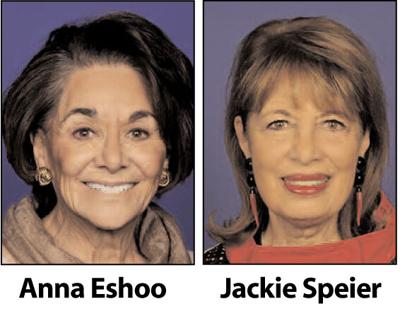
“This is historic and sweeping legislation,” said U.S. Rep. Anna Eshoo, D-Palo Alto, “Not only will it crush the virus and pay for the vaccines that are needed to inoculate every American but also to inject resources and money into the economy by putting money into people’s pockets.”
The bill is meant to serve as a “bridge” to a more stable economy for all, said Eshoo. U.S. Rep Jackie Speier, D-San Mateo, echoed Eshoo, noting the bill is about “handups,” not handouts.
As early as this weekend, some Americans earning less than $75,000 a year will begin receiving a $1,400 stimulus check through direct deposit though the process may take weeks including for those whose checks will be mailed. Couples earning less than $150,000 annually will receive $2,800 checks. Adult dependents will also receive a check.
Weekly state unemployment benefits will come with a $300 federal boost until Sept. 6, the first $10,200 nontaxable. A Senate amendment also made any future student loan forgiveness nontaxable income.
The Child Tax Credit will also be expanded to $3,000 for children over the age of 6 and $3,600 for children ages 6 and younger, equaling about $250 to $300 a child per month, according to a press release from Speier. And about $15 billion will flow into California to help reopen kindergarten through high school campuses. About $5 billion will be distributed among California colleges and universities
Speier also highlighted the nearly $900 million that will go toward California airports, a major benefit for parts of San Mateo County which rely heavily on airport traffic. Restaurants will also receive a large boost from the more than $25 billion reserved in the bill for grants nationally.
“All of this is going to help everybody,” said Speier. “That’s why we say this package gives people shots in the arm, money in pockets, kids going back to school and an opportunity to get back to work.”
Local funds
The package also offers $360 billion of funding directly to states, counties, cities and noncounty jurisdictions, an addition left out of the last relief package approved in December. Having served in local government, both Eshoo and Speier noted the important role agencies play when caring for residents, particularly during the pandemic.
“When you say cities and counties, what you’re talking about are people being employed,” said Speier. “You’re talking about all those people who frankly we take for granted.”
Government bodies will receive half of their allocation within 60 days of sending notice to the U.S. Department of the Treasury confirming a need for the funds and the remaining 50% will be provided no earlier than a year after the first distribution, said County Manager Mike Callagy.
California will receive nearly $43 billion, $26 billion to be managed by the state and the remaining $16 billion to be distributed among counties and cities. It is estimated more than $148 million will make its way to the county, separate from allocations directly being given to cities.
“This is a lifesaver for thousands of residents in this county and business owners who are holding on by a thread,” said Callagy. “This will really help San Mateo County get to a new normal and it couldn’t come at a better time.”
Recognizing the sustained need to support renters, business owners, parents with school-age children and others, Callagy noted the county has continued to make progress with vaccinating its population and moving through the state’s reopening plan.
Unlike the first relief package which was largely spent on personal protective equipment and other early-pandemic costs, the money will likely help replenish existing COVID-19 programs while being spent more directly on the public, said Callagy.
Recommended for you
The bill also includes additional money specifically for rental and homeowner assistance, a main focus for the county along with small business grants and child care center assistance. Additional federal dollars will be directed toward the child care industry.
“We need to get people back to work and for business that went out of business we need to inspire people to go into business,” said Callagy. “We need every aspect of our economy back and running.”
City aid
Most of the 20 San Mateo County cities poised to receive direct federal dollars will receive between $1 million and $8 million. Redwood City and San Mateo will likely receive upwards of about $18 million and South San Francisco is set to receive about $12 million. Daly City is slated to receive more than $26 million, the largest appropriation in the county, though figures may change. Mayor Juslyn Manalo, noting the city is the largest in the county, said the money will go a long way toward Daly City’s recovery.
Communities of color have been devastated by the pandemic, said Manalo, who emphasized the importance of using the funds to help those most disproportionately affected continue to live within the city and county.
“This just really gives us hope in 2021 around a realization of really seeing this light at the end of the tunnel,” said Manalo. “This is an opportunity to ensure we look at ways to help the most vulnerable communities because they were hit the hardest.”
Optimistically uncertain
An estimated nearly $19 million will be directed to Redwood City through the relief package. Unclear on what the final total will be that the city receives, Redwood City Mayor Diane Howard said she felt “very anxious and optimistic that the check will be a healthy one.”
Howard praised the leadership of Eshoo and Speier while highlighting the importance of securing COVID relief funds for municipalities. Redwood City, like many other jurisdictions, had to instate a hiring freeze among city departments while responding to increased community need and developing COVID-relief programs, she said.
“Most other programs’ money didn’t trickle down to cities but cities at the ground level have been doing the brunt of the work and this money will be so beneficial,” said Howard.
Also slated to receive one of the largest allocations in the county is San Mateo at roughly $18.64 million. Mayor Eric Rodriguez said the city saw an overwhelming need for support before the pandemic that has only been exacerbated.
Rodriguez said it’s still unclear what the federal dollars can be used for but once understood, “there’s not going to be a shortage of ideas.” Distribution of dollars may also take time, he noted, which will allow cities to think through how to best spend funds.
“The dust is just now settling,” said Rodriguez. “We’re seeing a light at the end of the tunnel and I think money is coming just at the right time. We have time to allocate it as wisely as we can.”
Speier highlighted her hope that county residents would be returning to work after a major campaign aiming to vaccinate all U.S. adults by May.
(650) 344-5200 ext. 106






(0) comments
Welcome to the discussion.
Log In
Keep the discussion civilized. Absolutely NO personal attacks or insults directed toward writers, nor others who make comments.
Keep it clean. Please avoid obscene, vulgar, lewd, racist or sexually-oriented language.
Don't threaten. Threats of harming another person will not be tolerated.
Be truthful. Don't knowingly lie about anyone or anything.
Be proactive. Use the 'Report' link on each comment to let us know of abusive posts.
PLEASE TURN OFF YOUR CAPS LOCK.
Anyone violating these rules will be issued a warning. After the warning, comment privileges can be revoked.