Three bills that aim to ease the construction of new housing in California and to keep better data are moving through the Assembly after passing the state Senate but opponents say they will ease gentrification and create an unfair burden on cities.
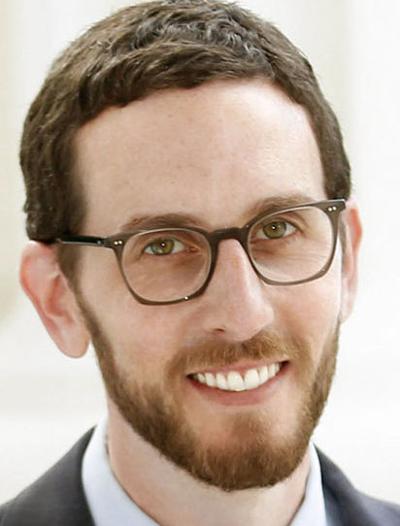
Senate Bills 10, 477 and 478, all authored by state Sen. Scott Wiener, D-San Francisco, would essentially upzone up to 10 units in certain areas near transit, eliminate certain restrictions on small apartment buildings and ease lot size rules. The bills passed the Assembly Housing Committee June 22 and now head to the Assembly Local Government Committee.
“Housing has always been my number one priority in the Senate. Housing is a top issue facing the Bay Area and all of California,” Wiener said. “We’re short millions of homes. We’re driving middle-class and working-class people into long commutes throughout the state entirely. We’re pushing people into homelessness and poverty. And we’re undermining our climate goals by pushing people into long commutes.”
The bills also face opposition from groups such as Livable California.
“It would fundamentally change neighborhoods, in many cases displacing and over-gentrifying neighborhoods of communities of color,” said Keith Gurnee, member of the Board of Directors for Livable California, referring to Senate Bill 10. “It also would allow local governments to override local initiatives.”
He said these bills are not addressing housing affordability and that Senate Bill 477 is micromanaging cities, putting the burden on them to do housing reporting every year.
“It is promoting high-end market rate housing without solving the real crisis and that’s the crisis of affordability,” he said.
Senate Bill 477, the Housing Data Act, is to strengthen California’s housing data collection so the state and public can better understand the impact of state housing laws and determine the progress made by various cities and counties in meeting regional housing goals, according to Wiener’s office.
Senate Bill 10 creates a voluntary, streamlined process for cities to zone for missing middle multiunit housing, allowing cities to upzone nonsprawl areas including areas that are close to transit or in existing urbanized locations, up to 10-unit buildings without having to go through the California Environmental Quality Act, according to Wiener’s office.
Wiener says Senate Bill 10 is a common-sense measure.
“It simply gives cities a voluntary tool that they can ignore if they want to but I think a lot of them will use it. So a city council can rezone for small multiunit housing without having to go through a five- or 10-year process, where they can do it much more effectively,” he said.
Senate Bill 478, the Housing Opportunity Act, ensures that when cities zone for small apartment buildings, between three and 10 units, those buildings are not effectively banned for reasons such as restrictive square footage caps. The bill also provides that cities cannot deny a project solely on the basis that the lot size does not meet the local agency’s requirements for minimum lot size.
Recommended for you
Wiener also has a fourth bill, Senate Bill 234, the SUPPORT Act, focusing on housing for at-risk youth. This was incorporated in the budget, allocating $250 million toward the act.
County legislators
Assembly Speaker pro Tem Kevin Mullin, D-South San Francisco, also introduced housing bills. Assembly Bill 1029 seeks to prioritize preservation of affordable housing units that face expiration of affordability covenants. Assembly Bill 464 would expand the use of enhanced infrastructure financing districts to include funding for health, youth, homeless and social services.
On Wiener’s bills, Mullin said he is reserving judgment until it comes before him on the Assembly floor as they are often amended in the committee process.
“That said, I do believe we must act boldly to address CA’s affordable housing crisis,” Mullin said.
State Sen. Josh Becker, D-San Mateo, said he didn’t support Senate Bill 10 because he thought it was too many units and also because it had a provision to override voter initiatives with a simple majority of the council vote. He said he will take a look at the changes that Wiener is going to make. However, Becker said he supports Senate Bill 477 and said it’s an important bill to have the data to evaluate housing measures and progress.
“I find myself, my own team, we feel like we’re doing a lot of the work,” Becker said. “We really do need better data.”
Senate Bill 9
Senate Bill 9 is similar to Senate Bill 10, which would allow homeowners to create a duplex or subdivide an existing lot in residential areas without local reviews or hearings, authored by Senate President Toni Atkins, D-San Diego.
This bill has also been met with opposition with critics saying the proposals will incentivize speculative developers to purchase properties with plans of rebuilding neighborhood lots into large projects incompatible with existing character. If approved, they claim the bills will yield construction of more market-rate units unaffordable to most existing residents and worsen gentrification patterns throughout the state.
Keep the discussion civilized. Absolutely NO
personal attacks or insults directed toward writers, nor others who
make comments. Keep it clean. Please avoid obscene, vulgar, lewd,
racist or sexually-oriented language. Don't threaten. Threats of harming another
person will not be tolerated. Be truthful. Don't knowingly lie about anyone
or anything. Be proactive. Use the 'Report' link on
each comment to let us know of abusive posts. PLEASE TURN OFF YOUR CAPS LOCK. Anyone violating these rules will be issued a
warning. After the warning, comment privileges can be
revoked.
Please purchase a Premium Subscription to continue reading.
To continue, please log in, or sign up for a new account.
We offer one free story view per month. If you register for an account, you will get two additional story views. After those three total views, we ask that you support us with a subscription.
A subscription to our digital content is so much more than just access to our valuable content. It means you’re helping to support a local community institution that has, from its very start, supported the betterment of our society. Thank you very much!



(0) comments
Welcome to the discussion.
Log In
Keep the discussion civilized. Absolutely NO personal attacks or insults directed toward writers, nor others who make comments.
Keep it clean. Please avoid obscene, vulgar, lewd, racist or sexually-oriented language.
Don't threaten. Threats of harming another person will not be tolerated.
Be truthful. Don't knowingly lie about anyone or anything.
Be proactive. Use the 'Report' link on each comment to let us know of abusive posts.
PLEASE TURN OFF YOUR CAPS LOCK.
Anyone violating these rules will be issued a warning. After the warning, comment privileges can be revoked.