Artists and Art Bias study AI in creative spaces: ArtBias forms task force to establish framework for using artificial intelligence in San Mateo County
A task force of artists in San Mateo County is looking into the ethics, fairness and transparency of using artificial intelligence in creative spaces, and will try to establish a framework for its optimal usage.
Largely spearheaded by creatives at Art Bias, an artist-in-residence community located in San Carlos, the task force was established to engage in productive conversations with a spectrum of views — from vehemently believing AI generated work is not art, to some identifying outright as AI artists.
Art Bias was described by its executive director, Terra Fuller, as “one of those places that you can come and you can see traditional landscaping painting next to AI generated art.” Old techniques of Japanese calligraphy are hung next to photography that was AI enhanced.
The diversity of media is the exact value Art Bias hopes to embrace, and the vastness of views on the subject matter is important to engage in, Fuller said.
“Art Bias wants to be open to the future, new process, new techniques,” Fuller said. “We’re not going to ban any medium, technique or tool so there’s a lot of nuances we need to explore.”
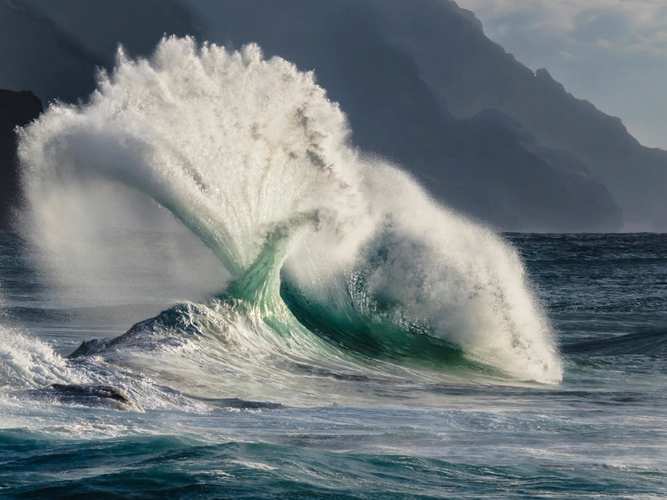
An AI enhanced photograph shot by Aaron Alvarez Mendoza on display at Art Bias in San Carlos.
Photo courtesy of Terra Fuller
Embracing this, Fuller was a great advocate of getting the first self-proclaimed AI artist with a residency at Art Bias. Mahyar Rahmatian uses AI as a primary medium in his work.
Rahmatian’s work blends “photography’s keen observation, poetry’s soul and symbolism, animation’s storytelling and music’s sense of rhythm when I work with AI,” an Instagram post announcing his residency said.
Ensuring Rahmatian was welcome at Art Bias was critical to Fuller, despite her personal opinions on the artificially generated work.
“I think it’s fascinating when you look at the old techniques next to new technology,” Fuller said. “That’s richness in a community that really wants to be able to talk about this and have dialogue about what it means to be a human now.”
The task force hopes to generate dialogue from all views to inform guidelines for Art Bias’ acceptance admissions panel and its curators on how art is labeled. Ideally, any parameters and discussions held could be provided as a baseline of judgment to other organizations, Fuller said.
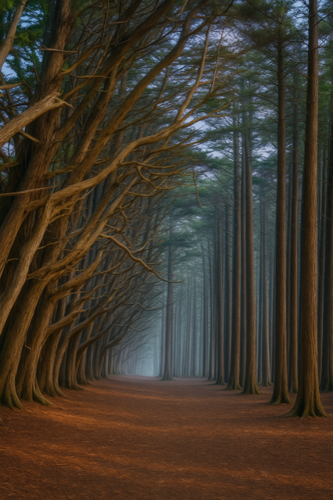
A photograph by Alan Hart, without AI enhancing, on display at Art Bias in San Carlos.
Photo courtesy of Terra Fuller
Artists using AI are able to produce work more quickly and at a lower cost — in terms of time, development and education, Fuller said. There’s a matter of fairness to look into, she and the task force agree.
One of the members investigating this topic is Shari Bryant, a pastel and charcoal artist with a residency at Art Bias.
In Bryant’s day job working in information security and AI system management, she’s constantly engaging with AI and proudly shares her love for technology.
Taking notes from her job, Bryant felt it was critical for the task force to look into the ethics, fairness and transparency of using AI. While some are in a “wait-and-see” mentality when it comes to figuring out the impact the technology will have on creative spaces, Bryant said it was important to be proactive.
Transparency will likely be a key component of any policy or framework the task force comes up with.
“People don’t want to feel tricked, frankly,” Bryant said. “We’re seeing a lot of that, in art, in the world today.”
Recommended for you
Still, she opts not to use it in any of her creative work.
“I enjoy that struggle and toil of art,” Bryant said. “That is validating for me, I’d like to hold on to that. Being able to fight to get what’s in your head out on the paper, that’s a beautiful struggle you have as being an artist.”
Bryant’s understanding of AI’s value gives her a nuanced understanding of the subject, but ultimately she hopes to preserve the integrity of the arts.
“I think it’s important to artists to have technology that can support them in their endeavors,” Bryant said. “I want it to support, not replace the arts.”
The ethical concern is top of mind for artist Liz Broekhuyse. She uses technology both in her artistic practice and her graphic design day job. Her experience though reminds her that AI produced work is abundant, and looking at the background workings of image generation tools prompts questions.
“You need so many images that you can make a reasonably informed assumption that they’ve taken my life’s work to feed into this thing,” Broekhuyse said. “Having done that without consent or credit or compensation for a commercial tool doesn’t sit well with me.”
Because of the ease of producing work with AI, Fuller describes the work as “more about monetization and making money.”
“Fine art is about an artist expressing their life, their trials, their struggles, their very personal view of the world,” Fuller said. “AI art is averaging the experience of all art forms and creating something that is more average.”
It’s not just artists who are hesitant to embrace work created with AI. Audience members and visitors of Art Bias have similarly strong opinions, Fuller said.
“Someone will see a piece and like it, but when they see it’s an AI piece, they change their opinion and say they don’t like it,” Fuller said.
The audience for AI art — and there is an audience, Fuller emphasized — is likely not the same as the audience for human-made art, she said.
“People who don’t know about art and might be very easily wowed by AI art because it’s cheap, made plentifully, that’s not the people that would be purchasing an original painting at a higher price anyway,” Fuller said.
While affordability and access to AI art may attract patrons to purchasing the work, Broekhuyse said there’s a matter of principle at hand as well.
“There’s AI art hanging in hallways of well-funded startup companies with abundant resources, and I’m still being paid by small nonprofits that care about paying people and supporting artists living in the Bay Area,” Broekhuyse said.
The technological value of AI is promoted as a means for productivity, Bryant said. Using a tool to move faster, produce more quickly in art feels like it makes a possibly unintended statement, she said.
“I don’t consider the act of creating inefficient,” Bryant said.
The artists acknowledged the length of time it has taken for certain media and artists to be validated in the creative space. Whether the influx of AI art will simply need time to be recognized canonically has yet to be seen.
“If AI is validated as an artistic form, I want it to do something unique to AI,” Bryant said. “It’s mimicking all these other things, so what’s unique about AI? What’s special about it? I’m not saying there isn’t anything, but show me.”
As both a fine artist and a reviewer of art in many forms, I'm going to be very interested in this discussion. No one I know wants their job, their livelihood, displaced by AI. That's part of the underlying issues here, not just the unauthorized and unpaid use of artists' work by AI. The other two major considerations are: what humanity may lose if machines make us and our emotional experience of the world irrelevant, and whether the "averaging" that AI does will habituate our tastes to mediocrity. Think about the debate that photography created 150 years ago. Despite the fears that the new tool would completely replace painting, it didn't. At least not where refined taste and finance made painting valuable. But it did make something increasingly easy, cheap and satisfying for mass use, snapshots vs. fine portraiture in paint. You can argue both sides of that, but you cannot argue that photography can't produce fine art too. If this were only an academic puzzle, no big deal. Rather, it is also a threat to the meaning, sense of purpose and income of working artists, who already have to struggle more financially for their art than creating the art itself! I'm glad Art Bias is taking this on. Let's see what they come up with for starters.
Keep the discussion civilized. Absolutely NO
personal attacks or insults directed toward writers, nor others who
make comments. Keep it clean. Please avoid obscene, vulgar, lewd,
racist or sexually-oriented language. Don't threaten. Threats of harming another
person will not be tolerated. Be truthful. Don't knowingly lie about anyone
or anything. Be proactive. Use the 'Report' link on
each comment to let us know of abusive posts. PLEASE TURN OFF YOUR CAPS LOCK. Anyone violating these rules will be issued a
warning. After the warning, comment privileges can be
revoked.
Please purchase a Premium Subscription to continue reading.
To continue, please log in, or sign up for a new account.
We offer one free story view per month. If you register for an account, you will get two additional story views. After those three total views, we ask that you support us with a subscription.
A subscription to our digital content is so much more than just access to our valuable content. It means you’re helping to support a local community institution that has, from its very start, supported the betterment of our society. Thank you very much!








(1) comment
As both a fine artist and a reviewer of art in many forms, I'm going to be very interested in this discussion. No one I know wants their job, their livelihood, displaced by AI. That's part of the underlying issues here, not just the unauthorized and unpaid use of artists' work by AI. The other two major considerations are: what humanity may lose if machines make us and our emotional experience of the world irrelevant, and whether the "averaging" that AI does will habituate our tastes to mediocrity. Think about the debate that photography created 150 years ago. Despite the fears that the new tool would completely replace painting, it didn't. At least not where refined taste and finance made painting valuable. But it did make something increasingly easy, cheap and satisfying for mass use, snapshots vs. fine portraiture in paint. You can argue both sides of that, but you cannot argue that photography can't produce fine art too. If this were only an academic puzzle, no big deal. Rather, it is also a threat to the meaning, sense of purpose and income of working artists, who already have to struggle more financially for their art than creating the art itself! I'm glad Art Bias is taking this on. Let's see what they come up with for starters.
Welcome to the discussion.
Log In
Keep the discussion civilized. Absolutely NO personal attacks or insults directed toward writers, nor others who make comments.
Keep it clean. Please avoid obscene, vulgar, lewd, racist or sexually-oriented language.
Don't threaten. Threats of harming another person will not be tolerated.
Be truthful. Don't knowingly lie about anyone or anything.
Be proactive. Use the 'Report' link on each comment to let us know of abusive posts.
PLEASE TURN OFF YOUR CAPS LOCK.
Anyone violating these rules will be issued a warning. After the warning, comment privileges can be revoked.