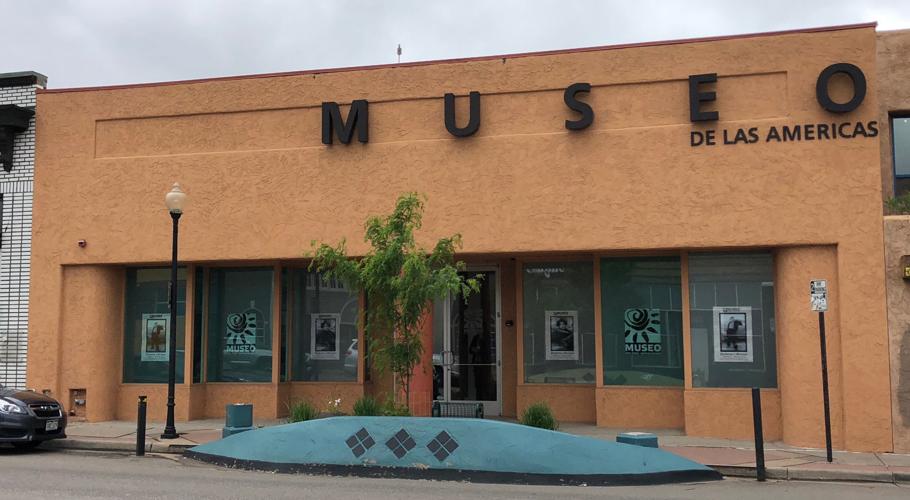
The Museo de las Americas in Denver, Colo., is dedicated to the arts and cultures of the Latinidad in the Americas. On view through Aug. 18 is Pachucos y Sirenas, highlighting the impact that the 1940s Pachuco legacy had on the American experience.
Photographer Daniel Salazar’s “Westside Dream I” shows National Chicano Dance Theater artists attired in traditional Pachuco and Sirena styles posed before Denver’s skyline.
DENVER’S MUSEO DE LAS AMERICAS EXPLORES THE LATINIDAD EXPERIENCE. Begun in 1992 as one room in a cabinet shop, Museo de las Americas now occupies a 12,000-square-foot building in the heart of Denver’s ‘Art District on Santa Fe.’ Dedicated to the arts and cultures of the Latinidad in the Americas, the Museo maintains a permanent collection of more than 3,000 objects, including textiles, ceramics, masks, jewelry, basketry, paintings, pre-Columbian figures and contemporary art pieces of mixed media.
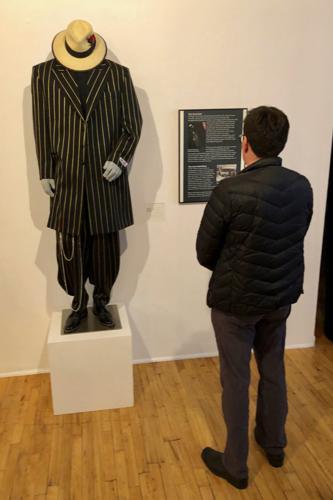
The zoot suit was emblematic of the Pachuco identity.
Its current exhibit, Pachucos y Sirenas, examines the Pachuco era of the late 1930s and ’40s, when Mexican-American youth adopted a highly stylized fashion, particularly the zoot suit, as a way of expressing cultural pride.
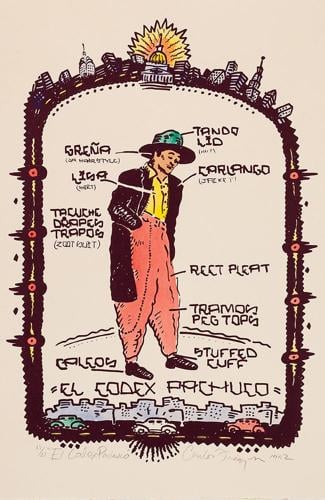
“El Codex Pachuco” by Carlos Frésquez sets out the sartorial rules for the Pachuco look.
Wes Magyar
Artists in the show play with the image of the zoot suit, with its long coat, padded shoulders and wide-legged pants, and highlight the impact that the 1940s Pachuco legacy had on the American experience. Maruca Salazar, chief curator of the Museo, said: “The Pachuco of the 1940s introduced a tribalism and style that presupposed eminent cultural upheavals that would change the American cultural landscape. This prelude of the Chicano Movimiento in the 1960s was cleverly disguised through fashion, dance, music and language. Delivering a fresh hybrid identity with a tribal flair that spread like wildfire among the youth.”
***
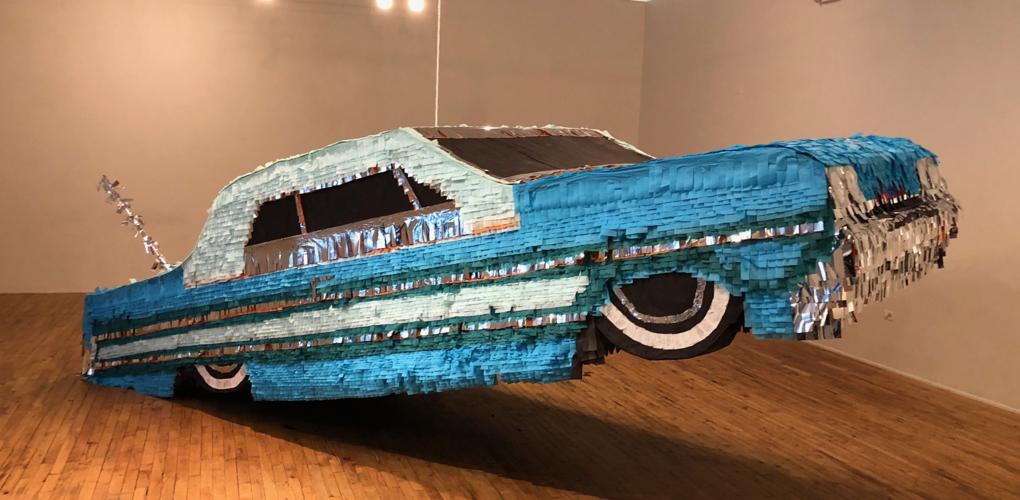
A piñata in the form of a full-size 1964 Chevy Impala lowrider was created by Las Vegas-based artist Justin Favela.
Recommended for you
A piñata in the form of a full-size 1964 Chevy Impala lowrider was created by Las Vegas-based artist Justin Favela. The origin of the lowrider stems from the Pachuco culture of the 1930s and ’40s which began with the lowering of old Chevys and Fords, which eventually evolved into the ranflas that cruised through the Southwestern United States in the ’60s and ’70s. Of this piece, Favela said: “The lowrider is a prime example of a multilayered symbol of Latinidad and Chicanx culture. Lowriders represent tradition, family, resurrection and progress. … Making a lowrider into a life-size piñata celebrates the object, literally elevates it and at the same time makes it accessible to those of us that have had piñatas at our family parties.”
***
The Museo de las Americas in Denver, Colo., is dedicated to the arts and cultures of the Latinidad in the Americas. On view through Aug. 18 is Pachucos y Sirenas, highlighting the impact that the 1940s Pachuco legacy had on the American experience.
Susan Cohn/Daily Journal
MUSEUM PARTICULARS: Museo de las Americas in located at 861 Santa Fe Drive in Denver, Colorado. For information about museum hours and events,visit museo.org or call (303) 571-4401. Pachucos Y Sirenas is on view through Aug. 18.
ARTISTS OPEN THEIR DOORS: FIRST FRIDAY ART WALKS IN DENVER’S ART DISTRICT ON SANTA FE. Denver’s Art District on Santa Fe (ADSF) encompasses hundreds of artists, galleries, studios, theaters and creative businesses along Santa Fe Drive, where First Friday Art Walks attract thousands, year-round, rain or shine, from 5:30 p.m.-9:30 p.m. In addition, every third Friday, the Art District offers Collector Preview Events, a more intimate version of First Friday with an opportunity for patrons to see the art and meet the artists and owners without the large First Friday crowds.
AND REMEMBER: To paint ... to travel ... to combine the two ... is to celebrate life. — Jack R. Brouwer
Susan Cohn is a member of the North American Travel Journalists Association, Bay Area Travel Writers, and the International Food, Wine & Travel Writers Association. She may be reached at susan@smdailyjournal.com. More of her stories may be found at http://ifwtwa.org/author/susan-cohn.
Keep the discussion civilized. Absolutely NO
personal attacks or insults directed toward writers, nor others who
make comments. Keep it clean. Please avoid obscene, vulgar, lewd,
racist or sexually-oriented language. Don't threaten. Threats of harming another
person will not be tolerated. Be truthful. Don't knowingly lie about anyone
or anything. Be proactive. Use the 'Report' link on
each comment to let us know of abusive posts. PLEASE TURN OFF YOUR CAPS LOCK. Anyone violating these rules will be issued a
warning. After the warning, comment privileges can be
revoked.
Please purchase a Premium Subscription to continue reading.
To continue, please log in, or sign up for a new account.
We offer one free story view per month. If you register for an account, you will get two additional story views. After those three total views, we ask that you support us with a subscription.
A subscription to our digital content is so much more than just access to our valuable content. It means you’re helping to support a local community institution that has, from its very start, supported the betterment of our society. Thank you very much!



(0) comments
Welcome to the discussion.
Log In
Keep the discussion civilized. Absolutely NO personal attacks or insults directed toward writers, nor others who make comments.
Keep it clean. Please avoid obscene, vulgar, lewd, racist or sexually-oriented language.
Don't threaten. Threats of harming another person will not be tolerated.
Be truthful. Don't knowingly lie about anyone or anything.
Be proactive. Use the 'Report' link on each comment to let us know of abusive posts.
PLEASE TURN OFF YOUR CAPS LOCK.
Anyone violating these rules will be issued a warning. After the warning, comment privileges can be revoked.