Cloudy with periods of rain. High 64F. Winds SSW at 10 to 20 mph. Chance of rain 100%. Rainfall near a quarter of an inch..
Tonight
Rain early...then remaining cloudy with showers overnight. Potential for heavy rainfall. Low 54F. Winds SSW at 10 to 15 mph. Chance of rain 90%. Rainfall near a quarter of an inch.
Many Bay Area political leaders acknowledge from podiums that we can’t build our way out of traffic congestion with highway expansion, and that climate change is the leadership test of our era.
As Californians, we pride ourselves on climate leadership, and we have been making great progress in reducing carbon emissions from energy, but we’re falling behind in transportation, which has become the single largest source of greenhouse gas emissions.
And yet, highway widening is still politically popular, since many people still feel reflexively that widening highways (one more time) will surely relieve congestion.
But decades of experience and research now show that widening highways provides very brief or no relief to congestion, since faster roads attract more drivers away from other transportation options so the roads are quickly clogged again.
In Gilroy, for example, after Highway 101 was widened in 2003, Caltrain ridership plummeted by 60 percent, and it’s still half the level it was in 2003. Caltrain ridership has more than doubled systemwide since 2003.
A recent University of California, Davis study shows that adding capacity to roads fails to alleviate congestion for long because it actually increases vehicle miles traveled (VMT). Another study by the California Governor’s Office of Planning and Research found that adding lane miles, especially in congested urban areas, causes increases in driving miles that often dampen the ability of capacity expansion projects to relieve congestion and generates higher levels of carbon emissions and other pollution.
Recommended for you
It’s more effective to improve mobility by helping more people travel in fewer vehicles, by providing more and better options and incentives to take trains, buses, shuttles or carpools, and to bike and walk, and by providing places for people to live near jobs, services and transportation options. Such approaches support many of our common goals and values — fulfilling our climate promises, while improving economic mobility, providing better access for people who are young, old and disabled, and fostering better health with cleaner air, safer streets and more physical activity.
And according to a recent survey of San Mateo County residents conducted by the Transportation Equity Allied Movement Coalition, the vast majority of respondents want to relieve congestion, but would prefer to do so by reducing, rather than by increasing, the number of cars on the road.
In recent years, the state of California and the Bay Area region have been decreasing policy support for major highway and road expansions, driven by recent acknowledgment that highway widening results in increased driving, and increased driving contributes to climate change. To pay for projects on the shelf, San Mateo and Santa Clara counties have been advancing locally funded initiatives to continue to expand highway and expressway capacity.
The Bay Area and San Mateo and Santa Clara counties face a major strategic turning point. Will our policymakers show leadership, make forward-looking decisions and help educate the public about the climate harm of road projects that increase driving and climate pollution? Will leaders make decisions that are in line with inspirational speeches about environmental protection?
Or will our leaders accommodate climate denial, ignoring the science; pander to popular opinion supporting wider highways; and continue the failed strategies of the past? Will our leaders pass the leadership test of our era?
San Mateo County is preparing a ballot measure that will shape our transportation options for years to come. Our decision-makers can choose to design and fund a transformative system that serves the mobility needs of all residents, current and future, and that protects and enhances our environment and quality of life. Or, they can choose an approach that will ensnare us in ever more congestion, polluted air and social inequity.
Please urge our county’s Board of Supervisors and the leaders of our transportation agencies to end the cycle of highway widening, and instead, fund projects with this ballot measure that improve mobility without adding polluting car trips.
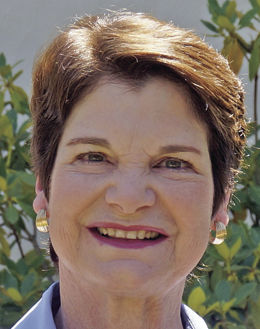
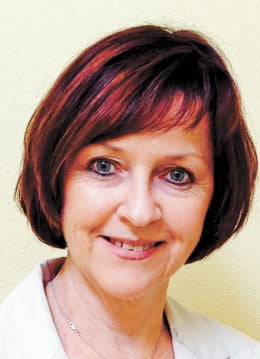
Terry Nagel is the former mayor of Burlingame and served on the San Mateo County Transportation Authority for five years. Debbie Ruddock is a member of the Half Moon Bay City Council. Adina Levin is the executive director of Friends of Caltrain, a nonprofit supporting modernized Caltrain and sustainable transportation on the Peninsula Corridor.
Why not stabilize the population instead of welcoming growth and its problems? Expanded public transportation can only do so much and we all know it.
Every time we spend m/billions building public transportation or widening a highway, along comes another glut of workers to contend with. Whether legal or illegal, high tech or simple laborers, it is the employers who profit by more and cheaper new workers while we pay the price:
Never ending new housing projects and shopping centers, sprawl, traffic lights, pollution, habitat loss, extinctions, open spaces trampled by too many visitors ... and the roads are congested once again. BART and bus not withstanding.
We cannot endlessly cram another 10 pounds into a 5 pound sack. The folks writing that letter cannot or do not primarily travel by public transportation and neither can most other people. I haven't met a city planner yet who presented a talk after arriving by public transport- that's somehow always for "other people" to depend on.
We must stop ruining our environment and quality of life by encouraging growth. Stop promoting the population spikes that requires new new housing. We're beyond full up.
Keep the discussion civilized. Absolutely NO
personal attacks or insults directed toward writers, nor others who
make comments. Keep it clean. Please avoid obscene, vulgar, lewd,
racist or sexually-oriented language. Don't threaten. Threats of harming another
person will not be tolerated. Be truthful. Don't knowingly lie about anyone
or anything. Be proactive. Use the 'Report' link on
each comment to let us know of abusive posts. PLEASE TURN OFF YOUR CAPS LOCK. Anyone violating these rules will be issued a
warning. After the warning, comment privileges can be
revoked.
Please purchase a Premium Subscription to continue reading.
To continue, please log in, or sign up for a new account.
We offer one free story view per month. If you register for an account, you will get two additional story views. After those three total views, we ask that you support us with a subscription.
A subscription to our digital content is so much more than just access to our valuable content. It means you’re helping to support a local community institution that has, from its very start, supported the betterment of our society. Thank you very much!



(3) comments
.....Bay Area political leaders acknowledge from podiums...lots of talk....
Fix the unsafe 2 lane road that is highway 92...it not rocket science...
Fix it how, exactly? San Mateo just revamped the El Camino/92 interchange, and RM3 is slated to do the same to the 92/101 interchange if it passes.
Why not stabilize the population instead of welcoming growth and its problems? Expanded public transportation can only do so much and we all know it.
Every time we spend m/billions building public transportation or widening a highway, along comes another glut of workers to contend with. Whether legal or illegal, high tech or simple laborers, it is the employers who profit by more and cheaper new workers while we pay the price:
Never ending new housing projects and shopping centers, sprawl, traffic lights, pollution, habitat loss, extinctions, open spaces trampled by too many visitors ... and the roads are congested once again. BART and bus not withstanding.
We cannot endlessly cram another 10 pounds into a 5 pound sack. The folks writing that letter cannot or do not primarily travel by public transportation and neither can most other people. I haven't met a city planner yet who presented a talk after arriving by public transport- that's somehow always for "other people" to depend on.
We must stop ruining our environment and quality of life by encouraging growth. Stop promoting the population spikes that requires new new housing.
We're beyond full up.
Welcome to the discussion.
Log In
Keep the discussion civilized. Absolutely NO personal attacks or insults directed toward writers, nor others who make comments.
Keep it clean. Please avoid obscene, vulgar, lewd, racist or sexually-oriented language.
Don't threaten. Threats of harming another person will not be tolerated.
Be truthful. Don't knowingly lie about anyone or anything.
Be proactive. Use the 'Report' link on each comment to let us know of abusive posts.
PLEASE TURN OFF YOUR CAPS LOCK.
Anyone violating these rules will be issued a warning. After the warning, comment privileges can be revoked.