As we transition out of a once-in-a-century pandemic, the road to recovery is green.
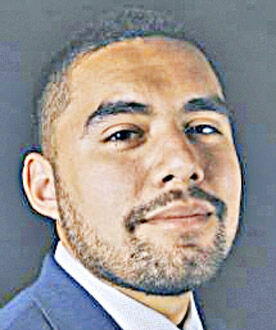
Antonio Lopez
The green I am referring to goes beyond stimulus checks and cold hard cash. I am talking about long-term investment in disfranchised communities to turn their historic spaces of gray to green. Building off the advocacy and policy making of congressmembers such as Alexandria Ocasio Cortez and California Attorney General Bob Bonta, I am calling for nothing short of a Green New Deal for East Palo Alto.
Let us be clear about what is at stake. A Green New Deal for East Palo Alto is not just about the right to a future full of flora and fauna; it is about the right for our children to enjoy the same opportunities for safe recreation as their peers who live in the ZIP codes next door.
The myth of California, and in particular Silicon Valley, is that in this land lies the future. Imagine then that in the heartland of boundless possibility, there is an entire community lagging behind in virtually every single metric.
Since decades before its inception, EPA has endured one crisis after another: a white flight that resulted in the depletion of its tax base, a freeway expansion that displaced dozens of small businesses, a drug epidemic that drove crime rates to national notoriety, an economic recession that devastated homeowners, and consequently, outside investors acquired properties for pennies on the dollar.
To rectify these historic inequities, parks and recreation will be a crucial component in promoting the health and well-being of our community.
All across the San Francisco Bay Area and country, cities are currently witnessing spikes in crime; ours is no exception. In a comparison of May 2021’s crime rates with last year, East Palo Alto experienced a 150%, 400% and 60% spikes in robbery, aggravated assaults and burglary respectively. Couple these statistics with the fact that parents in East Palo Alto, working multiple full-time jobs, and lacking funds for daycare, are often forced to leave their children unattended. This places minors in an even more vulnerable position to be out in the streets. Now more than ever, they need spaces built for them.
Recommended for you
East Palo Alto has not committed the coffers necessary to invest in this demographic. The city has no parks and recreation department. Nor do we have a community services department; we dissolved it in 2012 as part of a wave of furloughs.
According to a 2018 assessment report from Canopy, East Palo Alto’s average tree density is 13.5%. This is in stark contrast to Menlo Park’s 26.8% and Palo Alto’s 37.6%. But this is more about planting trees. What we are seeing and living with are entire neighborhoods east of Highway 101 starved of canopy coverage.
There is a school of thought in city governance that in times of deficit, it is prudent, even necessary, to tighten one’s fiscal belt. Instead, one should follow the practice of other cities, and establish a fee-based system. But we are not other cities, nor is the ethos of our leadership. In a recent budgetary meeting, councilwoman Lisa Gauthier stated, “I know it is a deficit year, but we are looking for things for our youth to do. How do we create a service for the residents who are paying taxes for this city, and want to utilize their parks?”
As ambassador for the Magical Bridge project at Bell Street Park, as well as member of the steering committee for the city’s first-ever Urban Forest Master Plan, I call for increased tree canopy from 13.5% to 25% by 2041, with a long-term goal of achieving 40% coverage by 2121, community education to provide stewardship of urban forestry. And to implement this, I finally call for full departmentalization of parks and recreation for the city.
I lean on my seasoned councilmembers and the wider community to join me in this historic fight for environmental justice. I call on nonprofits and environmental rights groups to look beyond the Baylands Trail, and ask themselves, “How can my advocacy preserve not only the birds and trouts, but the other 31,000 living beings, the residents, struggling to call East Palo Alto home?”
This is about dealing with the bitter remnants of redlining in San Mateo County, the accumulation of decades of systemic segregation, in a word, the disparity between the white and well-to-do and communities of color in their capacity to breathe.
Antonio López (@barrioscribe) is the author of the poetry collection, "Gentefication." He is a doctoral student at Stanford University and an East Palo Alto councilmember.
I went along with this until the last graf and the crack about people of no color, aka white. Don't white people live in EPA? Bring us together in common cause, not tear us apart. I suggest the author take a look at street signs in EPA - a lot of them have Irish names. Then he should attend the St. Patrick's Day party at St. Francis parish in EPA, now mainly Hispanic and Pacific Islanders who have replaced Ellis Islanders. A true melting pot or tossed salad. There are many good people in EPA. Don't make them fight while you hold their coats.
Your point about the melting pot is a good one. Yes, we can debate whether the melting pot metaphor truly applies to the American experience, but for sake of argument... let's go with it. That being said... it's one melting pot not two separate pots, and stirring two pots is just another name for segregation.
The author's suggestion that EPA needs a landscaping makeover is a good one. However, will more trees and parks solve EPA's problems? I'm wondering where planting trees would fall into a list of priorities articulated by EPA residents?
Well-written, wlydecker. My take is that although Mr. Lopez says it’s not the green of cold hard cash, it sounds exactly like the green of cold hard cash that he’s after because any greening will take money, lots of money. But wouldn’t any new monies be better spent on first tackling law and order? And then daycare facilities? Pulling the race card will do little to help with unity.
Keep the discussion civilized. Absolutely NO
personal attacks or insults directed toward writers, nor others who
make comments. Keep it clean. Please avoid obscene, vulgar, lewd,
racist or sexually-oriented language. Don't threaten. Threats of harming another
person will not be tolerated. Be truthful. Don't knowingly lie about anyone
or anything. Be proactive. Use the 'Report' link on
each comment to let us know of abusive posts. PLEASE TURN OFF YOUR CAPS LOCK. Anyone violating these rules will be issued a
warning. After the warning, comment privileges can be
revoked.
Please purchase a Premium Subscription to continue reading.
To continue, please log in, or sign up for a new account.
We offer one free story view per month. If you register for an account, you will get two additional story views. After those three total views, we ask that you support us with a subscription.
A subscription to our digital content is so much more than just access to our valuable content. It means you’re helping to support a local community institution that has, from its very start, supported the betterment of our society. Thank you very much!




(3) comments
I went along with this until the last graf and the crack about people of no color, aka white. Don't white people live in EPA? Bring us together in common cause, not tear us apart. I suggest the author take a look at street signs in EPA - a lot of them have Irish names. Then he should attend the St. Patrick's Day party at St. Francis parish in EPA, now mainly Hispanic and Pacific Islanders who have replaced Ellis Islanders. A true melting pot or tossed salad. There are many good people in EPA. Don't make them fight while you hold their coats.
Good morning...
Your point about the melting pot is a good one. Yes, we can debate whether the melting pot metaphor truly applies to the American experience, but for sake of argument... let's go with it. That being said... it's one melting pot not two separate pots, and stirring two pots is just another name for segregation.
The author's suggestion that EPA needs a landscaping makeover is a good one. However, will more trees and parks solve EPA's problems? I'm wondering where planting trees would fall into a list of priorities articulated by EPA residents?
Well-written, wlydecker. My take is that although Mr. Lopez says it’s not the green of cold hard cash, it sounds exactly like the green of cold hard cash that he’s after because any greening will take money, lots of money. But wouldn’t any new monies be better spent on first tackling law and order? And then daycare facilities? Pulling the race card will do little to help with unity.
Welcome to the discussion.
Log In
Keep the discussion civilized. Absolutely NO personal attacks or insults directed toward writers, nor others who make comments.
Keep it clean. Please avoid obscene, vulgar, lewd, racist or sexually-oriented language.
Don't threaten. Threats of harming another person will not be tolerated.
Be truthful. Don't knowingly lie about anyone or anything.
Be proactive. Use the 'Report' link on each comment to let us know of abusive posts.
PLEASE TURN OFF YOUR CAPS LOCK.
Anyone violating these rules will be issued a warning. After the warning, comment privileges can be revoked.