
The need is simple, but the solutions are not when it comes to the state budget. And the tangled web of dysfunction currently knows no bounds.
But the state needs a "do-over,” at least according to Jackie Speier, who knows her way around the Capitol as a former state senator and assemblywoman.
Now in Washington, D.C. representing the 12th Congressional District, Speier, D-San Mateo, has a unique perspective of how to best manage the ballooning state deficit particularly since the federal government is embarking on new policy after new policy even though the national annual deficit recently broke through the $1 trillion mark. The big difference? The federal government is not required to have a balanced budget and it’s full steam ahead with majorities in both houses and the president’s popularity likely at its highest point.
In Sacramento, however, the story is different and bulging programs and reduced revenue is wreaking havoc on a system with a number of flaws.
"They need to start over, and I don’t say that happily. I think they’ve lost their way,” Speier said.
California is entirely too hamstrung by the boom-and-bust cycles of income tax and the legislative process itself is in need of reform.
"Term limits has created a paralysis in the Legislature,” said Speier, D-San Mateo. "People fear losing their jobs more than doing their jobs. ... It saddens me in a way I can’t even express.”
Speier points to the reduction of the vehicle license fee during the dot-com boom as a critical mistake of former legislators and then-Gov. Gray Davis. Though Gov. Arnold Schwarzenegger ran on the idea of keeping the vehicle license fee low, Speier said that too was a mistake. The vehicle license fee, she said, was at the same rate for decades and keeping it at the level it was would mean $6 billion a year for the state every year. Instead, she said the money could have been placed in a "rainy day” fund that could be tapped when revenue slid.
At one time, Google employees were paying $500 million a year in state taxes because of capital gains for stock options. With property taxes kept low because of Proposition 13, the state depended on that revenue to keep it afloat. When there aren’t those types of options being exercised, that’s when the state gets into trouble, Speier said.
More importantly, Speier is in favor of open primaries so candidates won’t have to play to party extremes to get to the general election and was saddened that the Republican party and its members scolded and threatened to recall state Sen. Abel Maldonado, R-Santa Maria, when he made a deal with Democrats to get a budget as long as a proposal for open primaries could be considered for the ballot. Amending term limits up to 12 years, a spending cap and elimination of the two-thirds’ threshold for budget passage would also help, Speier said.
All valid ideas, sure. But the situation at hand is still locked up and the long-term fixes are easier said than done. But add Speier’s voice to the growing clamor that the state needs some serious reform so the current situation is not repeated. With redistricting reform set to begin after the 2010 census, and the possibility of open primaries on the horizon, there may be some hope — or at least some steps in the right direction.
***
Recommended for you
Speier has had a busy year on Capitol Hill. Big-ticket items are coming fast and furious. The economic stimulus, which Speier said kept the economy much better than if it had not passed; the climate bill, which Speier calls opposition, "laughable if it weren’t so dangerous;” and health care reform. Why the president’s rush?
"I think [the Obama administration] observed the rhythm of previous administrations and they have a smart, capable staff. A president never has as much clout as the first year in office,” she said.
Health care was a primary interest for Speier when she was at the state level, and it is frustrating for her that she has 18 years experience on the issue but is on no committee where she can help fashion legislation. But she is watching closely.
Despite some concern over terms such as "socialized health care” and the potential cost of the wide-sweeping plan, Speier still believes in its basic tenets and thinks it’s time the federal government creates a safety net for the average American who has health insurance provided by their employer but may be one layoff away from not having it. The plan as it stands now removes the ability to discriminate because of a pre-existing condition, places a burden on businesses that do not provide health care and ultimately will provide another choice for many Americans. With health care costs skyrocketing, this is the only time Speier said every major player is on board — pharmaceutical companies, insurance companies and health care providers. While the American system is flawed, Speier believes we can learn from our own mistakes and those of other countries with similar systems.
As it stands now, small business owners (AKA job creators) may be hit the hardest and there is some fear tax rates will rise to pay for such a wide-reaching plan. Combined with the sunset of the Bush tax cuts in 2010, high-income earners — especially many around here who suffer from a high cost of living — may be facing higher taxes than ever before. There is also concern that may not be reflected in the polls that it will take away health care choices to which many are accustomed and that the cost will be born by the average citizen to provide care for everyone.
And no one really knows just how much the whole thing will cost and who exactly will pay for it.
"I’m very sensitive to that. I’m a fiscal conservative. I don’t want to see money wasted and I don’t want to see us participating in false starts,” she said. "I know that more than anything else in my political career, we have to do this now.”
***
So while the state is slowed to a crawl by a budget threshold that can’t be met and a governor who said he will veto any proposal that raises taxes, the federal government is full speed ahead with no limit on the deficit, a majority in both houses and a new and ambitious president. Seems Speier made it to the federal level at just about the right time.
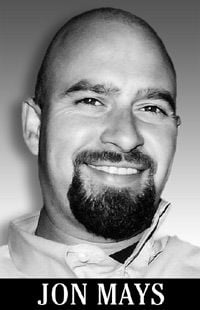
Jon Mays is the editor in chief of the Daily Journal. He can be reached at jon@smdailyjournal.com.







(0) comments
Welcome to the discussion.
Log In
Keep the discussion civilized. Absolutely NO personal attacks or insults directed toward writers, nor others who make comments.
Keep it clean. Please avoid obscene, vulgar, lewd, racist or sexually-oriented language.
Don't threaten. Threats of harming another person will not be tolerated.
Be truthful. Don't knowingly lie about anyone or anything.
Be proactive. Use the 'Report' link on each comment to let us know of abusive posts.
PLEASE TURN OFF YOUR CAPS LOCK.
Anyone violating these rules will be issued a warning. After the warning, comment privileges can be revoked.