Poetry was never my favorite subject in school. Intimidated by poetry’s many possibilities, I used to shy away from creative writing. But as I opened myself up to new forms of literature and writing, like journalism, I was presented with new perspectives on the world.
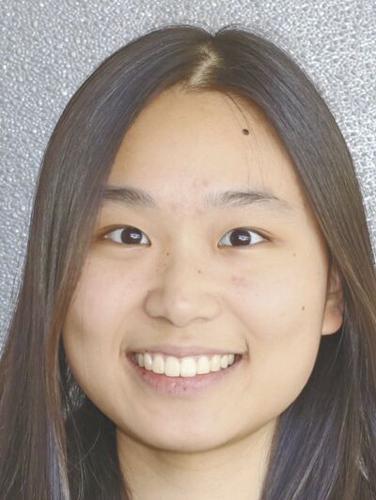
That’s the curious thing about writing — it prompts you to think and view things differently. For high school senior Eva Chen, poems allowed her to find a new way of life.
“I used to believe that poetry was rigid, old people’s literature,” Chen said. “I always liked writing, but realizing that poetry could be a very fluid art and seeing how poetry can take shape in different forms was what really got me into it.”
As Burlingame’s youth poet-in-residence, Chen’s job is to help launch the city’s first Youth Poet Laureate program. In the past few months, she has hosted writing workshops at the Burlingame Public Library for middle and high school students, guiding them in their search for their voice through poetry. But, while impressed by her mentees’ enthusiasm at every workshop, Chen was also saddened by how poetry was taught in schools.
“They always expressed to me that the spaces I provided in my workshops as a creative outlet were very different from the spaces they had in the classroom, where writing was more structured, and they had to work within the limitations of a lot of rules,” Chen said.
In all the English classes I have been in, poetry and creative writing were never the focus. Rather than encouraging students to express their ideas through writing, teachers followed structured curricula that often included standardized literature and essay templates. Whenever we engaged with poetry, the text was most likely written by people like Shakespeare or Langston Hughes.
To set the record straight, poets like Shakespeare and Langston Hughes were incredibly influential in literature, and school curricula aim to help students develop the necessary skills to write, analyze texts and think critically. But what is often missing in the classroom is an outlet for creativity and expression.
Recommended for you
Expressing a similar sentiment, Chen has always disliked how poetry is taught and people’s attitudes toward reading and writing poetry.
“I feel like a lot of students dislike poetry because they’ve been given a wrong image of what poetry looks like,” Chen said. “Poetry has evolved so much as an art, but we tend to focus on poets from 100 years ago when poetry now has many different formats and can lack many rules.”
Visually, we now have poems in the shape of a tree or an apple. Poets can write a run-on sentence and not capitalize letters or use punctuation. They can break out of the restrictions set in place by grammar rules and flow to find their own writing style.
As a result, Chen believes schools should advocate for more freedom in how they deliver poetry to students, seeing how readers can connect personally to the poem beyond just the meaning and purpose of the text.
“Poetry is supposed to be personal. At school, they don’t make it very personal,” Chen said. “Instead of asking what this poem means, we should ask, ‘how does it make you feel? How do the author and the words used in the context of the poem deliver that feeling to you?’”
Outside of hosting workshops at the library, Chen advocates for more poetry work, workshops and resources. In early February, she also presented a poem advocating for social justice and civil rights during a United Against Hate conversation at the Burlingame Community Center.
Drawing inspiration from everything around her, Chen writes about various topics, including calculus, the law of conservation, and social justice. In particular, she writes a lot about her identity as a Chinese American, connecting back to her culture through her United Against Hate poems. Since writing poetry, she has gained a greater appreciation for the world around her.
“Poetry can be an intimidating process. You have to condense a lot of things into a sentence or two, but I like to challenge that view as a poet who used to dislike poetry,” Chen said. “I really do think about the world in terms of poetry. It is a creative outlet in itself, but more than that, I would even argue that poetry is a lifestyle.”
Grace Wu is a senior at Carlmont High School in Belmont. Student News appears in the weekend edition. You can email Student News at news@smdailyjournal.com.
Grace - thank you for introducing us to Eva Chen and sharing your journey of writing! My idea of poetry was rooted in what I learned in High School and that scared me away from reading OR writing anything poetic until late in my adulthood when, fortunately, someone opened my eyes to what poetry could be.
I still remember reading "Sweet Spring" by ee cummings more than 50 years ago in English. I have not thought about that poem for long time... until I read your column today. Thanks
Keep the discussion civilized. Absolutely NO
personal attacks or insults directed toward writers, nor others who
make comments. Keep it clean. Please avoid obscene, vulgar, lewd,
racist or sexually-oriented language. Don't threaten. Threats of harming another
person will not be tolerated. Be truthful. Don't knowingly lie about anyone
or anything. Be proactive. Use the 'Report' link on
each comment to let us know of abusive posts. PLEASE TURN OFF YOUR CAPS LOCK. Anyone violating these rules will be issued a
warning. After the warning, comment privileges can be
revoked.
Please purchase a Premium Subscription to continue reading.
To continue, please log in, or sign up for a new account.
We offer one free story view per month. If you register for an account, you will get two additional story views. After those three total views, we ask that you support us with a subscription.
A subscription to our digital content is so much more than just access to our valuable content. It means you’re helping to support a local community institution that has, from its very start, supported the betterment of our society. Thank you very much!




(3) comments
Grace - thank you for introducing us to Eva Chen and sharing your journey of writing! My idea of poetry was rooted in what I learned in High School and that scared me away from reading OR writing anything poetic until late in my adulthood when, fortunately, someone opened my eyes to what poetry could be.
Hello, Grace
I still remember reading "Sweet Spring" by ee cummings more than 50 years ago in English. I have not thought about that poem for long time... until I read your column today. Thanks
These are the kinds of young people we need to support and encourage. Blessings + good luck to you, Grace.
Welcome to the discussion.
Log In
Keep the discussion civilized. Absolutely NO personal attacks or insults directed toward writers, nor others who make comments.
Keep it clean. Please avoid obscene, vulgar, lewd, racist or sexually-oriented language.
Don't threaten. Threats of harming another person will not be tolerated.
Be truthful. Don't knowingly lie about anyone or anything.
Be proactive. Use the 'Report' link on each comment to let us know of abusive posts.
PLEASE TURN OFF YOUR CAPS LOCK.
Anyone violating these rules will be issued a warning. After the warning, comment privileges can be revoked.