It is the time of the year when city councils are deep into budgeting. But this is not like any other year, particularly when it comes to spending on law enforcement.
If 2020 was the year of the Black Lives Matter movement, 2021 is the year that “defund the police” is expected to move from sentiment to results. Depending on who is doing the advocating, this can range from realigned police spending priorities to the outright slashing of police budgets.
Faced with just such expectations during her recent tenure as the interim police chief in Oakland, Susan Manheimer tried to shift the discussion to what she calls “reimagining” the police.
Harsh scrutiny of police conduct, and how that might be expressed in city budgets, is nothing new to Manheimer. Her 37 years in law enforcement include 17 years in the San Francisco Police Department, commanding substations in the city’s Tenderloin and Bayview neighborhoods; 19 years as the San Mateo police chief; and 10 months, ending in February, as the interim Oakland police chief. She arrived in Oakland as the city was experiencing 15 homicides in a single month and officials wanted to cut the police budget by 50%.
In a reflective mood, and saying with a laugh, “I’m much more hip and woke since I went to the East Bay,” Manheimer concurs that a deep re-evaluation of police priorities is warranted. But it also requires a rethinking of what a community expects from its police, and its leadership.
Over decades, police have become the primary response to every kind of social disturbance. Just like a person with a hammer sees every problem as a nail, those charged with responding to crime are likely to see every disturbance as criminal.
“We are not the best response to mental health, homelessness, youth out of control,” Manheimer said. The answer is increased training, starting at the police academies, in crisis intervention in which law enforcement is trained to distinguish between a mental health crisis and criminal activity. Manheimer long has advocated partnerships in which police are paired with trained clinicians. She tried to implement such partnerships when responding to homeless encampments.
Recommended for you
Increased training and additional support from nonsworn personnel require money and the challenge facing cities is whether to shift funds from police budgets or to spend more, an option many cities do not have. The other option is to move funds from elsewhere in the budget, but a case could be made that cutting funds to “quality of life” programs only worsens the stress on those most in need of refuge.
But the “defund the police” debate is not focused on mental health. It is focused on police conduct, or, rather, misconduct. Manheimer tried to make the case that police shootings have been, and remain, rare, but that the presence of body armor cameras has “magnified” these instances. Black Lives Matter advocates argue that cameras — worn by police or held by witnesses — actually exposed how common and widespread police shootings are.
Manheimer said the key is neither to dismiss those genuine concerns, nor to dismiss the need for effective law enforcement in those communities where alienation from police may be common.
“My experience over time is that the people who need the police most want the police in their communities and they want a police that makes them feel safe,” she said. “Let’s talk about how we make our Black and brown and indigenous communities feeling safer, including with the police.”
All of this requires leadership at the top. Police conduct, like police budgets, reflect the elected leadership of a community and, presumably, the priorities and attitudes of the community. Police departments throughout the country are remarkably inconsistent about what is tolerated by their officers. “You may have jurisdictions like Oakland, where they have very low tolerance for any misconduct and that ends up with severe discipline that, in another state or in California, may not even be disciplined,” Manheimer said. “At the end of the day, people set expectations for their city councils.”
BOOKER GETS IN: Half Moon Bay’s Steven Booker, business representative for the International Brotherhood of Electrical Workers, has jumped into the race to replace termed-out Don Horsley on the San Mateo County Board of Supervisors. Menlo Park Councilman Ray Mueller and San Carlos Mayor Laura Parmer-Lohan also are running. … The ever-eager Supervisor David Canepa immediately endorsed Booker. … By the way, Manheimer, oft-rumored as a candidate, says she’s not running for sheriff or “any political office. … I really want to get back to being a grandmother, catching my breath” and serving several state, national and international law enforcement organizations.
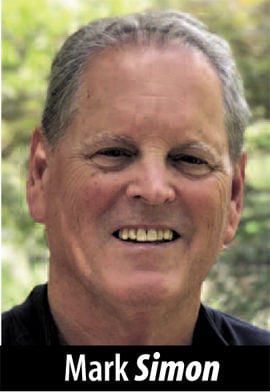
Mark Simon is a veteran journalist, whose career included 15 years as an executive at SamTrans and Caltrain. He can be reached at marksimon@smdailyjournal.com.
Thanks, Mark, for drawing attention to an important topic.
Cities will be best served by meeting the law enforcement needs of residents without the negative effects of politicizing the budget process. That will only happen if city councils across our county show the leadership needed to clearly define law enforcement goals and commit to meeting those goals.
I think you are correct in pointing out that law enforcement has traditionally been called on to deal with every social disturbance reported to the police. We have all heard the ridiculous stories... a fast food customer requests a police officer to respond because a menu item is not available. But too many police officials direct resources to every incoming call because city councils don't want to deal with complaints. Cable TV reception goes out... call the cops. Trash in the gutter... call the cops. Someone taking plastic bottles out of a recycling bin... call the cops. No! A police officer does not need to respond to every incoming call. Those complainants should be redirected to the party responsible for addressing the reported problem.
Police recruits do receive training in academies concerning how to deal with persons suffering from mental health issues. The authority granted to police to refer those persons to a psychiatric evaluation is used on a daily basis across our county. However, too many of those people needing help are examined then sent away before the officer who recommended the evaluation finishes his or her work shift. So, the person with mental health issues quickly returns to the environment that contributed to his or her situation. How is that helping those who need compassion, guidance and assistance? Dispatching mental health professionals to situations where they are needed is good first step, and maybe such a step can be part of the re-imagining, instead of defunding, the police suggested by Chief Manheimer.
While our county has witnessed (over the past couple of years) too many tragic deaths of persons needing help, we do not see our police gunning down people in the street. In fact, if truth be told... that's not happening anywhere. In Chicago... that's just one American city... 525 persons have been shot this year since January 1. 102 of them died. How many persons did the Chicago police shoot and kill during that same period? Zero.
In Redwood City, a new councilperson, Lissette Espinoza-Garnica, joined the council after last November's election. Congrats to Lissette. She is a defund the police advocate. That is her prerogative. While I disagree with that perspective, it still needs to be part of the discussion regarding what police departments will look like in the future.
Redwood City has created a Police Advisory Committee to work with Police Chief Dan Mulholland in addressing issues related to citizen concerns and police policies. Councilperson Espinoza-Garnica believes the committee process will be negatively impacted because folks will be "intimidated by working with the chief of police... " I would ask the following... has Councilperson Espinoza-Garnica sat down and discussed policing issues with Chief Mulholland? If so, did she find the experience intimidating? If not... give it a try. I believe she will find Chief Mulholland to be much like Chief Manheimer... experienced, knowledgeable, and very, very open to ideas about how to improve law enforcement services.
Coming full circle... citizens need to tell... not ask... their elected representatives what they want from local law enforcement, and those representatives need to have the courage to implement policies to meet their constituents' needs. Robert Kennedy captured this idea when he said, "Every society gets the kind of criminal it deserves. What is equally true is that every community gets the kind of law enforcement it insists on."
Keep the discussion civilized. Absolutely NO
personal attacks or insults directed toward writers, nor others who
make comments. Keep it clean. Please avoid obscene, vulgar, lewd,
racist or sexually-oriented language. Don't threaten. Threats of harming another
person will not be tolerated. Be truthful. Don't knowingly lie about anyone
or anything. Be proactive. Use the 'Report' link on
each comment to let us know of abusive posts. PLEASE TURN OFF YOUR CAPS LOCK. Anyone violating these rules will be issued a
warning. After the warning, comment privileges can be
revoked.
Please purchase a Premium Subscription to continue reading.
To continue, please log in, or sign up for a new account.
We offer one free story view per month. If you register for an account, you will get two additional story views. After those three total views, we ask that you support us with a subscription.
A subscription to our digital content is so much more than just access to our valuable content. It means you’re helping to support a local community institution that has, from its very start, supported the betterment of our society. Thank you very much!




(3) comments
Great article/interview Mark!
Thanks, Mark, for drawing attention to an important topic.
Cities will be best served by meeting the law enforcement needs of residents without the negative effects of politicizing the budget process. That will only happen if city councils across our county show the leadership needed to clearly define law enforcement goals and commit to meeting those goals.
I think you are correct in pointing out that law enforcement has traditionally been called on to deal with every social disturbance reported to the police. We have all heard the ridiculous stories... a fast food customer requests a police officer to respond because a menu item is not available. But too many police officials direct resources to every incoming call because city councils don't want to deal with complaints. Cable TV reception goes out... call the cops. Trash in the gutter... call the cops. Someone taking plastic bottles out of a recycling bin... call the cops. No! A police officer does not need to respond to every incoming call. Those complainants should be redirected to the party responsible for addressing the reported problem.
Police recruits do receive training in academies concerning how to deal with persons suffering from mental health issues. The authority granted to police to refer those persons to a psychiatric evaluation is used on a daily basis across our county. However, too many of those people needing help are examined then sent away before the officer who recommended the evaluation finishes his or her work shift. So, the person with mental health issues quickly returns to the environment that contributed to his or her situation. How is that helping those who need compassion, guidance and assistance? Dispatching mental health professionals to situations where they are needed is good first step, and maybe such a step can be part of the re-imagining, instead of defunding, the police suggested by Chief Manheimer.
While our county has witnessed (over the past couple of years) too many tragic deaths of persons needing help, we do not see our police gunning down people in the street. In fact, if truth be told... that's not happening anywhere. In Chicago... that's just one American city... 525 persons have been shot this year since January 1. 102 of them died. How many persons did the Chicago police shoot and kill during that same period? Zero.
In Redwood City, a new councilperson, Lissette Espinoza-Garnica, joined the council after last November's election. Congrats to Lissette. She is a defund the police advocate. That is her prerogative. While I disagree with that perspective, it still needs to be part of the discussion regarding what police departments will look like in the future.
Redwood City has created a Police Advisory Committee to work with Police Chief Dan Mulholland in addressing issues related to citizen concerns and police policies. Councilperson Espinoza-Garnica believes the committee process will be negatively impacted because folks will be "intimidated by working with the chief of police... " I would ask the following... has Councilperson Espinoza-Garnica sat down and discussed policing issues with Chief Mulholland? If so, did she find the experience intimidating? If not... give it a try. I believe she will find Chief Mulholland to be much like Chief Manheimer... experienced, knowledgeable, and very, very open to ideas about how to improve law enforcement services.
Coming full circle... citizens need to tell... not ask... their elected representatives what they want from local law enforcement, and those representatives need to have the courage to implement policies to meet their constituents' needs. Robert Kennedy captured this idea when he said, "Every society gets the kind of criminal it deserves. What is equally true is that every community gets the kind of law enforcement it insists on."
Good work, Mark!
Welcome to the discussion.
Log In
Keep the discussion civilized. Absolutely NO personal attacks or insults directed toward writers, nor others who make comments.
Keep it clean. Please avoid obscene, vulgar, lewd, racist or sexually-oriented language.
Don't threaten. Threats of harming another person will not be tolerated.
Be truthful. Don't knowingly lie about anyone or anything.
Be proactive. Use the 'Report' link on each comment to let us know of abusive posts.
PLEASE TURN OFF YOUR CAPS LOCK.
Anyone violating these rules will be issued a warning. After the warning, comment privileges can be revoked.