In 2013, shortly after I started exploring Redwood City on foot, I began writing about what I saw. At first, I focused on what I personally observed. I soon realized, however, that I needed to do additional research, both to satisfy my own curiosity as well as to give my writing some much-needed depth. That then led me to pay closer attention to the workings of the city itself, and helped me learn about the steps development projects need to take to get built.
Entirely by coincidence, 2013 is about when the effects of the city’s Downtown Precise Plan, which was adopted in 2011, started to really become apparent. For instance, that was the year the Crossing 900 project (the “Box buildings”) was approved and broke ground. Since then, of course, quite a few large projects have been built (with many more currently awaiting approval) in downtown Redwood City, changing it from a relatively quiet, mostly retail-oriented place into a modern, bustling downtown full of offices and restaurants. While people disagree on whether that transformation is a good thing, no one disputes the fact that Redwood City’s downtown is very different from how it was back in 2013. Pretty much all of that change can be traced directly to the adoption of the DTPP, which streamlined the development process for many of those projects.
The DTPP has been amended a handful of times over the years, but none of those amendments were as significant as the one passed just this week by the Redwood City Council. Following the recommendations of the city’s Planning Commission, the City Council on Monday voted, essentially unanimously (Councilmember Gee having recused himself from the vote), to establish a Transit District within the DTPP area. This new 16.6-acre Transit District consists of the Sequoia Station shopping center property, Redwood City’s Transit Center, and the parking lot just north of Broadway between Perry Street and the Caltrain tracks.
The DTPP streamlined development by establishing a set of caps for various development categories — residential, office, retail and lodging — that the city then used to perform a California Environmental Quality Act analysis assuming that all of those caps had been reached. Because that analysis showed that the CEQA impacts of a downtown Redwood City built to the DTPP limits were manageable, new projects that didn’t cause downtown to exceed those caps didn’t need to be accompanied by a full CEQA analysis. The savings in both time and money, resulting from not having to do a full impact analysis, lured in developers, causing the office and residential space caps to quickly be reached. Within the new Transit District — which lies entirely within the DTPP area — the DTPP’s caps on office and residential development no longer apply. The Transit District has its own cap on office development, of 1.23 million square feet. As for housing units, though, there is no cap. The city has determined that up to 1,100 units (including up to 343 affordable units) can be built without performing a full CEQA analysis, but developers could exceed those limits as long as they are willing to fully analyze their projects.
Recommended for you
Unlike the DTPP, which was designed to encourage development in downtown Redwood City, the new Transit District is something of the reverse. It was created to pave the way for two major projects that have been in the planning stages for a number of years. One is a complete rethinking of Sequoia Station that adds a great deal of office space and a large number of housing units to the sort of retail we enjoy there today. The other, of course, is a relocated and radically redesigned Caltrain station and Transit Center.
The creation of the Transit District will smooth the path for those two large projects, and it increases the chances (but does not guarantee) that they will actually be built. Don’t expect to see actual development on either for some time, however. Although the Sequoia Station project has already gone through a number of design iterations and has been formally submitted to the city, now that the Transit District is official, it will likely see further changes before it is approved (assuming it is). As for the new Transit Center, there exist some blue-sky renderings of what one might look like, but there are still a number of issues to be resolved before an actual design can be put together.
The Transit District allows for the four-track station that Caltrain wants, and it helps make it possible to separate Caltrain’s tracks from several of the city’s roads. Thus, it is key to improving transit in and around Redwood City. At the same time, it’s a necessary step in extending downtown’s transformation to the aging and inefficient Sequoia Station shopping center.
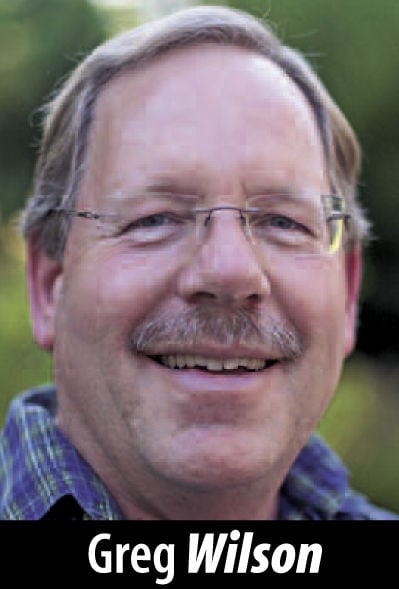
Greg Wilson is the creator of Walking Redwood City, a blog inspired by his walks throughout Redwood City and adjacent communities. He can be reached at greg@walkingRedwoodCity.com. Follow Greg on Twitter @walkingRWC.
Almost everywhere Bay Area, cities are facing a deterioration of downtown as a business model, and a fiscal cliff for transit. RWC, an in-transit destination between two declining downtowns, is looking to spend billions on an antiquated infrastructure model.
The important part of Transit District is transit. RWC needs a bus system that carries people to Caltrain and Samtrans at Sequoia station. It had a system that worked but Samtrans took over. How about getting the shuttles operated by Kaiser, Stanford etc. to expand? That would be a start.
Keep the discussion civilized. Absolutely NO
personal attacks or insults directed toward writers, nor others who
make comments. Keep it clean. Please avoid obscene, vulgar, lewd,
racist or sexually-oriented language. Don't threaten. Threats of harming another
person will not be tolerated. Be truthful. Don't knowingly lie about anyone
or anything. Be proactive. Use the 'Report' link on
each comment to let us know of abusive posts. PLEASE TURN OFF YOUR CAPS LOCK. Anyone violating these rules will be issued a
warning. After the warning, comment privileges can be
revoked.
Please purchase a Premium Subscription to continue reading.
To continue, please log in, or sign up for a new account.
We offer one free story view per month. If you register for an account, you will get two additional story views. After those three total views, we ask that you support us with a subscription.
A subscription to our digital content is so much more than just access to our valuable content. It means you’re helping to support a local community institution that has, from its very start, supported the betterment of our society. Thank you very much!






(3) comments
Hi, Greg
Thanks for your additional research into these projects and for sharing your research in a way that is easy to understand. Have a great wet weekend!
Almost everywhere Bay Area, cities are facing a deterioration of downtown as a business model, and a fiscal cliff for transit. RWC, an in-transit destination between two declining downtowns, is looking to spend billions on an antiquated infrastructure model.
The important part of Transit District is transit. RWC needs a bus system that carries people to Caltrain and Samtrans at Sequoia station. It had a system that worked but Samtrans took over. How about getting the shuttles operated by Kaiser, Stanford etc. to expand? That would be a start.
Welcome to the discussion.
Log In
Keep the discussion civilized. Absolutely NO personal attacks or insults directed toward writers, nor others who make comments.
Keep it clean. Please avoid obscene, vulgar, lewd, racist or sexually-oriented language.
Don't threaten. Threats of harming another person will not be tolerated.
Be truthful. Don't knowingly lie about anyone or anything.
Be proactive. Use the 'Report' link on each comment to let us know of abusive posts.
PLEASE TURN OFF YOUR CAPS LOCK.
Anyone violating these rules will be issued a warning. After the warning, comment privileges can be revoked.