New incoming exhibits at the San Mateo County History Museum will bring visitors through the county’s natural history and tell the stories of the working class from 150 years ago.
An expansion of the History Museum has been planned for many years, and the long-anticipated grand unveiling of the new Taube Family Carriage House, updated exhibits and access to the historic — and to be renamed — Lathrop House is scheduled in November.
In the meantime, finishing touches are being made and the San Mateo County Historical Association is preparing to physically haul the exhibits into the new buildings.
Mitch Postel, president of the San Mateo Historical Association, said there’s undoubtedly nerves about the literal big lift that installing the displays will be — much of which will require a crane to carry already-built carriages and displays — but he’s excited to see the museum grow.
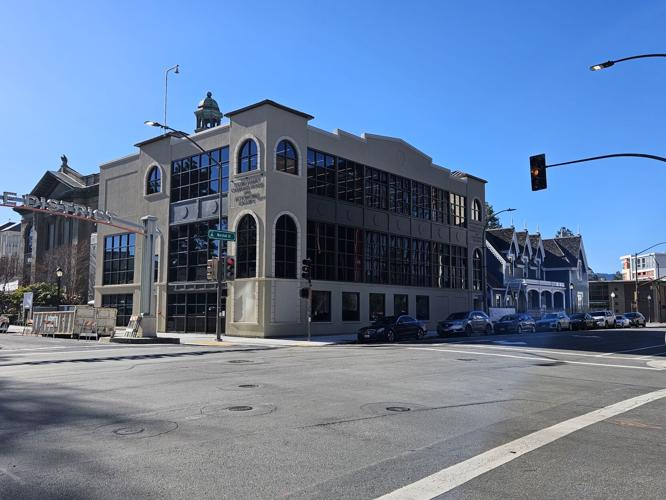
The Taube Family Carriage House and Automobile Gallery is a 15,000-square-foot, three-story community space at the back end of the History Museum. Construction began in 2023 and will considerably add to the museum’s square footage to host exhibits.
The ground floor will open with a classic automobile gallery, largely showcased from the Kopf family’s personal collection. The gallery will feature rotating exhibits from other community enthusiasts to showcase their vehicles as well.
“Our goal with this exhibit is not to have a showroom of automobiles, you can see that in various places, but we want to be able to tell stories about the automobile culture and why automobiles are a part of the lifestyle of the Peninsula,” Deputy Director Carmen Blair said.
Cool cars are also a great grab for visitors, museum staff joked.
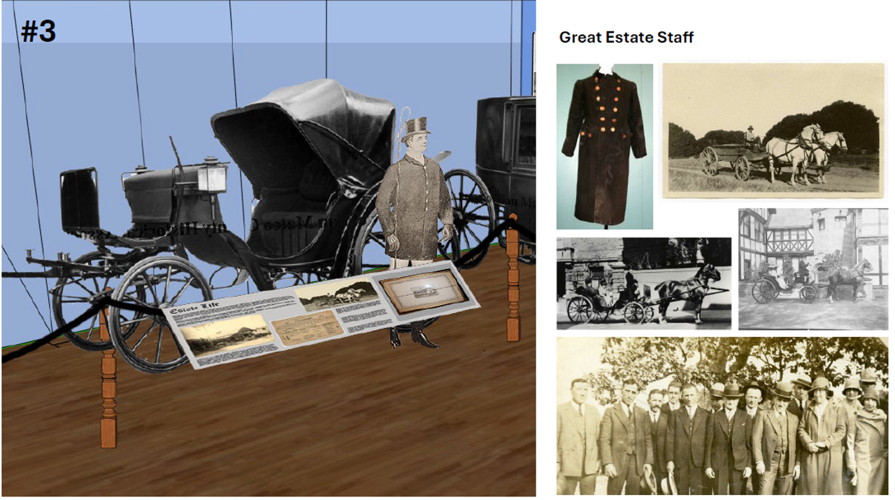
The second floor will then take folks further back in time to showcase the Historical Association’s extensive mid-19th century carriage collection.
The exhibit may rotate which carriages are on display — the association maintains more than 30 — but the goal of each is to not only depict the former residents of San Mateo County who rode on them, but the workers who built, drove and maintained the pristine carriages.
“We’re not concentrating on just the great estate families who owned these carriages, but we’re really looking at who worked at the estates, who made this possible, what businesses were inside the small town of San Mateo at the time,” Blair said.
During the mid-19th century, there were about 10,000 people living on the Peninsula spread sparsely across what is now San Mateo County. Prominent estates often included staffs of up to 300 people, and the amount of workers far exceeded the wealthy residents, which will be reflected in the museum’s curation, Postel said.
“A major portion of the people in San Mateo County worked on the estate and we want to tell that story,” Postel said. “They were from China, they were from Ireland, Japan, Italy, they were from Portugal and the Philippines, and they were to great extent the original working class of San Mateo County.”
While blinders on the windows will protect the automobiles and carriages during the day, the curtains will rise in the evening and lights will spotlight the displays so passersby can look in awe at the iconic vehicles, Postel said.
The top floor of the building will serve as a beautiful community gathering space with a view and event space.
Connecting the Carriage House and the renamed Lathrop House is a 1,200-square-foot courtyard that Postel hopes will be used as an outdoor teaching space for children and summer programs, or public art.
New name for Lathrop House
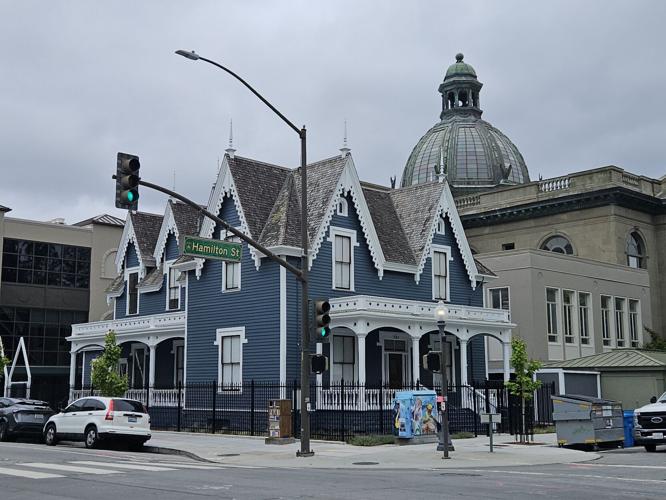
The Lathrop House is proposed to be renamed as the Lora Mundi House — a phrase once used by the former Lathrop family.
Benjamin Lathrop, the first county clerk, built the home in 1863. However, Benjamin Lathrop’s history as a possible slave owner made the association quickly reconsider taking the home’s move and reopening as an opportunity to rename it.
“Lora Mundi is the name that the Lathrop family gave the house. They understood it to translate as ‘beauty spot of the world,’” Blair said. “We can’t find that translation, but that’s what they understood it to be, so we’re going for it. We feel that honors the history of the house but allows us to broaden our interpretation.”
When the Lathrops owned the home, it was previously located where the Fox Theatre currently stands at 2215 Broadway, and was moved in 1905 after the Mansfield family bought it. Then in 2019, the home was moved once again, slowly and over the course of multiple days, across the street to its current location at the corner of Marshall and Hamilton streets behind the History Museum.
The building is slightly refurbished, in its former architectural glory. Some items in the building are from the families themselves that lived inside — which will be marked clearly so guests don’t touch — but other furniture pieces were carefully selected to invite guests to feel what living in a 19th century household was like.
Natural history
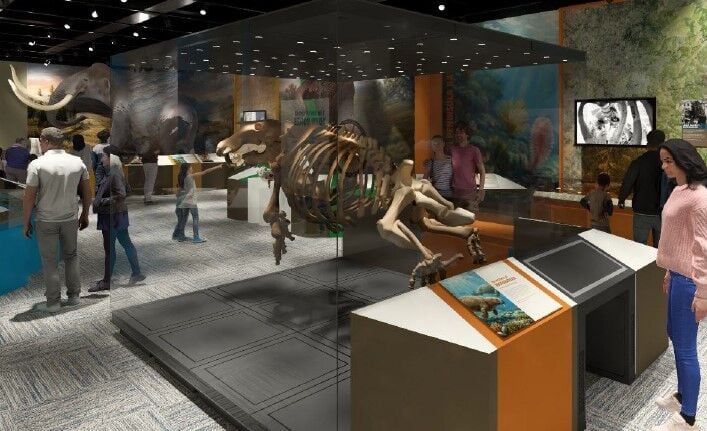
In an area that connects the existing museum with the new building, a new Natural History Gallery will also open, featuring animals on the Peninsula during the Ice Age.
“The visceral experience, especially for the kids, is that all of these animals lived here,” Postel said. “On the ground you walk, so did these guys.”
A fossil discovered at the Stanford Linear Accelerator location in 1964, known as neoparadoxia, will be a main attraction. A cast model built over the course of 25 years of neoparadoxia but Adele Panofsky will take center of the exhibit, visible from every vantage point.
Animals on display will also be a model of the short-faced bear — which was nearly twice the size of a grizzly bear. The short-faced bear had long legs and ran fast, able to chase after buffaloes, Postel said.
“You wouldn’t want one of those running around now,” Postel said.
Others include a model of a mammoth, a mastodon tooth fossil and details about the once nearly extinct elephant seals.
“Our goal is to talk about the different things found here and what this space that we now call San Mateo County was and how it has involved, and some of the interesting critters and interesting stories, as well as the people who discovered these stories,” the exhibit’s curator said.
The exhibit will talk about evolution, climate change and other effects on the changing landscape of the Peninsula over history.
Sports Hall of Fame
The county’s History Museum Sports Hall of Fame is also getting an updated look. To be named after Tom Martinez, the former football coach and educator at the College of San Mateo, the updated gallery will reflect those that have played or coached high school or collegiate sports in the county.
Installing the exhibits will be conducted on a meticulous schedule and specific order. Many things will be craned in through a large window on the second floor of the Carriage House and, once they’re in, reconfiguring displays will be all the more difficult. Blair said she’s looking forward to seeing the final result.
“I’m excited to see what it all looks like when it’s done,” Blair said. “You can talk and see designs on a computer but when you actually picture it, it’s a much different feeling.”
The grand opening ceremony of the History Museum’s vast expansion will be held Nov. 7.





(1) comment
Re Lathrop House name change: At least it wasnt renamed for resident Gen. Patrick Conner who fought native Americans. Run this by the commissars: rename Burlingame. It was christened for a senator elected on the anti-Catholic Know Nothing party.
Welcome to the discussion.
Log In
Keep the discussion civilized. Absolutely NO personal attacks or insults directed toward writers, nor others who make comments.
Keep it clean. Please avoid obscene, vulgar, lewd, racist or sexually-oriented language.
Don't threaten. Threats of harming another person will not be tolerated.
Be truthful. Don't knowingly lie about anyone or anything.
Be proactive. Use the 'Report' link on each comment to let us know of abusive posts.
PLEASE TURN OFF YOUR CAPS LOCK.
Anyone violating these rules will be issued a warning. After the warning, comment privileges can be revoked.