As alarm regarding a highly-contagious and dangerous virus started traveling across the Pacific Ocean last winter, health officials with the network supporting Mills-Peninsula Medical Center in Burlingame prepared for an emergency.
Noting the frequency of travel between Asia and the Bay Area, Sutter Health officials recognized that local exposure to coronavirus was likely and started building protocols and policies in preparation for a health crisis, said Bill Isenberg, chief quality and safety officer for the organization operating the Burlingame medical facility.
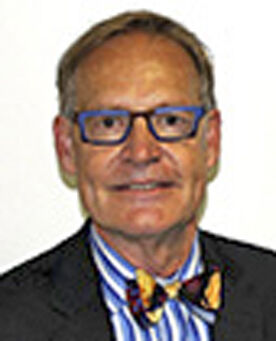
William Isenberg
The quick action paid off, he said, as the health network cared for the eighth verified case of COVID-19 identified in the United States, said Isenberg.
“I have been really impressed with the way the system has come together on this,” said Isenberg.
Noting there was a lull in cases between the first identified in January and the wave that started to arrive with travelers returning from cruises in March, Isenberg said the system spent the interim period attempting to stock up on critical response materials.
And though the network with 22 facilities across that state was able to stockpile a fair amount of resources through its supply chain, Isenberg admitted Sutter Health faced struggles collecting the personal protective equipment, testing supplies and other sought after items as demand surged with the spread of the virus.
Undelivered shipments of masks, embargoed pallets of N-95 respirators and other critical orders redirected by the federal government for distribution to other parts of the country became common but unexpected hurdles for the system to overcome, said Isenberg.
The need for appropriate supplies to keep patients and staff safe required health officials to look beyond the Sutter system to local lawmakers, who Isenberg said have been an invaluable resource in COVID-19 response.
A close relationship with U.S. Rep. Jackie Speier, D-San Mateo, proved incredibly useful for assuring patients and workers in Burlingame have the care they deserve, said Isenberg.
But working with government figures across the state has been complicated too, said Isenberg. Because the network operates medical centers throughout California, Sutter must adjust to meet the differing demands of health officers structuring specific orders for a variety of communities.
Recommended for you
“We have to be able to be flexible for each hospital in each county to be able to do what their health officer wants,” said Isenberg.
Because necessity is the mother of invention, adjusting to local orders required network officials to frequently collaborate and assure each center has the resources and expertise necessary. Those sessions helped the network exchange best practices, which Isenberg said ultimately proved beneficial in caring for patients.
To that end, he said the network was able to shift its treatment plan from recommendations originating in New York to a local approach that eventually helped hospitals cut the average stay time for a COVID-19 patient from roughly one week to a matter of days.
“I think the fact that we were able to learn from one another across the enterprise benefited all Sutter patients, regardless of where they lived,” he said.
Janet Wagner, Mills-Peninsula Medical Center CEO, agreed the network has been an essential resource for treating patients locally.
“We rapidly improved our treatment approach for patients based on information that was learned and immediately shared,” she said in an email.
While celebrating its success, Isenberg acknowledged the network is not out of the woods yet. With case counts continuing to rise and a flu season approaching, he said Sutter will rely heavily on unique approaches and innovation to expand its care.
Teleconferencing and drive-thru treatment locations are among the emerging concepts health officials are using more commonly with hopes that patients embrace to maximize the system’s resources, while preserving limited space in traditional facilities for those needing direct treatment.
“Those kinds of novel approaches to rendering care are out there and don’t be afraid of them,” said Isenberg.
Keep the discussion civilized. Absolutely NO
personal attacks or insults directed toward writers, nor others who
make comments. Keep it clean. Please avoid obscene, vulgar, lewd,
racist or sexually-oriented language. Don't threaten. Threats of harming another
person will not be tolerated. Be truthful. Don't knowingly lie about anyone
or anything. Be proactive. Use the 'Report' link on
each comment to let us know of abusive posts. PLEASE TURN OFF YOUR CAPS LOCK. Anyone violating these rules will be issued a
warning. After the warning, comment privileges can be
revoked.
Please purchase a Premium Subscription to continue reading.
To continue, please log in, or sign up for a new account.
We offer one free story view per month. If you register for an account, you will get two additional story views. After those three total views, we ask that you support us with a subscription.
A subscription to our digital content is so much more than just access to our valuable content. It means you’re helping to support a local community institution that has, from its very start, supported the betterment of our society. Thank you very much!



(0) comments
Welcome to the discussion.
Log In
Keep the discussion civilized. Absolutely NO personal attacks or insults directed toward writers, nor others who make comments.
Keep it clean. Please avoid obscene, vulgar, lewd, racist or sexually-oriented language.
Don't threaten. Threats of harming another person will not be tolerated.
Be truthful. Don't knowingly lie about anyone or anything.
Be proactive. Use the 'Report' link on each comment to let us know of abusive posts.
PLEASE TURN OFF YOUR CAPS LOCK.
Anyone violating these rules will be issued a warning. After the warning, comment privileges can be revoked.