
In recent years, California has seen the devastating consequences of ignoring the wisdom that indigenous people have carried for a millennia: Fire is essential for both human and ecosystem health.
The state’s history of fire suppression and the criminalization of indigenous burning have contributed to an era of catastrophic wildfires, wreaking havoc on our environment and our way of life.
As a Karuk person, I have known this for a long time.
Fire is central to our Karuk identity, and the suppression of indigenous burning has deeply impacted our people and our lands. Fire, for us, is not just a tool — it’s a lifeline, a means of renewal, and a vital part of our culture. For generations, our ceremonies have honored the essential role of fire in maintaining the health of our forests, the regeneration of plants and the sustenance of our communities.
With Senate Bill 310, California has a chance to begin the long process of reconciliation — with both tribes and fire. SB 310, introduced by state Sen. Bill Dodd, acknowledges tribal sovereignty over cultural burning for the first time in California’s history. By signing SB 310 into law, Gov. Gavin Newsom can start to correct historical wrongs and reduce our collective vulnerability to wildfire.
When settlers first arrived in the Klamath region of what is now Northern California, they found forests with enormous trees, wooden homes and structures, acorn orchards, abundant plants, berries, fish, wildlife and clean water. All of it was made possible by indigenous peoples’ frequent use of fire on the landscape.
California is not just fire-adapted, it is fire dependent.
Yet, in the late 19th century, California and the United States attempted to stamp out indigenous peoples and our practices, including indigenous burning, in an effort to force Native Americans to assimilate into settler culture and to “protect” the timber supply on stolen lands. Under an 1850 state law, Native people were legally shot for burning as late as the 1930s.
Recommended for you
Today, indigenous burning, when conducted in accordance with tribal traditions, is still unjustly criminalized and could even be classified as arson, a felony offense.
Addressing the wildfire crisis requires restoring our severed relationship with fire — a relationship that many indigenous communities still maintain and are working to reclaim. California has taken steps to embrace proactive burning as a proven solution for ecosystem health and resilience. A record number of controlled burns were set on federal lands in California this year, building resilience on over 63,000 acres. However, this is only a small fraction of the fire that was used by our ancestors and is needed on the landscape.
Despite being sovereign nations, tribes must currently seek permission from the state to light a fire. This not only strains our resources and limits our ability to burn when conditions are right — a window that is very small and shrinking — but violates tribal sovereignty. Sovereign tribal nations should not have to ask a state for permission to exercise our culture.
SB 310 is an opportunity for California to “walk the walk” when it comes to healing and reconciliation of a violent history toward indigenous peoples and the misguided exclusion of fire. The bill would authorize the secretary of the California Natural Resources Agency and local air districts to engage with federally recognized tribes to coordinate agreements for cultural burning activities without the burden of securing permits for each individual fire.
For far too long, the wisdom of our ancestors has been ignored, ridiculed and criminalized. SB 310 represents an opportunity for California to take a significant step toward healing the relationship between the state, its forests and the indigenous peoples who have always cared for them.
By embracing this bill, California can acknowledge and support tribal sovereignty while embracing a future where fire is once again viewed as a force for renewal, not destruction.
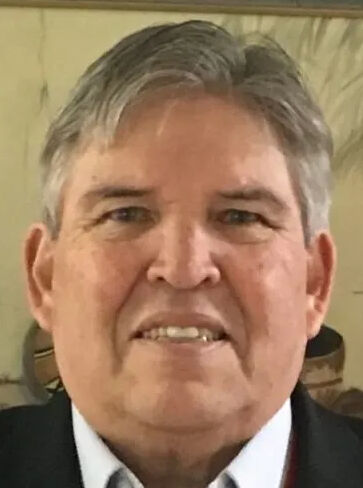
Russell “Buster” Attebery is the chairman of the Karuk tribe, a federally recognized tribe overseeing more than 1 million acres of land in Humboldt and Siskiyou counties along the Klamath River.







(8) comments
Good to read. Thanks for publishing this.
This seems like a no brainer. I noticed that controlled burns are used in Central America all of the time by the locals in the fields. They seem to know how to effectively handle overgrowth and are not stopped by dimwitted environmentalists.
Couldn't agree more. We all could learn valuable lessons from Indigenous people.
This sounds like the practical and just thing to do and agree it should be done. However, I wouldn't prefer to be downwind -or in other areas where the smoke goes - when such fires are taking place. That might be an issue in this heavily populated - and health conscious - state.
JCar - let me enlighten you. These controlled burns are not massive and very localized, if, and I emphasize if, they are conducted by a team of local tribe members and the Forest Service. That is the point, their measured actions, based on eons of experience, would prevent the wild fires that environmentalists and the unwitting US Forest Service have caused.
Dirk, this is why I said in a different discussion that I was concerned that you were also falling into the SMDJ LTE morass. The name-calling in these pages, e.g., “dimwitted environmentalists,” has really gotten out of hand.
Correct me if I am wrong (one can never say anything in these pages without creating a vicious dogpile), but environmentalists have long been in favor of allowing natural processes, including, e.g., lightening-caused fires, to burn. Some tree species require fire to propagate. I am NOT saying that I necessarily support this idea in general as each incident is unique.
This controversy came to a head many years ago in Yellowstone National Park when the National Park Service did not initially fight a forest fire that started there. The fire grew to such an extent as a result of prolonged prior Forest Service fire suppression policies (which often supports the timber industry, not environmentalists) that their decision created an outraged backlash from locals whose properties were threatened and their politicians.
The fire problem actually lies in the fact that more people have decided to build houses in heavily forested areas, so the practice of doing controlled burns is much more complicated than in the 19th century. For example, a few years ago the Forest Service did a controlled burn in northern New Mexico which also got out of control and led to the torching of thousands of acres and massive property damage.
The author of this article is from the Klamath River area which is much less developed, and this policy is probably easier to implement there than in more developed areas of the SIerra foothills, etc., but I am just guessing here.
Nonetheless, our litigious society still sues at the drop of a hat, so I have to wonder about the potential liability that tribes would incur if a controlled burn went out of control. Do they have the resources to cover lawsuits seeking damages or would this fall to the California taxpayers?
David - it would have been better if I had used the terms 'well-meaning' instead of 'dim-witted'. So, I apologize to all who were or could have been offended. You are making very good points but based on the horrendous wild fires over the past few years, I wonder whether controlled burns could not have prevented some of of these disasters. Do the detrimental effects of controlled burns outweigh the results of natural wild fires? Certainly, our current practices do not seem to work in our favor. Should we be hamstrung by potential litigation and just let it burn and suffer the consequences? Even the author does not appear in favor of widespread controlled burning but he makes a case that with appropriate coordination there is an opportunity to mitigate some of the disastrous effects of wild fires. Clearly, to be well-meaning is not enough.
Dirk, I agree with the points about controlled burns that you make in the response immediately above. I simply wanted to clarify that environmentalists are not necessarily opposed to control burns. The opposition to controlled burns, as the author mentions in his article, was often from the government prodded by timber interests not wanting to see valuable timber go up in smoke, and the U.S. Forest Service sided with them in decades past instead of with native Americans.
As often happens, two conflicting trends, growth of housing in higher risk fire areas coupled with fire suppression policies, continued until we started having major disasters, and only then did people react. We have let the problem get so complicated now that each situation has to be reviewed individually for multiple risks. This also makes me a little leery about the idea of removing review for permits that the author advocates. While the arguments sound reasonable on the surface, I don’t think any of us here in the Bay Area really know the details of how this might impact other regions of California, so I am not going to contact my state representatives to advocate for or against this bill. They need to do the committee work and research the problem without media hysteria pressuring them.
I don’t have a source for the following, but I also vaguely remember reading somewhere that the scope of wildfires back in the Wild West days was pretty large at times, possibly larger some years than what we are experiencing now, but the land was not dotted with houses and population density was very low in comparison, so few people were around to report about it.
While not an expert in this area, I think that fire suppression policies are probably the biggest contributor to this current fire problem, NOT climate change, but, on the other hand highly unusual 121 degree F temperatures in British Columbia a couple of years back in a town that completely burned down a short while later obviously can increase fire risks too.
In summary, we definitely need controlled burns, but we have let the problem fester for so long that we have to be much more careful about how they are done now than in the days when native Americans occupied the bulk of the land. It is unfortunate that, as always seems to happen, we did not have the foresight to deal with the problem of excessive fire suppression sooner.
Welcome to the discussion.
Log In
Keep the discussion civilized. Absolutely NO personal attacks or insults directed toward writers, nor others who make comments.
Keep it clean. Please avoid obscene, vulgar, lewd, racist or sexually-oriented language.
Don't threaten. Threats of harming another person will not be tolerated.
Be truthful. Don't knowingly lie about anyone or anything.
Be proactive. Use the 'Report' link on each comment to let us know of abusive posts.
PLEASE TURN OFF YOUR CAPS LOCK.
Anyone violating these rules will be issued a warning. After the warning, comment privileges can be revoked.