In early February, I took my kids to Belmont’s Community Center for a talk on the city’s hidden role in the Summer of Love and the 1960s music scene. Seventy-five people packed into a small classroom to hear about The Warlocks’ residency in Belmont.
Who knew Jerry Garcia was playing five nights a week at the Steak Pit on Old County Road as he began what became the Grateful Dead? I was equally surprised to learn Bruce Springsteen once lived here.
I left grateful that our city has the Belmont Community Foundation and a Parks and Recreation Department investing in programming that brings us together to create meaning and culture. That night reminded me of something simple but important: Community centers bring life into our cities and serve as essential civic infrastructure.
They matter more in the post-COVID era, where life is increasingly online. Raising kids in Silicon Valley means our schedules are full with work, school, extracurriculars and the constant pressure to do it all, much of it tied to a screen. We still build community through our commitments, of course, but we also need places to slow down, meet new people and untether from our devices.
And the demand is there. Across San Mateo County, cities are investing in spaces built for connection, recreation, education and resilience. Brisbane expanded its Mission Blue Center in 2018. Burlingame replaced its Community Center in 2022. Millbrae opened its Recreation Center in 2022 and San Bruno followed in 2024. Foster City is building a new community center now, with completion expected in summer 2026. Communities are treating gathering space as essential civic infrastructure.
These neighborhood hubs bring vitality, engagement, resilience and pride. The benefits are clearly visible: teens with a safe place to go after school, seniors enjoying retirement, working families with a reliable space for programs and support, newcomers with a way into community life, and a stronger volunteer pipeline when the city needs it. Community centers also create a natural bridge to local small businesses and community organizations. The quality of life and economic value these spaces enable may be hard to quantify, but the impact is real, especially as social isolation and national division reach historic highs.
Recommended for you
The benefits are also deeply personal. My husband and I moved back to the Peninsula to raise our three daughters because we believed we needed our parents, and as they grew older, they needed us. Moving closer also connected our children to their grandparents on a regular basis. This choice made us appreciate even more how much intergenerational communities benefit from shared time together.
Our recreation centers are where generations meet. Kids take advantage of the many programs, sports and activities with seniors doing the same or teaching our younger residents and sharing their life experiences and skills. Residents can take music classes, yoga, Spanish language or attend seminars about health, history or poetry. Our kids can attend summer camps, teen wellness retreats, art and dance classes. So many opportunities to enrich and improve our lives while meeting our neighbors.
Community spaces create belonging because they create real, repeated touchpoints. At the recent talk on Belmont’s hidden influence on music in the ’60s, I met my daughter’s art teacher and learned middle school students could earn extra credit for attending. I saw spouses enjoying a free night out, while my kids volunteered as community center ambassadors — welcoming neighbors and practicing public speaking. I was able to strengthen my connection to the Belmont Community Foundation’s leadership. That’s what civic infrastructure looks like in everyday life: relationships, opportunities and a stronger local fabric that helps people connect and support one another.
If you have a community center in your town, use it. Relish it. Plan an event there. Bring people together to learn, celebrate and find joy. If you do not, start thinking about how to build one.
We are all better when we have places and people that bring us together.
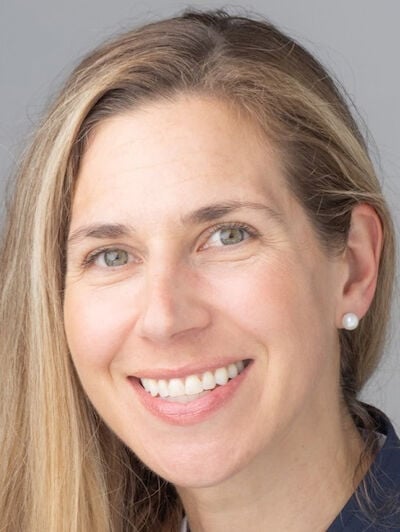
Sarah Minczeski Delisle is a Belmont resident and member of Friends of the Belmont Community Center.
Keep the discussion civilized. Absolutely NO
personal attacks or insults directed toward writers, nor others who
make comments. Keep it clean. Please avoid obscene, vulgar, lewd,
racist or sexually-oriented language. Don't threaten. Threats of harming another
person will not be tolerated. Be truthful. Don't knowingly lie about anyone
or anything. Be proactive. Use the 'Report' link on
each comment to let us know of abusive posts. PLEASE TURN OFF YOUR CAPS LOCK. Anyone violating these rules will be issued a
warning. After the warning, comment privileges can be
revoked.
Please purchase a Premium Subscription to continue reading.
To continue, please log in, or sign up for a new account.
We offer one free story view per month. If you register for an account, you will get two additional story views. After those three total views, we ask that you support us with a subscription.
A subscription to our digital content is so much more than just access to our valuable content. It means you’re helping to support a local community institution that has, from its very start, supported the betterment of our society. Thank you very much!



(0) comments
Welcome to the discussion.
Log In
Keep the discussion civilized. Absolutely NO personal attacks or insults directed toward writers, nor others who make comments.
Keep it clean. Please avoid obscene, vulgar, lewd, racist or sexually-oriented language.
Don't threaten. Threats of harming another person will not be tolerated.
Be truthful. Don't knowingly lie about anyone or anything.
Be proactive. Use the 'Report' link on each comment to let us know of abusive posts.
PLEASE TURN OFF YOUR CAPS LOCK.
Anyone violating these rules will be issued a warning. After the warning, comment privileges can be revoked.